AlgoBlaze Trading Platform Alternatives 2026
Compare AlgoBlaze alternatives for 2026 across regulation, platforms, spreads, and execution. A risk-aware guide to choosing safer, regulated brokers.
AlgoBlaze Trading Platform Alternatives 2026: Reliable Options for Online Traders
A fast-moving market has a habit of exposing soft edges: shaky execution during news, unclear fee lines, or a withdrawal process that suddenly feels longer than a Scandinavian winter. That’s usually when traders start searching for AlgoBlaze alternatives—not because they want novelty, but because they want fewer operational surprises. Based on what is commonly seen among offshore CFD providers, AlgoBlaze appears positioned as a forex-and-CFD-first venue, typically paired with a proprietary WebTrader and a mobile app, with conditions that may include leverage up to 1:500, a minimum deposit around $250, and EUR/USD spreads often quoted around 2.0 pips on a standard-style account. The package can look convenient on day one, yet convenience is not the same thing as resilience.
For US and EU readers in particular, the bigger question is not “Can I place a trade?” but “What framework governs the trade when something goes wrong?” Offshore setups—often associated with places such as the Seychelles—tend to offer fewer formal protections than FCA/ASIC/CySEC-regulated brokers, and the difference matters most precisely when volatility spikes. If you’re currently using AlgoBlaze, the goal of this guide is to map credible alternatives to the AlgoBlaze trading platform, with a bias toward transparent regulation, cleaner execution models, and platforms that can support real workflow: from risk limits to tax records.
Disclaimer: This article is for informational purposes only and does not constitute investment advice. CFDs and other leveraged products carry a high risk of loss and may not be suitable for all investors.
Key Takeaways (TL;DR)
- Offshore CFD venues can offer high leverage, but regulated brokers typically offer clearer client-fund rules, complaint routes, and documented execution policies.
- Compare round-turn trading cost (spread + commission + slippage), not just “from 0.0 pips” headlines.
- If you need real stocks/ETFs (not CFDs), start with a multi-asset broker like Interactive Brokers or Saxo Bank rather than a CFD-only platform.
What Is AlgoBlaze and How Does Its Trading Platform Work?
Seen through a fixed-income analyst’s lens, AlgoBlaze looks less like a full brokerage and more like a trading interface wrapped around leveraged CFDs. The typical instrument mix in this category is forex pairs (roughly 30–50), a standard slate of indices and commodities, and a smaller set of crypto CFDs. The regulatory footprint is often offshore; for the purposes of this 2026 comparison, it’s most consistent to treat AlgoBlaze as operating under a Seychelles-style framework rather than a tier-one regime. That has practical implications for dispute handling, segregation standards, and what “investor protection” means in real life. For traders who want speed and simplicity, that can feel adequate—until you’re managing risk around a payroll print or a gap-open.
AlgoBlaze Web Trading Platform: Core Features and Tools
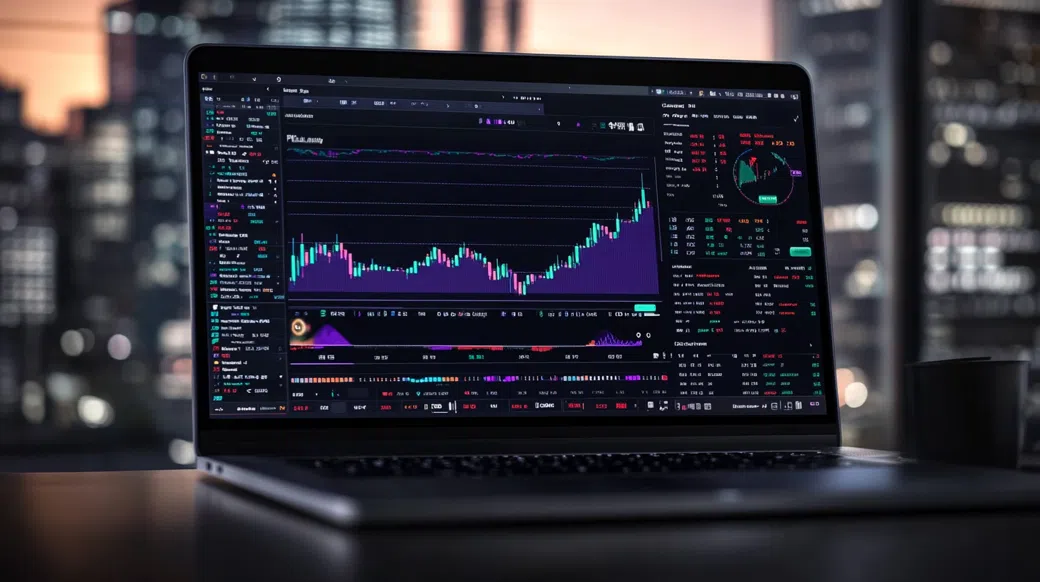
Start with the interface. A proprietary WebTrader in this segment usually delivers the essentials: basic-to-mid charting, common indicators, and straightforward market/limit orders, often with a clean account dashboard for deposits, withdrawals, and position monitoring. Mobile apps typically mirror the main functions—watchlists, chart viewing, order placement—though advanced workflow (multi-chart layouts, deep order tickets, hotkeys, or detailed execution reporting) can be thinner than on MT4/MT5/cTrader stacks. Execution “feel” tends to be fine in calm markets; the real test is slippage during fast moves and whether the platform gives you enough transparency to understand what happened afterward. That transparency is where competitors to AlgoBlaze often differentiate.
Trading Fees, Spreads, and Account Types at AlgoBlaze
Cost-wise, the common pattern is a spread-led standard account where EUR/USD trades around 2.0 pips in typical conditions, with financing (swap/overnight fees) applied to positions held past rollover. Some brokers in this tier also advertise a raw/ECN-style account: spreads can compress toward 0.0–0.4 pips, but the bill comes back as commission—often around $6–$8 per round-turn. Add the less glamorous items: withdrawal fees depending on method, potential inactivity charges, and the hidden cost many traders underestimate—price improvement versus slippage. If your strategy trades frequently, those “small” frictions become the strategy.
When Do Traders Start Looking for AlgoBlaze Alternatives?
Regime matters. A trader can tolerate a clunky chart; they struggle to tolerate uncertainty about safeguards. That’s why many AlgoBlaze alternatives discussions begin with regulation and client-fund handling, then move to execution and pricing. High leverage—often marketed at 1:500—can magnify a good week, but it can also turn a routine drawdown into a margin call with very little room for judgment. Add in the reality that the US is typically off-limits for offshore CFD brokers, and the search naturally shifts toward regulated options vs AlgoBlaze that fit your jurisdiction and your risk budget.
- You want MT4/MT5 or cTrader for automation, custom indicators, or a strategy workflow that a basic WebTrader can’t support.
- Withdrawals feel unpredictable (timing, fees, or repeated documentation requests), and you need a broker with tighter operational plumbing.
- Your trading has grown into multi-asset needs—real stocks/ETFs, options, or bonds—rather than indices and FX CFDs only.
- You’re scaling size and now care about execution reports, slippage controls, and whether fills behave sensibly in volatile sessions.
How to Choose a Reliable Alternative to the AlgoBlaze Trading Platform
Think of broker selection as portfolio construction: you’re choosing counterparties, not just charts. The right alternatives to the AlgoBlaze trading platform depend on where you trade (US vs EU/UK), what you trade (CFDs vs real securities), and how you trade (discretionary vs systematic). My own bias is to start with safety plumbing—segregated funds, clear regulator oversight—then move outward to costs and tools. A cheap spread is meaningless if the venue can’t be trusted when the tape gets ugly.
Regulation, Safety, and Investor Protection
For UK/EU traders, FCA and CySEC supervision usually brings clearer conduct rules and public registers you can check. Under the FCA, eligible clients may have FSCS coverage up to £85,000; under CySEC, the ICF framework can cover up to €20,000 in certain cases. ASIC-regulated entities in Australia have their own standards, though compensation schemes differ by jurisdiction. Look for segregated client funds, negative balance protection (where applicable), and a broker that states its legal entity and regulator plainly—without you needing a detective’s patience.
Available Markets and Instruments
Here’s the blunt distinction: CFDs are contracts; stocks and ETFs are ownership. If you require shareholder rights, voting, or long-term investing mechanics, you’ll want a multi-asset broker with access to real exchanges. If you’re purely tactical—FX, indices, commodities—then a specialist CFD/FX venue can be a better fit. Platforms like AlgoBlaze are often strongest in short-term leveraged products; the best substitutes for AlgoBlaze broaden the menu without turning the platform into a maze.
Trading Costs: Spreads, Commissions, and Other Fees
Costs live in layers: spread (in pips), commission (often quoted per lot), swap/overnight financing, and then the “soft” cost—slippage. Compare round-turn cost-of-trade on your typical position size and frequency. A raw account showing 0.1 pips can still be expensive once you add a $7 round-turn commission and mediocre fills. Conversely, a 0.8–1.2 pip all-in model can be competitive if execution quality is consistent. Treat fee schedules as risk disclosures, not marketing brochures.
Platforms, Tools, and Execution Quality
Tooling is not vanity; it’s control. MT4/MT5 and cTrader support automation, custom scripting, and broader third-party ecosystems, while proprietary platforms can be smoother for casual use. Execution model matters too: market maker setups can be perfectly legitimate, but you should understand how the broker hedges risk, what “requotes” mean in practice, and how slippage is handled. STP/ECN/DMA language should be backed by disclosures and reporting. If you still trade on AlgoBlaze, consider documenting a few weeks of execution stats before you move—spreads during liquid hours, fills around news, and stop-loss behavior.
Support, Education, and Overall User Experience
When money is on the line, support is part of your trading infrastructure. Look for clear service hours aligned with your trading session, fast ticket resolution, and staff who can answer operational questions (KYC, corporate actions, margin policy) without scripted evasions. Education matters less as “market tips” and more as platform literacy: margin calculations, order types, and risk tools. Mobile parity is a practical check—if the app can’t manage positions cleanly, it’s not a serious platform for active risk management.
AlgoBlaze and Different Asset Classes: When Alternatives May Be Better
AlgoBlaze Forex and CFD Trading
On forex and index CFDs, AlgoBlaze-style offerings usually look familiar: 30–50 FX pairs, a handful of major indices, and commodities like gold and oil. The headline leverage (often up to 1:500) is tempting, but leverage is only useful when it’s married to discipline—position sizing, stop placement, and a broker whose margin rules you can predict. Regulated alternatives often win on two fronts: pricing transparency and execution tooling. Pepperstone and IC Markets, for example, are widely used by short-term traders because they pair MT4/MT5/cTrader with raw-style pricing where spreads can be very tight, with commissions disclosed upfront. For discretionary traders, IG and CMC Markets offer robust CFD suites with strong risk tools and mature platform reporting. In 2026, the strongest argument for brokers similar to AlgoBlaze is simple: you can keep the CFD playbook while upgrading the rulebook and the platform stack.
AlgoBlaze Stock and ETF Trading
This is where many offshore CFD venues show their limits. Even when “stocks” are listed, exposure is often via stock CFDs—no ownership, no voting rights, and different tax reporting than holding the underlying. If your plan includes building a long-term book—US ETFs, European equities, or even bonds—you’ll want a broker built for custody and exchange access. Interactive Brokers is the obvious reference point for global market reach: stocks, ETFs, options, futures, and even bonds, with a professional-grade platform suite. Saxo Bank is another strong option for investors who want a well-designed multi-asset environment with broad instruments and solid reporting. That difference—CFD wrapper versus real market access—is the single biggest reason many traders graduate from platforms like AlgoBlaze to a true multi-asset brokerage.
AlgoBlaze Crypto Trading
Crypto, in this offshore-CFD context, is typically delivered as CFDs on major coins—think a list of 10–30 instruments rather than a full exchange universe. That means you’re trading price exposure with leverage and financing costs, not holding coins on-chain, not withdrawing to a wallet, and not interacting with staking or transfers. For traders who specifically want regulated crypto CFDs, brokers such as IG and Plus500 have offered crypto CFD access in various jurisdictions (availability is regional and can change). If crypto is a small tactical sleeve inside a broader portfolio, a multi-asset venue like Interactive Brokers can still be attractive for everything around it—equities, futures, FX—while you keep crypto exposure appropriately sized. Among top substitutes for AlgoBlaze, the key question is whether you want “crypto trading” as ownership or as a leveraged derivative; the risk profile is not remotely the same.
Best AlgoBlaze Alternatives for 2026: Comparison of Top Trading Platforms
Interactive Brokers (IBKR): Key Facts and How It Compares to AlgoBlaze
Regulation: SEC/FINRA (US), FCA (UK), IIROC (Canada) (entity depends on region)
Markets: Stocks, ETFs, options, futures, FX, bonds, funds
Fees: FX pricing varies by structure; commissions are typically explicit, with institutional-style reporting; financing applies on margin
Platform: Trader Workstation (TWS), IBKR Mobile, Client Portal; API access
Best For: Global multi-asset traders who want exchange access
Pepperstone: Key Facts and How It Compares to AlgoBlaze
Regulation: FCA, ASIC, CySEC, DFSA
Markets: FX and CFDs (indices, commodities, some crypto CFDs depending on region)
Fees: Standard spreads often around ~1.0–1.2 pips on EUR/USD; Raw-style pricing can be ~0.0–0.3 pips + commission (varies by platform/account)
Platform: MT4, MT5, cTrader (availability by entity)
Best For: Systematic FX traders using MT4/MT5 or cTrader
Saxo Bank: Key Facts and How It Compares to AlgoBlaze
Regulation: FCA, MAS, DFSA
Markets: Stocks, ETFs, bonds, FX, options, futures, CFDs
Fees: Costs depend on product; spreads and commissions are tiered; strong transparency on financing and custody-style charges
Platform: SaxoTraderGO, SaxoTraderPRO
Best For: Portfolio builders who also trade tactically
OANDA: Key Facts and How It Compares to AlgoBlaze
Regulation: CFTC/NFA (US), FCA, ASIC, IIROC
Markets: FX (and CFDs where permitted by jurisdiction)
Fees: Typically spread-based pricing; EUR/USD often seen from ~0.8–1.4 pips depending on account and market conditions
Platform: OANDA web/mobile, MT4 (availability varies)
Best For: FX-first traders who value jurisdictional clarity
CMC Markets: Key Facts and How It Compares to AlgoBlaze
Regulation: FCA, ASIC, BaFin
Markets: CFDs on FX, indices, commodities, shares (CFD)
Fees: Competitive CFD pricing; spreads vary by instrument and volatility; financing costs apply on leveraged positions
Platform: Next Generation platform, mobile app; MT4 in some regions
Best For: Active CFD traders who want deep platform analytics
Plus500: Key Facts and How It Compares to AlgoBlaze
Regulation: FCA, CySEC, ASIC, MAS
Markets: CFDs on FX, indices, commodities, shares (CFD), crypto CFDs (where available)
Fees: Spread-based; costs depend on instrument; overnight financing is a key component for holds
Platform: Proprietary WebTrader, mobile app
Best For: Simplicity-focused traders who stay within CFDs
Comparison Summary
| Platform | Regulation | Main Markets | Typical Costs | Best For |
|---|---|---|---|---|
| Interactive Brokers (IBKR) | SEC/FINRA, FCA, IIROC | Stocks/ETFs, options, futures, FX, bonds | Commission-led model; FX pricing varies; strong reporting | Global multi-asset traders who want exchange access |
| Pepperstone | FCA, ASIC, CySEC, DFSA | FX + CFDs | ~1.0–1.2 pip Standard; ~0.0–0.3 pip + commission on Raw-style | Systematic FX traders using MT4/MT5 or cTrader |
| Saxo Bank | FCA, MAS, DFSA | Multi-asset incl. stocks/ETFs, bonds, options, futures | Tiered spreads/commissions; financing and custody-style fees disclosed | Portfolio builders who also trade tactically |
| OANDA | CFTC/NFA, FCA, ASIC, IIROC | FX (and CFDs where permitted) | Spread-based; EUR/USD often ~0.8–1.4 pips depending on conditions | FX-first traders who value jurisdictional clarity |
| CMC Markets | FCA, ASIC, BaFin | CFDs across FX/indices/commodities/share CFDs | Variable spreads; financing is material for multi-day holds | Active CFD traders who want deep platform analytics |
| Plus500 | FCA, CySEC, ASIC, MAS | CFDs incl. FX/indices/commodities/share CFDs/crypto CFDs (region-based) | Spread-based; overnight fees are central for swing positions | Simplicity-focused traders who stay within CFDs |
How to Safely Move from AlgoBlaze to Another Broker
Switching brokers is less “account shopping” and more operational risk management. Do it while markets are calm, not mid-drawdown or during a macro week. The sequence that reduces stress is: verify the new venue, set it up fully, then unwind the old relationship methodically. If you’re moving away from AlgoBlaze, remember that leverage cuts both ways—closing positions under pressure is how avoidable losses become permanent.
- Confirm the new broker’s legal entity on the regulator’s public register (FCA Register, ASIC Connect, CySEC listings, or NFA BASIC for US FX).
- Open the new account and complete KYC early: ID plus proof of address, and any suitability questionnaires required for CFDs.
- Flatten exposure at the old broker rather than assuming positions can be “transferred”; in most retail setups, you’ll need to re-enter trades at the new venue.
- Withdraw funds using the original deposit route when possible; AML policies often force “same-method” withdrawals before alternatives are approved.
- Export statements, trade history, and funding records for tax and audit trails before you lose dashboard access or the account is archived.
Ready to Explore AlgoBlaze?
If you’re still evaluating the platform itself, take a moment to compare onboarding steps, regional eligibility, and the platform stack against the regulated substitutes in this guide. Small details—like how margin is displayed or how stops behave during volatility—tend to matter more than promotional headlines.
Visit AlgoBlazeFAQ: AlgoBlaze Alternatives and Trading Platforms
What is the best alternative to AlgoBlaze in 2026?
The best choice depends on whether you need real markets or just CFDs: Interactive Brokers and Saxo Bank are strong when you want stocks/ETFs/options/futures alongside FX, while Pepperstone or OANDA are often better aligned with FX-centric workflows. For pure CFD users who prioritize platform analytics, CMC Markets is a frequent shortlist candidate. In other words, “best” is strategy-fit, not a single winner—especially when comparing best AlgoBlaze alternatives 2026 across jurisdictions.
Is AlgoBlaze a safe broker/platform?
AlgoBlaze appears consistent with an offshore CFD model (often associated with Seychelles-style frameworks), which typically provides fewer formal protections than FCA/ASIC/CySEC or NFA-regulated firms. That doesn’t automatically mean you can’t trade, but it does raise the bar for your own operational checks: fund segregation language, withdrawal terms, and execution disclosures. If safety is your priority, regulated options vs AlgoBlaze generally offer clearer recourse and more transparent oversight.
Can I trade stocks, futures, or crypto with AlgoBlaze?
With platforms like AlgoBlaze, access is usually centered on forex and CFDs, and “stocks” are commonly offered as stock CFDs rather than real share ownership. Futures are typically not offered as direct exchange-traded futures in this category. Crypto exposure is often via crypto CFDs (price exposure, not on-chain ownership), which comes with leverage and overnight financing costs.
What should I check before switching from AlgoBlaze to another platform?
Before switching, verify the new broker’s exact legal entity on the regulator’s register, then complete KYC so you’re not stuck mid-transfer. Next, compare round-turn costs on your own trade size (spread + commission + likely slippage), and read the margin/negative balance rules closely. Finally, export your statements and funding records first—then unwind positions and withdraw funds in an AML-compliant way.
About the Author: Erik Lindström is a Stockholm-based former fixed-income analyst turned financial journalist, focused on European brokerage ecosystems and Nordic fintech innovation. He approaches platform reviews like risk work: less about slogans, more about process, protections, and how trades behave when volatility is real.