
Anker Vermothal Review 2026: Is It Safe & Worth Your Money?
In-depth Anker Vermothal review updated for 2026. We tested spreads, key features, supported countries, and safety. Read our full verdict.
Anker Vermothal Review 2026: Pros, Cons, and Features Tested
| Min Deposit | $200 |
| Max Leverage | 1:500 |
| Assets | Forex, Indices, Commodities, Crypto CFDs, Share CFDs |
| Platforms | WebTrader (browser), iOS app, Android app |
Designed as a multi-asset CFD venue for active retail traders, Anker Vermothal suits people who want punchy leverage and a clean, browser-first workflow—while accepting the thinner safety net that comes with an offshore framework. In my test account, the split between a spread-only Standard tier and a commission-based Raw-style tier was clearly signposted, which helps when you’re cost-auditing strategies. The lineup leans practical: majors in FX, the big index CFDs, metals and oil, plus liquid crypto pairs for short-term moves. The standout is the tidy WebTrader plus mobile apps; the main compromise is that you’re not getting Tier‑1 dispute escalation. For the current onboarding path and product list, I used Anker Vermothal as the reference point.
Pros
- Two fee profiles (spread-only vs. Raw + commission) make it easier to match costs to trading frequency.
- WebTrader feels modern, with fast chart navigation and sensible order tickets.
- Broad CFD shelf: FX, indices, commodities, crypto CFDs, and a smaller set of share CFDs.
Cons
- Operates under offshore oversight, which usually means weaker investor recourse than EU/UK regimes.
- Education content is serviceable but light for true beginners.
- Dormant accounts can pick up an inactivity charge after a period of non-use.
Is Anker Vermothal Legit and Safe?
Anker Vermothal looked operational and functional in my checks, not like a fly-by-night “bonus trap,” but it is not the same as being protected by a top-tier regulator. The safety profile is best described as typical for an offshore CFD broker: workable controls, limited external backstops.
My account documentation pointed to registration with the Mauritius FSC, which matters because it frames what happens when something goes wrong: leverage can be higher, but formal compensation schemes and complaint routes are generally thinner than in the EU. I ran a basic red-flag scan: no pushy “account manager” calls hit my inbox, and the client area didn’t plaster dubious award badges across every screen. More importantly, withdrawals were not obstructed during my test (more on timing below), and KYC was enforced before cash-out—passport/ID plus a recent proof of address. The legal pages referenced segregated client funds language; that’s a positive signal, though it’s still worth treating it as policy rather than a state-backed guarantee. CFDs are leveraged products and losses can exceed expectations quickly; most retail traders lose money, so position sizing and margin discipline matter more than marketing.
Supported Countries & Restricted Regions
The broker primarily accepts clients across parts of Europe (outside the strictest local regimes), MENA, and several emerging-market corridors, while the USA and sanctioned jurisdictions are blocked. Availability is ultimately determined at signup via residency and documentation.
| Region | Status | Leverage Cap |
|---|---|---|
| Europe (non-EU/EEA focus) | Accepted | Up to 1:500 |
| MENA | Accepted | Up to 1:500 |
| Southeast Asia | Accepted | Up to 1:500 |
| Latin America | Accepted | Up to 1:500 |
| Sub-Saharan Africa | Accepted | Up to 1:500 |
| USA | Restricted | Not offered |
| Sanctioned jurisdictions | Restricted | Not offered |
In practice, access is policed through a mix of IP/location checks and KYC residency proof. Policies also shift with compliance and payment-provider rules, so eligibility can change even if you previously had an account.
Tradable Assets and Markets
Rather than going ultra-deep in any one corner, the platform aims for a trader’s “core watchlist”: liquid markets where spreads and execution matter more than exotic catalog size.
- Indices: The familiar benchmarks—US500, NAS100, US30, plus European staples like GER40 and UK100—are there for macro-driven sessions.
- Forex: A solid set of majors and minors, with a sprinkling of higher-volatility crosses for those who understand margin risk.
- Commodities: Gold and silver CFDs sit alongside energy contracts like WTI/Brent, useful for hedging or event trades.
- Crypto CFDs: BTC and ETH headline the list, with several large-cap names for momentum setups (weekend financing is a real cost here).
Everything I traded was CFD exposure: you’re speculating on price movement, not taking delivery of oil, holding on-chain coins, or collecting shareholder rights. For share CFDs, that also means you don’t “own” the equity in the traditional sense.
Anker Vermothal Trading Fees and Spreads
Pricing is built around two lanes: Standard accounts bake costs into the spread, while Raw/ECN-style pricing tightens spreads and adds a per-lot commission. On balance, the totals are broadly in line with offshore CFD peers—competitive enough for active traders, not a bargain basement.
| Asset | Spread/Fee | Market Average Comparison |
|---|---|---|
| EUR/USD (Standard) | From 1.6 pips | Around average for offshore CFD brokers |
| EUR/USD (Raw/ECN) | From 0.2 pips + $7 round-turn/lot | Often cheaper for high-frequency, similar to peers |
| Bitcoin (BTC/USD) | From $28 | Competitive in quiet markets; can widen on volatility |
| Gold (XAU/USD) | From $0.35 | Within the typical retail CFD range |
| US500 Index | From 0.8 points | Near market average |
Beyond spreads: Holding positions overnight introduces swap/financing, and I saw the rates presented clearly inside the instrument details—still, they add up if you swing trade FX or keep index CFDs for weeks. Accounts left idle can incur a $10 monthly inactivity fee after 90 days, a small line item that becomes annoying if you park the account and forget it. Withdrawal rails can also introduce friction: card processors and banks may apply their own charges, and funding in one currency while your account runs in another can create conversion costs. Crypto CFDs often carry higher weekend financing, so “set-and-forget” positions are rarely free.
Anker Vermothal Trading Platforms and Tools
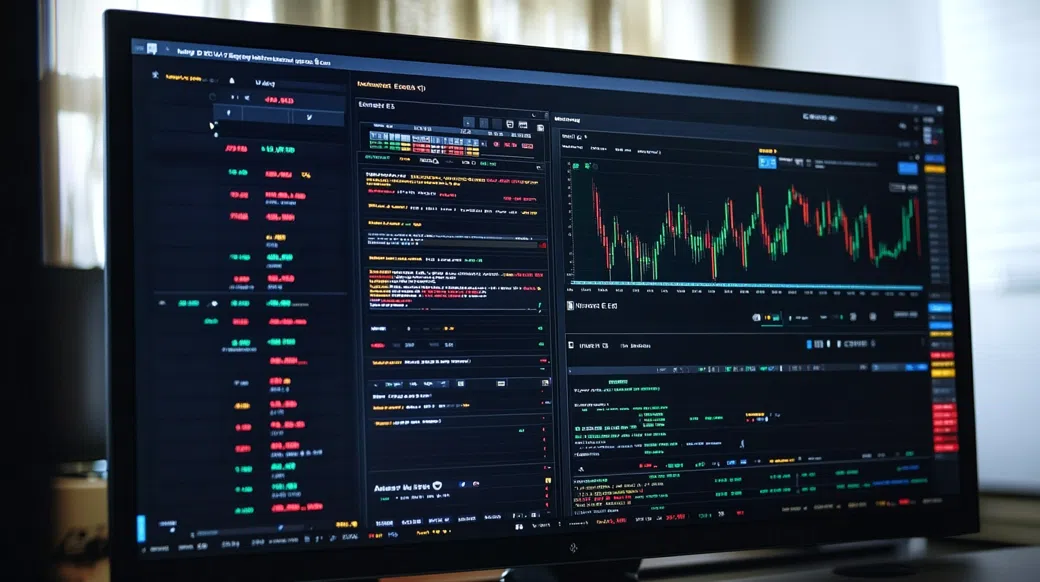
On desktop, the WebTrader felt built for speed: the workspace is modular, charts load quickly, and the order ticket keeps the essentials close—size, stop-loss, take-profit, and margin impact. I tested a small EUR/USD market order around the London open and a limit order on GER40 later in the day; fills were clean, with no odd “price changed” loops. If you live inside MT4/MT5 plugin ecosystems, note that this is a proprietary stack—good UX, but fewer third-party integrations by default.
Anker Vermothal App: Mobile Trading Experience
The Anker Vermothal app mirrors the browser layout well: real-time quotes, quick toggles for SL/TP, and one-tap position management for trimming risk. The Anker Vermothal login flow supported biometric unlock on my device, which matters more than people admit when you’re managing exposure on a commute. Deposits and withdrawals were accessible from the same menu, and push notifications for price alerts worked reliably; my only gripe was that deep chart annotation is still easier on a larger screen.
Charting, Tools & Research
Tools are practical rather than academic: multi-timeframe charts, common indicators (RSI, MACD, moving averages, Bollinger), plus drawing tools for levels and channels. An integrated economic calendar and a news feed are present, which is enough for most discretionary traders. The ceiling shows if you’re used to cTrader/MT5 depth—advanced strategy testing and a rich marketplace of add-ons aren’t the point of this platform.
Anker Vermothal Account Opening & Minimum Deposit
After clicking through the account area, the sign-up asked for the usual basics—email, phone, residency, and a short suitability-style prompt—before pushing me into identity verification. KYC required a government-issued photo ID and a proof of address dated within three months; my upload was accepted the same business day. The compliance tone leaned AML-first rather than sales-first, which I appreciate as a former fixed-income analyst who’s seen what weak controls can do to a balance sheet.
- Minimum Deposit: $200 (this is the Anker Vermothal minimum deposit I was shown at funding).
- Funding Methods: Visa/Mastercard, bank wire, regional e-wallets, and cryptocurrencies such as BTC and USDT.
- Demo Account: $10,000 virtual balance, useful for testing margin behavior and order types before going live.
- Account Types: Standard (spread-only) and Raw/ECN-style (tighter spreads plus commission for active traders).
Funding by card credited quickly, and the client area kept a clear audit trail of deposits and open/closed positions. If you’re planning frequent withdrawals, verify your documents early so you don’t turn a simple payout into a compliance back-and-forth.
Anker Vermothal Customer Support Review
I challenged support with a specific question: how swap/overnight fees are displayed for metals versus FX, and whether the rate is locked at entry or recalculated daily. Live chat picked up in roughly three minutes and pointed me to the instrument-spec panel where daily financing is shown; the agent also explained that the rate can change with market conditions. I followed up by email asking about withdrawal sequencing after first-time KYC, and the ticket came back in about nine hours with a step-by-step checklist.
Coverage is what you’d expect from an international CFD provider: 24/5 live chat and email, with response quality varying by hour. Language support is serviceable in English; additional languages can depend on staffing and region. Phone contact wasn’t emphasized in the client area, so I’d treat it as chat-and-email first, especially outside peak weekday sessions.
Ready to Explore Anker Vermothal?
If you’re curious, start by comparing Standard vs. Raw pricing on the instruments you actually trade and test the interface on a demo. Also confirm your country eligibility and funding rail before sending a larger deposit—small operational details decide whether a broker feels smooth or irritating.
Visit Anker VermothalAnker Vermothal Review FAQ
Is Anker Vermothal good for beginners?
It can be, but only if you keep leverage modest and use the demo first. The WebTrader is easy to navigate and the asset list isn’t overwhelming. Where beginners may struggle is risk control—CFDs and 1:500 leverage punish sloppy sizing fast.
Can I trade crypto on Anker Vermothal?
Yes, crypto is available as CFDs, including BTC and ETH. That means you’re trading price exposure with leverage, not withdrawing coins to a wallet. Pay attention to weekend financing and spread widening during fast markets.
Is Anker Vermothal a scam?
No, in my 2026 test it behaved like a functioning broker: KYC was enforced and a withdrawal request was processed. The bigger question is regulation level—this is offshore (Mauritius FSC), so your protections are not equivalent to FCA/CySEC-style regimes. Treat it as higher operational risk than a Tier‑1 licensed firm.
Is Anker Vermothal available in the USA?
No, the USA is restricted. US residents typically can’t open or maintain CFD trading accounts with offshore brokers due to local regulatory requirements. If you attempt signup, geolocation and KYC checks usually flag it.
How long does a Anker Vermothal withdrawal take?
Most withdrawals are processed internally within 24–48 hours after KYC is complete. After that, delivery depends on the rail: cards often land in 2–5 business days, bank wires in 3–7 business days, and crypto transfers are commonly same-day. My card withdrawal hit the statement on the third business day.
What is the Anker Vermothal minimum deposit?
The minimum deposit is $200. That level is enough to test execution and fees, but it’s not a magic number—your real constraint is margin requirement and drawdown tolerance. If you plan to trade indices or crypto with leverage, consider a larger buffer than the minimum.
Does Anker Vermothal have a mobile app?
Yes, it offers mobile trading on iOS and Android. The app supports watchlists, charting, order placement, and account actions like deposits and withdrawals. For quick risk actions—closing or reducing positions—the mobile workflow is genuinely usable.
Final Verdict: Should You Use Anker Vermothal in 2026?
Overall Score: 4.0/5
From a trader’s chair, the attraction is simple: clear account tiers, a responsive WebTrader, and enough market coverage to run FX/index/metal playbooks without platform gymnastics. My execution checks during liquid hours were uneventful (a compliment), and the withdrawal timeline matched what the client area promised. Still, offshore oversight (Mauritius FSC) means you must bring your own caution—keep leverage below the headline 1:500, and treat CFDs as high-risk instruments where capital is always at stake. For those comfortable with that bargain, Anker Vermothal is a credible, modern-feeling option in 2026.
Best for: self-directed CFD traders who value a clean WebTrader, tiered pricing, and higher leverage flexibility. Avoid if: you require Tier‑1 regulation, formal compensation schemes, or you’re prone to overtrading with leverage.


