
Bold Accrudency Review 2026: Is It Safe & Worth Your Money?
In-depth Bold Accrudency review updated for 2026. We tested spreads, key features, supported countries, and safety. Read our full verdict.
Bold Accrudency Review 2026: Pros, Cons, and Features Tested
| Min Deposit | $200 |
| Max Leverage | 1:500 |
| Assets | Forex, Indices, Commodities, Crypto CFDs, Share CFDs |
| Platforms | WebTrader (desktop/browser), iOS & Android apps |
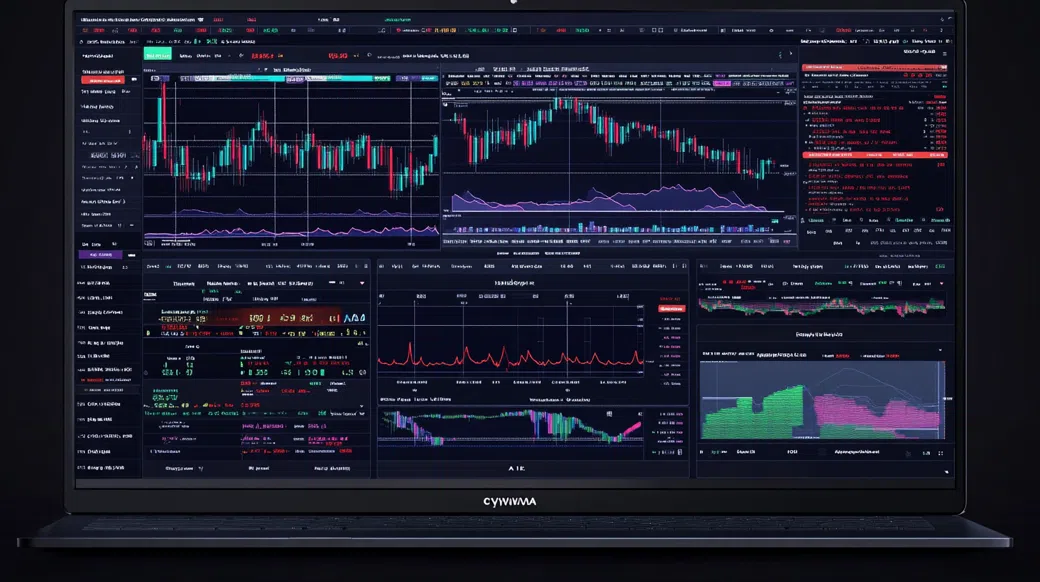
Built for traders who want a multi-asset CFD cockpit with high leverage, Bold Accrudency suits active short-term speculators—while the headline compromise is an offshore rulebook that offers fewer formal protections than top-tier EU/UK oversight. I ran a small test account across Standard and Raw-style pricing and found the tiering logical: the entry account leans on spread-only costs, while the tighter feed sits behind commission. Coverage is broad enough for a “one screen” routine (FX, gold, US indices, and headline crypto), and the WebTrader is the center of gravity with mobile acting as a capable sidecar. The weak spot is predictable: lighter research depth and fewer escalation paths if a dispute turns ugly. See Bold Accrudency for the current onboarding flow and product list.
Pros
- Two pricing tracks (spread-only vs. raw + commission) that let you match costs to style
- WebTrader and mobile apps feel coherent, with core order controls where you expect them
- Solid mix of FX, indices, metals, and crypto CFDs for tactical trading
Cons
- Offshore registration means weaker investor-compensation and complaint routes
- Education and research are functional, not institutional-grade
- Inactivity charge appears after prolonged dormancy, which can surprise “set-and-forget” users
Is Bold Accrudency Legit and Safe?
Bold Accrudency operated as a functioning CFD broker in my test—accounts could be verified, trades executed, and withdrawals requested—so it doesn’t present like a fly-by-night “vanish overnight” operation. Still, it runs under an offshore framework, which changes what “safe” means: fewer statutory backstops and more reliance on the firm’s own controls.
One detail worth leading with: the provider presents itself under the Mauritius FSC umbrella, a structure common among international CFD outfits that prefer flexibility on leverage and onboarding. In practice, that flexibility cuts both ways—higher leverage and looser product packaging, but less robust compensation schemes and a steeper hill if you need formal dispute escalation. During my test window I looked for the usual red flags (pressure calls, “award” logos that can’t be traced, withdrawal friction) and didn’t get the hard-sell routine; support stuck to process when I asked about financing and verification. The platform also pushed KYC early (ID plus proof of address) and referenced segregated client funds in its legal language, which is a basic but meaningful trust signal. None of this cancels the central risk: CFDs are leveraged products, margin calls happen fast, and most retail accounts lose money—treat position sizing as your first line of defense.
Supported Countries & Restricted Regions
This broker primarily targets international clients across parts of Europe (outside the strictest regimes), MENA, and segments of Asia and Africa. The USA is not supported, and sanctioned jurisdictions are blocked.
| Region | Status | Leverage Cap |
|---|---|---|
| Europe (non-EU/EEA focus) | Accepted | Up to 1:500 |
| MENA (select countries) | Accepted | Up to 1:500 |
| Southeast Asia (select countries) | Accepted | Up to 1:500 |
| Sub-Saharan Africa (select countries) | Accepted | Up to 1:500 |
| USA | Restricted | Not offered |
| Sanctioned jurisdictions | Restricted | Not offered |
Eligibility is enforced through a mix of onboarding declarations, IP/location checks, and—most decisively—KYC/AML review before withdrawals. Policies move with regulation, so a country that is “in” today can be “out” after a compliance update.
Tradable Assets and Markets
Rather than trying to be everything at once, the lineup feels designed for macro-themed CFD trading: currencies and indices first, then commodities and a curated crypto shelf for tactical exposure.
- Indices: The usual liquid benchmarks are here, including US500, NAS100, US30, plus staples like GER40 and UK100.
- Forex: Roughly 40+ pairs across majors and minors, with a handful of exotics for those who can stomach wider spreads.
- Commodities: Gold and silver are the obvious workhorses, alongside WTI/Brent-style oil contracts and occasional gas exposure.
- Crypto CFDs: BTC and ETH sit at the center, with several large-cap coins rotating in depending on liquidity conditions.
- Share CFDs: A selective list of US/EU blue chips for event-driven trades, rather than deep equity investing.
All of this is CFD exposure: you’re trading price movement with leverage, not owning shares, taking delivery of commodities, or holding on-chain crypto. That distinction matters for rights, custody, and how financing costs accrue overnight.
Bold Accrudency Trading Fees and Spreads
The cost structure is split between a spread-only Standard account and a Raw/ECN-style option that pairs tighter spreads with commission. In my checks, EUR/USD on Standard hovered near the “serviceable, not razor-thin” end of the offshore spectrum, while the raw feed looked more competitive once you price in the per-lot fee. Overall, it lands broadly in line with international CFD peers that run proprietary WebTraders.
| Asset | Spread/Fee | Market Average Comparison |
|---|---|---|
| EUR/USD (Standard) | From 1.6 pips | Slightly higher than best-in-class, typical for spread-only tiers |
| EUR/USD (Raw/ECN) | From 0.2 pips + $7 round-turn/lot | Competitive for active traders when volume justifies commission |
| Bitcoin (BTC/USD) | From $35 (variable) | In line; widens during volatility and weekend sessions |
| Gold (XAU/USD) | From $0.35 | Reasonable versus CFD averages; watch rollovers |
| US500 Index | From 0.9 points | Near the middle of the pack for offshore CFD pricing |
Non-spread costs that actually move the P&L: overnight swap/financing on leveraged CFDs (including weekend triples), plus conversion charges if you fund in a non-base currency. An inactivity fee of $10 per month kicked in after 90 days without trading on my account settings, which makes “park it and forget it” surprisingly expensive. On withdrawals, the broker can pass through payment-rail costs (especially wires), so the cheapest route is often the same rail you used to deposit.
Bold Accrudency Trading Platforms and Tools
On desktop, the WebTrader behaved like a modern browser terminal rather than a patched-together plugin: stable sessions, quick symbol search, and clean order tickets for market/limit/stop with stop-loss and take-profit attached. I tested execution on EUR/USD around the London open and saw fills that tracked the tape without obvious requotes; slippage appeared only when I forced a market order into a fast print. If you live inside MT4/MT5 ecosystems for EAs and third-party indicators, note the gap: this platform covers core trading tasks well, but it’s not an open marketplace of scripts and add-ons.
Bold Accrudency App: Mobile Trading Experience
The Bold Accrudency app mirrors the WebTrader layout sensibly, which matters when you’re managing risk from a train or café. I used the same credentials for Bold Accrudency login on iOS, enabled biometric access, and found one-tap close handy for trimming exposure. Quotes updated smoothly, deposits/withdrawals were reachable from the main menu, and push alerts for price levels worked once permissions were toggled. My main gripe: chart space is naturally tighter, so drawing tools feel a bit “thumb-first” versus desktop precision.
Charting, Tools & Research
Charting includes the bread-and-butter indicators (MA, RSI, MACD, Bollinger) and enough timeframes for intraday and swing work. The integrated economic calendar and news feed are useful for situational awareness, but don’t expect deep analyst notes or institutional flows. Alerts and watchlists do the job, yet heavy quants will still miss the depth you get in MT5/cTrader environments designed for strategy testing and advanced order management.
Bold Accrudency Account Opening & Minimum Deposit
After entering email, phone, and a basic suitability set, the account area immediately nudged me toward identity checks—less “optional later” than some brokers in this segment. For KYC, I uploaded a passport scan and a utility bill dated within three months; verification cleared the same business day, and the dashboard unlocked higher funding/withdrawal limits. The flow is clearly designed around AML hygiene: you can browse the platform first, but the real rails open once documents are approved.
- Minimum Deposit: $200 (this is the Bold Accrudency minimum deposit I saw at checkout for card funding)
- Funding Methods: Visa/Mastercard, bank wire, selected e-wallets, and crypto (BTC/USDT)
- Demo Account: $10,000 virtual balance for testing spreads, margin, and order logic without cash risk
- Account Types: Standard (spread-only) and Raw/ECN-style (tighter spreads + $7 round-turn commission)
One practical note: account base currency choices were limited, so funding in SEK or NOK may introduce conversion costs at the payment stage. I also prefer when brokers show swap rates transparently per instrument; here, it’s available, but not as prominently displayed as on platforms built around professional financing schedules.
Bold Accrudency Customer Support Review
To pressure-test service quality, I asked live chat a specific question about swap/overnight fees on XAU/USD and whether triple-swap timing applies around Wednesday rollover. A human agent picked up in roughly three minutes, pointed me to the instrument’s contract specs, and clarified that financing reflects server-time rollover rather than my local clock—a detail that saves confusion. I then opened an email ticket about withdrawal sequencing (card vs. crypto) and got a clear reply in about eight hours with the internal processing window and the usual AML caveats.
Coverage is geared to the trading week: 24/5 availability on chat and email, with weekend staffing thinner unless markets are particularly active. Language support depends on region; English was consistent in my interactions, while phone support looked inconsistent and not emphasized. Relative to similar offshore CFD brokers, the support was “process-first”—not overly friendly, but also not evasive.
Ready to Explore Bold Accrudency?
If you’re considering this broker, start by checking real-time spreads on your preferred instruments and confirming your country’s eligibility before funding. A demo run is also a sensible way to see whether the WebTrader workflow fits your risk routine.
Visit Bold AccrudencyBold Accrudency Review FAQ
Is Bold Accrudency good for beginners?
It can be, provided you treat it as a CFD training ground rather than an investing account. The $10,000 demo helps, and the interface is not cluttered, but the learning material is lighter than what big regulated brokers provide. Beginners should keep leverage low even if 1:500 is available.
Can I trade crypto on Bold Accrudency?
Yes, you can trade crypto CFDs such as BTC/USD and ETH-based pairs. You’re speculating on price with leverage, not receiving coins to a wallet. Because weekend volatility can widen spreads, risk controls matter more than usual.
Is Bold Accrudency a scam?
No—based on my 2026 hands-on use, it behaved like an operational broker (KYC, execution, and a withdrawal request flow all functioned). The more honest concern is the offshore setup: if something goes wrong, you generally have fewer regulatory levers than with FCA/ASIC-style supervision. Evaluate it as “higher risk, higher flexibility,” not as a savings vehicle.
Is Bold Accrudency available in the USA?
No, Bold Accrudency is not available to US residents. The signup and compliance checks are designed to filter restricted regions. If you’re traveling, expect location/KYC review to determine eligibility.
How long does a Bold Accrudency withdrawal take?
Most withdrawals were queued for internal processing within 24–48 hours after KYC was complete. After that, receipt depends on the rail: cards typically take 2–5 business days, bank wires 3–7, while crypto is often same-day. Timing can stretch if AML checks are triggered or details don’t match deposit records.
What is the Bold Accrudency minimum deposit?
The Bold Accrudency minimum deposit is $200 on the funding screen I used. That threshold is workable for a small test account, but it’s still enough to get into trouble if you combine it with high leverage. Consider starting with a demo to calibrate spreads and margin impact.
Does Bold Accrudency have a mobile app?
Yes, there are iOS and Android apps alongside the WebTrader. The mobile terminal supports charting, order placement, and account functions like deposits and withdrawals. For fast risk actions, features like biometric login and one-tap position management are genuinely useful.
Final Verdict: Should You Use Bold Accrudency in 2026?
Overall Score: 4.0/5
What stood out in my Bold Accrudency broker review 2026 was the platform’s balance: a clean WebTrader, credible account tiering, and enough markets to run a macro-to-tactical book without juggling five apps. Costs are acceptable on Standard and more compelling on the raw tier if you trade size; just price commission honestly into your edge. The offshore wrapper remains the deciding factor—less formal recourse, and you must self-police leverage. If you’re comfortable with CFDs and treat withdrawals/KYC as part of the routine, Bold Accrudency can fit a disciplined, risk-aware approach. Capital is at risk, and leverage magnifies mistakes as efficiently as it magnifies wins.
Best for: Active CFD traders who value flexible leverage and a simple WebTrader workflow. Avoid if: You require top-tier regulation, deep research, or you’re prone to overtrading with high margin.


