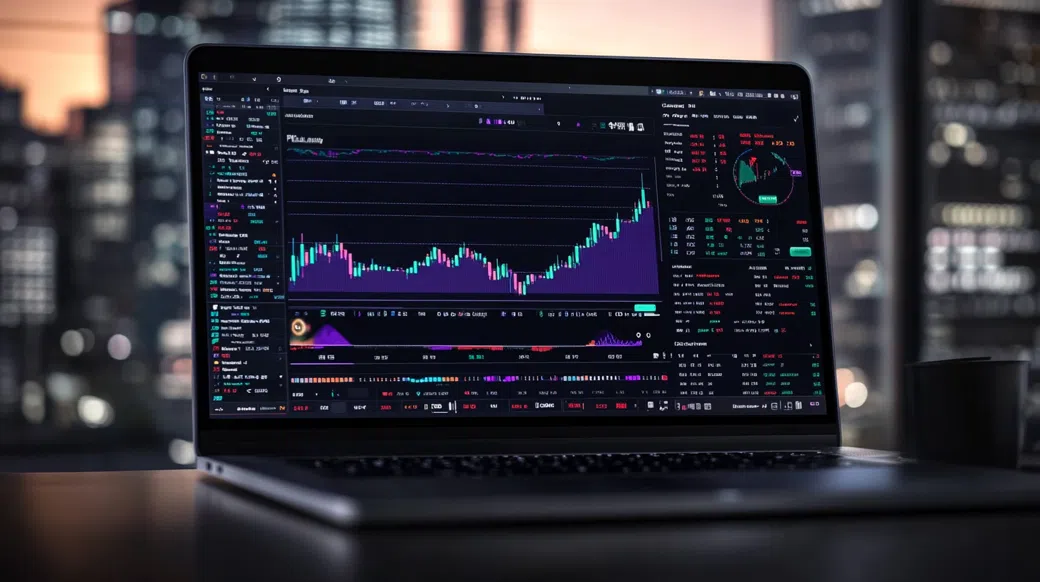
Cordex GPT Trading Platform Alternatives 2026
Review Cordex GPT alternatives for 2026: regulated brokers vs offshore platforms, fees, execution, markets, and a safer migration checklist for traders.
Cordex GPT Trading Platform Alternatives 2026: Reliable Options for Online Traders
Risk has a smell. Sometimes it’s obvious—wild leverage banners and vague company details. Other times it’s subtler: a platform that feels “fine” until you need a clean withdrawal, a deeper product list, or tighter execution during a fast tape. Cordex-style brokers typically sit in that second category: forex and CFD-centric, built around a proprietary WebTrader plus mobile apps, and marketed to global retail clients who value speed of onboarding over paperwork.
Based on what’s commonly observed in this offshore segment, Cordex GPT is best understood as a CFD-first venue: think 30–50 FX pairs, a handful of indices and commodities, and crypto CFDs as an add-on rather than a core offering. Costs often look workable on day one—EUR/USD “from around 2.0 pips” is a familiar headline—but the real test is how the platform behaves under stress: slippage around news, margin calls at awkward moments, and the practical friction of KYC/AML when it’s time to move money. That’s where many traders start searching for Cordex GPT alternatives that bring stronger investor safeguards and a more transparent execution model.
In this guide to Cordex GPT alternatives, I’ll compare regulated brokers that serve US/EU traders in 2026, outline what to check (registers, protections, product structure), and give a migration playbook that treats switching as a capital-preservation exercise—not a marketing impulse.
Disclaimer: This article is for informational purposes only and does not constitute investment advice. CFDs and other leveraged products can move against you quickly, and you may lose more than your initial deposit depending on the product and jurisdiction.
Key Takeaways (TL;DR)
- Offshore-style CFD platforms often advertise high leverage (up to ~1:500); regulated alternatives tend to cap leverage but compensate with clearer protections and dispute processes.
- Compare total cost using round-turn spread + commission (and don’t ignore swap/overnight fees), especially if you trade frequently or hold positions for weeks.
- If you want real stocks/ETFs (not CFDs), prioritize multi-asset brokers with DMA access; that’s where the biggest capability gap usually appears.
- Switching works best when the new account is fully KYC-verified before you withdraw, and when you download trade history for tax records first.
What Is Cordex GPT and How Does Its Trading Platform Work?
Across platforms like Cordex GPT, the core proposition is straightforward: trade FX and CFDs through a web interface, with account types that emphasize leverage and quick market access. In practice, that usually means a market-maker style setup (the broker is often the counterparty), with execution and pricing determined internally rather than routed to an exchange. The target user is the active retail trader—someone trading indices, FX majors, and popular crypto tickers—who prefers a simple dashboard over a multi-asset workstation built for equities, options, or bonds.
Cordex GPT Web Trading Platform: Core Features and Tools
Expect a proprietary WebTrader with basic-to-mid charting: common timeframes, a standard library of indicators, and the usual drawing tools for levels and trendlines. Order entry is typically oriented around market and pending orders, plus stop-loss/take-profit controls from the ticket. The “feel” of execution—how quickly orders confirm and how often slippage appears—matters more than a glossy UI, and it’s hard to judge without live testing in volatile windows. Mobile apps on iOS/Android generally mirror the web layout, including a simple account dashboard for margin, open positions, and funding actions.
Trading Fees, Spreads, and Account Types at Cordex GPT
Fee schedules in this category tend to be spread-led. A typical reference point is EUR/USD from about 2.0 pips on a standard-style account, with higher leverage frequently marketed up to roughly 1:500. Some brokers in the segment also pitch a “raw” tier—often framed as 0.0–0.4 pips plus a commission around $6–$8 round-turn—though the practical all-in cost depends on execution and whether quotes widen sharply around events. Beyond spreads, watch the quieter line items: swap/overnight financing on CFDs, potential withdrawal charges, and inactivity fees that can surprise long-horizon traders.
When Do Traders Start Looking for Cordex GPT Alternatives?
One sign is psychological: you stop trusting the plumbing. The moment you trade smaller to “test” whether fills and withdrawals behave, you’re already budgeting for uncertainty. Cordex GPT alternatives become relevant when strategy maturity outgrows a basic WebTrader—particularly if you want consistent execution analytics, clearer legal protections, or the ability to diversify beyond FX/CFDs without rebuilding your workflow from scratch.
- Needing MT4/MT5 or cTrader for automation (EAs, custom indicators, VPS workflows) that a proprietary WebTrader can’t support reliably.
- Wanting regulator-backed safeguards such as segregated client funds and formal complaint channels, rather than relying on offshore dispute handling.
- Seeing meaningful slippage during news releases and realizing the execution model (market maker vs. STP/ECN/DMA) affects outcomes, not just “spreads.”
- Trying to build a portfolio with real stocks/ETFs—then discovering equity exposure is CFDs only, with different rights, costs, and tax handling.
How to Choose a Reliable Alternative to the Cordex GPT Trading Platform
Selection works best as a fit-to-strategy exercise. Start from what you actually trade (timeframe, holding period, instrument set), then map that to regulation, cost structure, and platform tooling. The strongest substitute for one trader can be the wrong tool for another—especially when the difference is “real shares vs. share CFDs” or “DMA execution vs. internalized pricing.”
Regulation, Safety, and Investor Protection
In the EU/UK/AU/US orbit, names like the FCA, ASIC, CySEC, and the NFA/CFTC aren’t marketing badges—they’re enforcement frameworks. FCA-regulated firms may fall under FSCS protection up to £85,000 for eligible clients; CySEC investment firms can be covered by the ICF up to €20,000. Add the basics: segregated client funds, clear risk disclosures, and negative balance protection where required. Those features don’t remove trading risk, but they can materially change counterparty risk.
Available Markets and Instruments
Ask a blunt question: do you need exposure, or ownership? FX and index CFDs cover many short-term approaches, but long-term investors often want real stocks/ETFs (and sometimes bonds, options, futures). Multi-asset venues can consolidate custody and reporting, while CFD-only brokers keep you in synthetic exposure. For US traders, product access is also jurisdiction-driven—spot FX and listed products can be available, while many CFD products are restricted.
Trading Costs: Spreads, Commissions, and Other Fees
Costs deserve a proper yardstick. A tight headline spread can be meaningless if commission, slippage, or swaps do the damage. I prefer a round-turn view: spread in pips converted to dollars + any per-lot commission, then stress-test that number at your monthly volume. Also check overnight financing on CFDs, inactivity fees, and withdrawal charges—small line items become real money when you hold positions or rebalance frequently.
Platforms, Tools, and Execution Quality
Platform choice is not aesthetics; it’s capability. MT4/MT5 and cTrader matter if you run automation, need robust order types, or want a deep ecosystem of indicators and trade-management tools. Execution model is the second lever: market maker vs. STP/ECN vs. DMA will influence fill quality, especially around volatile prints. If you’re comparing competitors to Cordex GPT, ask for execution disclosures, typical slippage behavior, and whether orders are internalized or routed.
Support, Education, and Overall User Experience
When markets move, support becomes a risk control. Look for reachable hours (especially for US/EU overlap), clear language coverage, and funding support that doesn’t bounce you between departments. Education is less about “beginner lessons” and more about practical platform guidance: margin policy, corporate actions for equities, swap calculations, and what triggers a margin call. Mobile parity also matters if you manage risk away from the desk.
Cordex GPT and Different Asset Classes: When Alternatives May Be Better
Cordex GPT Forex and CFD Trading
On FX and index CFDs, Cordex-style pricing often looks acceptable at first glance—EUR/USD around 2.0 pips is a familiar benchmark in offshore retail. The difference shows up in the details: execution consistency, transparent trade reporting, and whether spreads remain stable during stress. Regulated FX/CFD specialists such as Pepperstone and OANDA tend to publish clearer platform stacks and provide better-known guardrails (including negative balance protection in certain regions). If your strategy relies on frequent entries, the “all-in” cost is the real contest: a raw-style account with commission can outperform wider spreads, but only if slippage is controlled and your broker’s execution model matches your style.
Cordex GPT Stock and ETF Trading
Here’s where many traders feel the ceiling. With brokers similar to Cordex GPT, equity exposure is often CFDs on shares rather than real stock ownership—no voting rights, no direct participation in corporate actions the way a custodian account handles them, and financing costs that can make long holds expensive. Multi-asset brokers like Interactive Brokers and Saxo Bank are built for real stocks/ETFs with deeper market access (often DMA), more robust reporting, and broader product choice (options/futures depending on region). If you’re shifting from short-term CFD trading into portfolio building, this is usually the decisive upgrade: the instrument structure changes your risk profile, not just your watchlist.
Cordex GPT Crypto Trading
Crypto on offshore CFD platforms is typically exposure via contracts, not on-chain ownership. That distinction matters: you’re trading price movements with leverage and financing costs, rather than holding coins in a wallet. For traders who want regulated options vs Cordex GPT in 2026, several CFD brokers offer crypto CFDs under established oversight—IG and Plus500, for example, are known for regulated CFD access in multiple jurisdictions (availability varies by country). If you actually need spot crypto custody, you’re usually looking beyond traditional brokers entirely; but for risk-managed speculation, regulated crypto CFDs can be a cleaner framework than offshore alternatives—provided you respect margin and volatility.
Best Cordex GPT Alternatives for 2026: Comparison of Top Trading Platforms
Saxo Bank: Key Facts and How It Compares to Cordex GPT
Regulation: FCA, MAS, DFSA (entity depends on your region)
Markets: Stocks, ETFs, bonds, options, futures, FX, CFDs
Fees: FX spreads generally from ~0.6–1.2 pips (account/region dependent); commissions apply on stocks/options/futures
Platform: SaxoTraderGO, SaxoTraderPRO
Best For: Multi-asset portfolio builders who still trade tactically
Interactive Brokers (IBKR): Key Facts and How It Compares to Cordex GPT
Regulation: SEC/FINRA, FCA, IIROC
Markets: Stocks, ETFs, options, futures, FX, bonds, funds
Fees: FX pricing is typically commission-based with very tight spreads; listed products carry transparent exchange/commission schedules
Platform: Trader Workstation (TWS), IBKR Mobile, Client Portal API
Best For: Serious traders who want global market access and reporting depth
Pepperstone: Key Facts and How It Compares to Cordex GPT
Regulation: FCA, ASIC, CySEC, DFSA
Markets: FX, CFDs (indices, commodities, some shares depending on region)
Fees: Standard spreads often around ~1.0+ pip on EUR/USD; Razor/Raw-style pricing can run ~0.0–0.3 pips plus commission
Platform: MT4, MT5, cTrader
Best For: Algorithmic FX traders who live inside MT4/MT5 or cTrader
OANDA: Key Facts and How It Compares to Cordex GPT
Regulation: CFTC/NFA, FCA, ASIC, IIROC
Markets: FX, CFDs (availability varies by jurisdiction)
Fees: Typically spread-based pricing; EUR/USD commonly around ~0.6–1.2 pips depending on region and market conditions
Platform: OANDA Trade (web/mobile), MT4
Best For: Risk-first FX traders who value well-known oversight
IG: Key Facts and How It Compares to Cordex GPT
Regulation: FCA, ASIC, MAS
Markets: CFDs (indices, FX, commodities, shares), spread betting (UK/IE)
Fees: Competitive spread-led CFD pricing; costs vary widely by market and volatility, with financing on overnight CFD positions
Platform: IG Trading Platform, MT4 (where available)
Best For: Macro-minded CFD traders who want broad index and sector coverage
Trading 212: Key Facts and How It Compares to Cordex GPT
Regulation: FCA, CySEC, FSC Bulgaria
Markets: Stocks, ETFs (invest account); CFDs (separate offering, region dependent)
Fees: Investing often positioned as low-fee; CFD costs are spread-based with overnight financing for holds
Platform: Trading 212 web and mobile
Best For: Mobile-first investors blending ETFs with occasional CFDs
Comparison Summary
| Platform | Regulation | Main Markets | Typical Costs | Best For |
|---|---|---|---|---|
| Saxo Bank | FCA, MAS, DFSA | Real stocks/ETFs, bonds, options/futures, FX/CFDs | FX ~0.6–1.2 pips; commissions on listed markets | Multi-asset portfolio builders who still trade tactically |
| Interactive Brokers (IBKR) | SEC/FINRA, FCA, IIROC | Global stocks/ETFs, options, futures, FX, bonds | Tight FX + commission; transparent listed fees | Serious traders who want global market access and reporting depth |
| Pepperstone | FCA, ASIC, CySEC, DFSA | FX + CFD suite | Raw ~0.0–0.3 pips + commission; Standard ~1.0+ pip | Algorithmic FX traders who live inside MT4/MT5 or cTrader |
| OANDA | CFTC/NFA, FCA, ASIC, IIROC | FX (plus CFDs outside the US) | Spread-based, often ~0.6–1.2 pips EUR/USD | Risk-first FX traders who value well-known oversight |
| IG | FCA, ASIC, MAS | CFDs on FX/indices/commodities/shares; spread betting (UK) | Spread-led; overnight financing on CFD holds | Macro-minded CFD traders who want broad index and sector coverage |
| Trading 212 | FCA, CySEC, FSC Bulgaria | Stocks/ETFs (real), plus CFDs (region dependent) | Low-fee investing; CFD spreads + overnight financing | Mobile-first investors blending ETFs with occasional CFDs |
How to Safely Move from Cordex GPT to Another Broker
Switching brokers is less like changing apps and more like rolling risk from one counterparty to another. Do it in sequence, keep documentation, and assume nothing transfers automatically—positions, margin terms, even symbol conventions can differ. If you’re stepping away from Cordex GPT or similar offshore setups, treat every step as reversible until cash is confirmed in the new account.
- Confirm the new broker’s authorization on the regulator’s own register (FCA Register, ASIC Connect, CySEC register, or NFA BASIC) and match the legal entity name—not just the brand.
- Open the new account and complete KYC/AML first (ID + proof of address). Many verifications clear within a business day, but mismatched addresses can stretch it.
- Recreate your risk settings before funding: leverage limits, negative balance protection terms (where applicable), and margin-call policy can differ materially.
- Flatten or hedge open positions rather than expecting a “transfer.” Most retail CFD/FX positions cannot be moved broker-to-broker; you typically exit and re-enter.
- Withdraw using the same rail you deposited with when possible. Brokers often enforce this for AML reasons, and it can reduce delays and back-and-forth.
Ready to Explore Cordex GPT?
If you’re comparing Cordex GPT trading platform alternatives 2026, it helps to review the current onboarding flow, tradable instruments, and regional eligibility side by side before committing funds. Test spreads, swaps, and order handling with small size first—then scale only if the execution matches your plan.
Visit Cordex GPTFAQ: Cordex GPT Alternatives and Trading Platforms
What is the best alternative to Cordex GPT in 2026?
The best alternative depends on whether you need real multi-asset access or mainly FX/CFDs. For global, multi-market investing and advanced tooling, Interactive Brokers and Saxo Bank are hard to ignore; for FX-focused execution with MT4/MT5/cTrader, Pepperstone is a frequent short-list name. If you want a regulated, FX-first setup with strong oversight options across regions, OANDA is a sensible benchmark.
Is Cordex GPT a safe broker/platform?
Cordex GPT appears consistent with offshore/unregulated CFD providers, which generally means fewer investor-protection mechanisms than FCA/ASIC/CySEC/NFA-regulated firms. In that setting, you’re taking more counterparty risk: dispute resolution, fund segregation standards, and compensation schemes may not mirror top-tier jurisdictions. If safety is the priority, regulated options vs Cordex GPT—checked directly on regulator registers—are usually the more robust path.
Can I trade stocks, futures, or crypto with Cordex GPT?
Cordex GPT is typically positioned around forex and CFDs, with crypto often offered as crypto CFDs rather than coin ownership, and stocks/ETFs commonly available (if at all) as CFDs only. Futures access in the listed-exchange sense is usually a feature of multi-asset brokers like Interactive Brokers or Saxo Bank, not basic WebTrader CFD venues. If you need real stocks/ETFs or exchange-traded futures, a brokerage with DMA and listed-market connectivity is the cleaner solution.
What should I check before switching from Cordex GPT to another platform?
Before switching, verify the new broker’s exact legal entity on the FCA/ASIC/CySEC/NFA register, then compare margin rules, negative balance protection, and total trading costs (spread + commission + swap). Export your history and statements from Cordex GPT for taxes and audit trails, and don’t assume positions can be transferred. Finally, test execution and withdrawals with a small amount before deploying full size.
About the Author: Erik Lindström is a Stockholm-based former fixed-income analyst who now covers European brokerage ecosystems and Nordic fintech innovation. He writes with a trader’s respect for execution details and a journalist’s instinct for verifying claims. For Erik, risk management is closer to craft than calculus: structure first, then size.