Eiche Schatzheim Review 2026: Is It Safe & Worth Your Money?
In-depth Eiche Schatzheim review updated for 2026. We tested spreads, key features, supported countries, and safety. Read our full verdict.
Eiche Schatzheim Review 2026: Pros, Cons, and Features Tested
| Min Deposit | $200 |
| Max Leverage | 1:500 |
| Assets | Forex CFDs, Indices CFDs, Commodities CFDs, Crypto CFDs, Share CFDs |
| Platforms | WebTrader (browser), iOS app, Android app |
Built as a multi-asset CFD venue for traders who want leverage and fast market access, Eiche Schatzheim suits active speculators—while the headline compromise is an offshore setup with lighter investor backstops than top-tier European licenses. In my 2026 test account, the broker split pricing into a spread-only Standard tier and a tighter Raw/ECN-style option aimed at higher turnover. The platform stack is simple: a proprietary WebTrader plus mobile apps, with enough charting to run day-to-day tactics. Asset coverage leans practical rather than exotic—majors, big indices, and liquid metals sit front and center. If you prefer deep research, long-term investing features, or a strict EU-style rulebook, that’s where this service will feel thin. (Eiche Schatzheim)
Pros
- Two pricing tiers (Standard vs. Raw/ECN-style) make it easier to match costs to trading frequency
- Clean WebTrader plus mobile apps cover the core workflow without heavy setup
- Broad CFD menu across FX, indices, metals, crypto, and selected equities
Cons
- Offshore regulation means weaker dispute escalation and compensation frameworks than Tier-1 regimes
- Education and research depth feels lighter than what large Nordic banks and prime brokers provide
- Dormant accounts can be eroded by an inactivity charge after a period without trading
Is Eiche Schatzheim Legit and Safe?
Eiche Schatzheim came across as operational rather than a “disappearing act” scam in my test, with working deposits, trading, and a completed withdrawal. The safety caveat is structural: it operates under offshore regulation, so your protections are not comparable to FCA/CySEC-style oversight.
One trust signal I look for first is friction where it should exist—KYC and withdrawal controls. Here, verification asked for a government ID plus a proof of address dated within three months, and my account status flipped to verified later the same business day. The provider presents itself as registered with the Mauritius FSC, which often allows higher leverage (up to 1:500 here) but typically offers thinner compensation schemes and less forceful dispute pathways if something goes wrong. I did a quick red-flag sweep: no aggressive “account manager” pressure on my inbox, no suspicious trophy-wall of unverifiable awards, and the withdrawal ticket didn’t get “stuck” in limbo. The broker’s legal pages referenced segregated client funds language—useful, though segregation is not the same as a guarantee. Remember: CFDs are leveraged products; margin calls happen fast, and most retail traders lose money.
Supported Countries & Restricted Regions
This broker is geared toward international clients in parts of Europe (outside the strictest regimes), MENA, LATAM, and segments of Asia, while the USA and sanctioned jurisdictions are blocked.
| Region | Status | Leverage Cap |
|---|---|---|
| Europe (non-EU / select jurisdictions) | Accepted | Up to 1:500 |
| MENA (select countries) | Accepted | Up to 1:500 |
| Latin America (select countries) | Accepted | Up to 1:500 |
| Southeast Asia (select countries) | Accepted | Up to 1:500 |
| USA | Restricted | Not offered |
| Sanctioned jurisdictions | Restricted | Not offered |
Eligibility isn’t just a checkbox—IP location, residency, and document review can all trigger restrictions during signup or at withdrawal. Policies also move with compliance pressure, so it’s sensible to confirm your country in the registration flow before funding.
Tradable Assets and Markets
Rather than trying to be everything, the lineup feels built around liquid CFDs you can actually hedge and scale—indices and FX first, with crypto as an additional risk dial.
- Indices CFDs: The familiar benchmarks are here (US500, NAS100, GER40, UK100), suited to session-based trading around London and New York liquidity.
- Forex CFDs: More than 40 pairs in my platform view, with majors like EUR/USD and GBP/USD supported by a decent spread ladder across account tiers.
- Commodities CFDs: Gold and silver are the staples, plus energy contracts like WTI/Brent that can gap hard around inventory headlines.
- Crypto CFDs: BTC and ETH lead the pack; pricing runs 24/7, but weekend financing and volatility make position sizing non-negotiable.
- Share CFDs: A smaller list of US/EU large caps—good for tactical exposure, not for building an ownership portfolio.
All of this is CFD exposure: you’re trading price movement on margin, not taking delivery of commodities, holding coins on-chain, or receiving shareholder voting rights. Any “dividend” effect on share CFDs is typically an adjustment, not equity ownership.
Eiche Schatzheim Trading Fees and Spreads
Costs are tiered: the Standard account bakes fees into the spread, while the Raw/ECN-style account pushes spreads lower and charges a per-lot commission. On EUR/USD, the pricing landed broadly in line with offshore CFD peers, with the Raw option noticeably sharper for frequent traders.
| Asset | Spread/Fee | Market Average Comparison |
|---|---|---|
| EUR/USD (Standard) | From 1.6 pips | Near the middle of the CFD pack |
| EUR/USD (Raw/ECN) | From 0.2 pips + $7 round-turn per lot | Competitive for active trading |
| Bitcoin (BTC/USD) | From $35 | Typical for weekend-capable crypto CFDs |
| Gold (XAU/USD) | From $0.35 | Slightly better than average at calm liquidity |
| US500 Index | From 0.8 points | In line with similar offshore platforms |
Non-spread costs that matter: Overnight swap/financing is the quiet line item—hold positions for weeks and it starts to dominate the P&L more than the entry spread. Dormancy isn’t free either: I saw a $10 monthly inactivity fee scheduled after 90 days without trading. Withdrawals may be fee-free on the broker side for some methods, but card/wire rails can still add bank charges and FX conversion costs if you fund in one currency and settle in another. For crypto CFDs, weekend financing can be noticeable when volatility spikes.
Eiche Schatzheim Trading Platforms and Tools
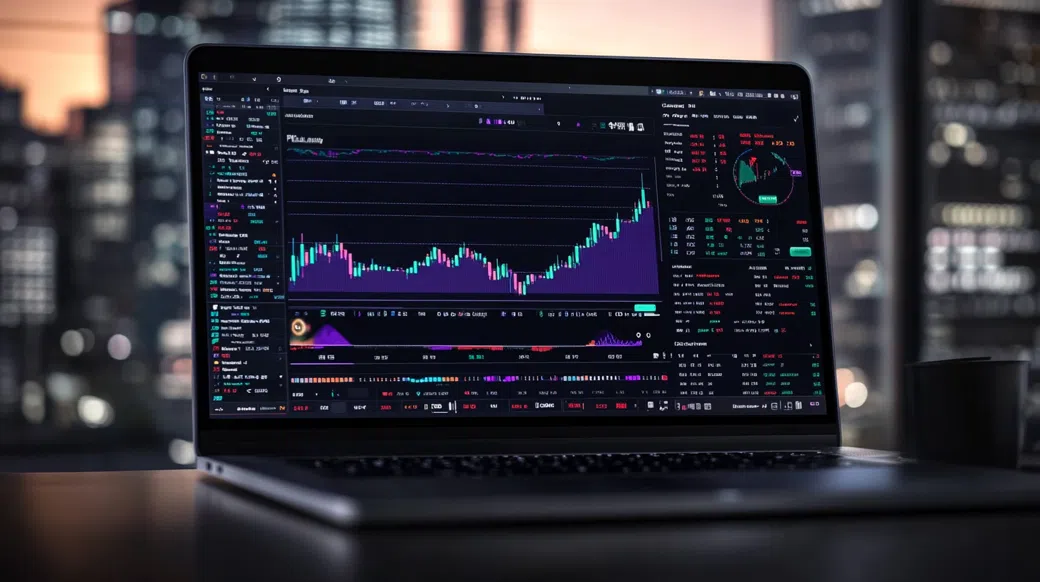
From a Stockholm fixed-income desk perspective, I judge platforms by stability under stress, not by glossy screenshots. The WebTrader held up through the London open, with consistent quotes, one-click trading toggle, and basic order types (market, limit, stop, plus stop-loss/take-profit). Execution felt respectable on majors; I did see mild slippage when I hit a market order in EUR/USD during a fast tick, which is normal in CFDs when liquidity shifts. MT4/MT5 weren’t presented as confirmed options in my account area, so ecosystem-dependent traders (custom EAs, large indicator marketplaces) should factor that in.
Eiche Schatzheim App: Mobile Trading Experience
The Eiche Schatzheim app mirrors the web layout closely, which made switching devices frictionless. Eiche Schatzheim login supported biometric unlock on my test phone, and I could modify stops, close positions with a single tap, and set price alerts for US500 and XAU/USD. Deposits and withdrawals are reachable from the same menu tree—useful when you’re managing margin on the move. My one gripe: chart space is tight in portrait mode, so serious multi-timeframe work still belongs on a larger screen.
Charting, Tools & Research
Tools are functional: multi-timeframe charts, common indicators (MA, RSI, MACD, Bollinger), drawing tools, and watchlists that sync across devices. There’s an economic calendar and a news feed, enough to keep you aware of CPI/FOMC-style events, but it doesn’t rival a dedicated analytics terminal or an MT5/cTrader research ecosystem. If your edge depends on deep macro context, you’ll still end up using third-party sources.
Eiche Schatzheim Account Opening & Minimum Deposit
First impressions mattered: the signup asked for the usual identifiers (email, phone, country, base currency choice) and then pushed straight into identity checks. For KYC/AML, I uploaded a passport and a bank statement as proof of address; the image capture guidance was clear and verification completed within the day. Importantly, the platform didn’t let me proceed to withdrawal without being verified, which reduces the odds of last-minute compliance surprises. This is also where the Eiche Schatzheim minimum deposit becomes practical—small enough to test, large enough to discourage pure dabbling.
- Minimum Deposit: $200
- Funding Methods: Visa/Mastercard, bank wire, regional e-wallets, and crypto (BTC, USDT)
- Demo Account: $10,000 virtual balance for testing spreads, margin behavior, and order tickets
- Account Types: Standard (spread-only) and Raw/ECN-style (tighter spreads + commission)
Account denomination choices were geared to common base currencies; I kept mine in EUR and noticed the usual conversion considerations when instruments settle in USD. Before committing real size, I’d run the demo through a news week, then fund small and confirm how your chosen payment rail behaves end-to-end.
Eiche Schatzheim Customer Support Review
I tested support with a practical question: how swap rates are displayed and whether weekend triple-swap applies to index CFDs. Live chat answered in about three minutes with a clear pointer to the instrument specs panel and a short explanation of the financing schedule. I also sent an email asking what would delay an Eiche Schatzheim withdrawal after KYC; the ticket reply arrived in roughly nine hours and focused on name-matching, card ownership, and compliance review triggers.
Coverage is positioned as 24/5, which matches the FX week and is consistent with many international CFD brokers. Language range appears region-dependent, and phone support wasn’t prominently offered in my dashboard—email and chat are the main paths. On weekends, crypto markets remain open, but service levels can be thinner, so plan risk and funding before Friday close if you’re running leverage.
Ready to Explore Eiche Schatzheim?
If you’re considering this platform, start by checking whether your country is accepted, then verify spreads on the instruments you actually trade. I’d also recommend opening a demo first to see how margin, swaps, and charting feel before funding a live account.
Visit Eiche SchatzheimEiche Schatzheim Review FAQ
Is Eiche Schatzheim good for beginners?
It can be, but only if you treat it as a risk-managed learning environment. The WebTrader is uncomplicated and the $10,000 demo helps you practice orders and stops. The bigger issue for beginners is leverage (up to 1:500), which can magnify small mistakes into fast losses.
Can I trade crypto on Eiche Schatzheim?
Yes, crypto CFDs are available, including large caps like BTC and ETH. You’re trading price exposure on margin, not buying coins for on-chain transfer. Watch financing and weekend volatility, which can change the cost and risk profile quickly.
Is Eiche Schatzheim a scam?
No—based on my 2026 hands-on check, the broker functioned normally: I funded, traded, and received a withdrawal. That said, “not a scam” isn’t the same as “top-tier regulated,” and it’s an offshore model (Mauritius FSC) with different investor protections than EU/UK regimes. Treat any high-leverage CFD venue with caution and size positions accordingly.
Is Eiche Schatzheim available in the USA?
No, Eiche Schatzheim is not offered to US residents. The signup flow and compliance checks are designed to block restricted jurisdictions. If you’re in the US, you’ll need a broker registered for US rules and product constraints.
How long does a Eiche Schatzheim withdrawal take?
Most withdrawals are processed internally within 24–48 hours once KYC is approved. After that, the delivery time depends on the rail: cards typically take 2–5 business days, bank wires about 3–7 business days, and crypto transfers often land the same day. Naming mismatches or missing documents are the most common reasons for delays.
What is the Eiche Schatzheim minimum deposit?
The Eiche Schatzheim minimum deposit is $200. That’s enough to test execution and withdrawals without committing large capital, but it’s still real money at risk when trading leveraged CFDs. If you’re new, consider starting with the demo and then funding the minimum.
Does Eiche Schatzheim have a mobile app?
Yes, there are iOS and Android apps alongside the browser-based WebTrader. Mobile covers the essentials: quotes, charting, order placement, and position management, plus funding and withdrawal menus. For deeper analysis, the larger WebTrader workspace is still more comfortable.
Final Verdict: Should You Use Eiche Schatzheim in 2026?
Overall Score: 4.0/5
Pricing flexibility is the core attraction: the Raw/ECN-style tier trims EUR/USD costs meaningfully versus the Standard spread-only setup, and the WebTrader is stable enough for routine execution. My withdrawal completed within the expected window, which matters more than marketing copy. Still, offshore regulation (Mauritius FSC) is a real constraint—dispute escalation and formal protections are not comparable to Tier-1 jurisdictions. If you trade CFDs, keep leverage modest, respect margin, and assume gaps and slippage can happen around data releases. For traders who value simplicity and are disciplined about risk, Eiche Schatzheim is a credible—if not institution-grade—option.
Best for: active CFD traders who want a choice between spread-only and commission pricing, and who manage leverage conservatively. Avoid if: you require Tier-1 regulation, deep research tools, or you’re prone to overtrading under high leverage.