Finora AI Review 2026: Is It Safe & Worth Your Money?
In-depth Finora AI review updated for 2026. We tested spreads, key features, supported countries, and safety. Read our full verdict.
Finora AI Review 2026: Pros, Cons, and Features Tested
| Min Deposit | $200 |
| Max Leverage | 1:500 |
| Assets | Forex, Indices, Commodities, Crypto CFDs, Share CFDs |
| Platforms | Proprietary WebTrader + iOS/Android mobile apps |
Built as a high-leverage CFD venue with an AI-leaning interface, Finora AI suits traders who want quick access to majors, indices, and crypto—while accepting the realities of an offshore framework. In my test account, the broker’s tiering was clear: a spread-only Standard setup for casual positioning and a tighter Raw/ECN-style option designed for faster turnover. Market coverage feels multi-asset rather than “forex-only,” and the WebTrader is the center of gravity, with mobile acting as a functional companion. The edge is simplicity and flexibility; the friction is that investor protections and escalation paths aren’t EU-grade. For the platform tour and current terms, I used Finora AI.
Pros
- Two pricing tracks (Standard vs Raw/ECN-style) let you match costs to your trading frequency
- Solid multi-asset CFD menu: FX, indices, metals, and large-cap crypto all in one place
- WebTrader is clean and usable, with mobile apps that cover the essentials
Cons
- Operates under an offshore registration model, so protections and dispute routes are thinner
- Education and research are serviceable, not “broker-university” level
- Non-trading fees (like inactivity) can matter if you park an account
Is Finora AI Legit and Safe?
Finora AI looks operational and legitimate as a functioning CFD broker rather than a “vanishing act” scam. That said, it’s built on an offshore registration structure, which changes the risk calculus versus a Tier-1 regulated house.
The account I opened was linked to a Seychelles FSA registration footprint, and the compliance tone matched that world: workable onboarding, clear risk prompts, and firm KYC gates, but without the heavy investor-compensation scaffolding you’d expect in the EU. Offshore status often buys you higher leverage (here up to 1:500) and looser product constraints, yet it can also mean fewer formal channels if a dispute turns messy. I did a basic red-flag sweep while testing—no “mystery awards,” no aggressive phone sales, and no odd pressure to upsell beyond normal account-type nudges. Withdrawals were processed inside the stated window, and the provider’s documentation referenced segregated client funds and AML checks (useful signals, though you still rely on enforcement quality). Remember: CFDs are leveraged instruments; most retail traders lose money, and capital is always at risk.
Supported Countries & Restricted Regions
This broker generally accepts clients across parts of Europe (non-EU), MENA, Southeast Asia, and segments of LATAM, while explicitly blocking the USA and sanctioned jurisdictions.
| Region | Status | Leverage Cap |
|---|---|---|
| Europe (non-EU/EEA) | Accepted | Up to 1:500 |
| MENA (selected countries) | Accepted | Up to 1:500 |
| Southeast Asia (selected countries) | Accepted | Up to 1:500 |
| Latin America (selected countries) | Accepted | Up to 1:500 |
| USA | Restricted | Not offered |
| Sanctioned jurisdictions | Restricted | Not offered |
Eligibility is enforced through a mix of IP checks and KYC details (residency/address), and the allowed list can tighten quickly when policy or payment rails change. If you travel often, expect an occasional security prompt at login.
Tradable Assets and Markets
From a trader’s seat, the lineup reads “macro-first”: indices and FX sit alongside metals and crypto, so you can express risk-on/risk-off views without juggling multiple brokers.
- Indices: The usual suspects are here (US500, NAS100, GER40, UK100), which is where I spent most of my screen time during the NY overlap.
- Forex: Roughly 40+ pairs covering majors and a decent slice of minors; exotics exist but are clearly not the main event.
- Commodities: Gold and silver are liquid, with energy exposure via WTI/Brent-style contracts and natural gas for the brave.
- Crypto CFDs: BTC and ETH lead, with a handful of large-caps; it’s price exposure, not coin custody.
All of this is CFD exposure: you’re trading price movements with leverage, not acquiring shareholder voting rights, on-chain tokens, or “true” dividend ownership. For share CFDs, dividends may be handled via cash adjustments rather than actual stock receipts.
Finora AI Trading Fees and Spreads
The cost structure hinges on account tier: Standard is spread-only, while the Raw/ECN-style account compresses spreads and adds a per-lot commission. On balance, pricing lands in the middle of the offshore CFD segment—competitive when you trade actively, less exciting if you only place the occasional micro-position.
| Asset | Spread/Fee | Market Average Comparison |
|---|---|---|
| EUR/USD (Standard) | From 1.6 pips | In line with typical offshore CFD pricing |
| EUR/USD (Raw/ECN) | From 0.2 pips + $7 round-turn/lot | Competitive for frequent traders |
| Bitcoin (BTC/USD) | From $25 spread | Middle of the pack; can widen on weekends |
| Gold (XAU/USD) | From $0.35 | Reasonable versus similar CFD venues |
| US500 Index | From 0.8 points | Close to segment norms |
Non-spread costs that matter: Overnight swap/financing is the quiet line item—hold positions through multiple sessions and it starts to dominate the P&L, especially on indices and leveraged FX. I also noted an inactivity charge of $10 per month once an account sits dormant for 90 days, which is small but persistent. Withdrawals themselves were not billed on my side, but your bank/card provider can still clip you via intermediary fees, and funding in a different base currency adds conversion costs. Crypto CFDs can carry heavier weekend financing, so swing traders should read the contract specs closely.
Finora AI Trading Platforms and Tools
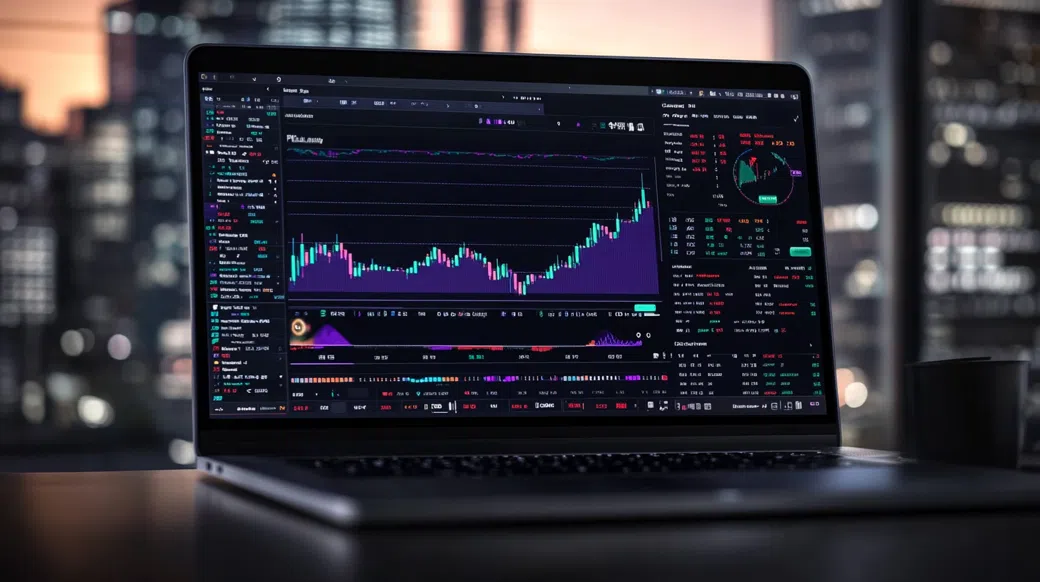
On desktop, the proprietary WebTrader behaved like a modern brokerage front-end rather than a retro terminal: stable sessions, quick instrument search, and enough order controls to trade tactically. I ran a small US500 position around a CPI print to watch slippage; execution wasn’t “magic,” but fills were consistent with a volatile tape and I didn’t see a carousel of requotes. If you live inside the MT4/MT5 plugin universe, the gap is ecosystem depth—fewer third-party add-ons and less community tooling—though for many discretionary traders the built-ins will do.
Finora AI App: Mobile Trading Experience
The Finora AI app is not a toy: real-time quotes, chart access, and position management are all there, plus deposits and withdrawals from the same menu. Finora AI login supported biometric unlock on my device, and push notifications for price alerts arrived promptly once enabled. One-tap close works, but I’d still avoid heavy ticket-splitting on a small screen during fast markets; the UI favors clarity over hyperactive scalping workflows.
Charting, Tools & Research
Tools are practical rather than academic: multi-timeframe charts, the common indicators (MA, RSI, MACD, Bollinger), and basic drawing for levels and trendlines. An economic calendar and an integrated news feed cover the “what just happened?” use case. The ceiling shows up when you want deeper strategy testing or advanced order logic—areas where MT5/cTrader-style environments still dominate.
Finora AI Account Opening & Minimum Deposit
My onboarding started with a short form (email, password, country, and a suitability/risk questionnaire), then moved into KYC without theatrics. The broker requested a government-issued photo ID plus a proof of address (utility bill or bank statement dated within three months), and verification cleared the same business day. Deposit prompts were presented immediately after approval, which is typical, but I appreciated that leverage and margin risk were surfaced before I could place my first trade.
- Minimum Deposit: $200
- Funding Methods: Visa/Mastercard, bank wire, regional e-wallets, and crypto (BTC/USDT)
- Demo Account: $10,000 virtual balance for practicing order flow and platform navigation
- Account Types: Standard (spread-only) and Raw/ECN-style (tighter spread + commission)
For anyone searching “Finora AI minimum deposit,” the $200 threshold is realistic for testing position sizing without immediately leaning on 1:500 leverage. My first top-up was by card, and the ledger entry appeared instantly with a clean confirmation screen. If you want to compare account tiers before funding, start with the demo and treat real money as a second step.
Finora AI Customer Support Review
I put support to work on two fronts: live chat for swap/overnight financing details on a gold CFD, and email to confirm withdrawal rails after KYC. Chat connected in roughly three minutes and the agent pointed me to the contract-spec sheet while clarifying how triple-swap is applied midweek. The email reply landed later the same day (around nine hours), with a concise timeline and a reminder that name-matching is mandatory for AML.
Coverage is broadly 24/5, which fits the FX week but leaves weekends quieter—relevant if you trade crypto CFDs and want hand-holding on Saturday. Language support felt serviceable in English; regional languages may depend on staffing. Phone contact wasn’t prominently pushed during my test, so I’d treat this provider as chat-and-ticket first, like many offshore brokers.
Ready to Explore Finora AI?
If you’re considering an account, start by checking the live spread widget during your usual trading hours and confirm your country’s eligibility before funding. A short demo run can also reveal whether the WebTrader layout fits your risk workflow—especially if you trade around macro releases.
Visit Finora AIFinora AI Review FAQ
Is Finora AI good for beginners?
Yes, it can work for beginners if they stay small and use the demo first. The WebTrader is uncluttered and the $200 entry point is manageable. The caution is leverage: 1:500 is not “beginner-friendly” unless you actively cap your position sizing.
Can I trade crypto on Finora AI?
Yes, crypto is available as CFDs, with BTC and ETH as the main contracts plus a few large-cap alternatives. You’re trading price exposure rather than holding coins on-chain. Expect wider spreads and different financing behavior over weekends.
Is Finora AI a scam?
No, my experience didn’t match common scam patterns: KYC was enforced, trading access worked as expected, and a withdrawal request was processed. The more accurate framing is “offshore-risk” rather than “scam-risk,” meaning fewer formal protections than a Tier-1 regulated broker.
Is Finora AI available in the USA?
No, the USA is restricted and accounts aren’t offered there. If you attempt signup from a US profile, you’ll typically be blocked during eligibility checks. This is standard for international CFD brokers operating offshore.
How long does a Finora AI withdrawal take?
Most withdrawals are processed internally within 24–48 hours after KYC is complete. Receipt time then depends on the rail: cards commonly take 2–5 business days, wires 3–7 business days, and crypto can arrive the same day. In my test, the broker-side approval happened inside the stated window.
What is the Finora AI minimum deposit?
The Finora AI minimum deposit is $200. That’s enough to test both the platform and real-market execution without forcing oversized leverage. Funding options include cards, bank transfer, e-wallets, and selected cryptocurrencies.
Does Finora AI have a mobile app?
Yes, there are iOS and Android apps alongside the WebTrader. You can monitor positions, place trades, and manage deposits/withdrawals from the phone. Biometric login and alerts help, but complex multi-order management is still smoother on desktop.
Final Verdict: Should You Use Finora AI in 2026?
Overall Score: 4.0/5
What kept me engaged wasn’t marketing—it was the combination of a usable WebTrader, a credible Raw/ECN-style pricing option, and enough multi-asset CFDs to express a macro view without hopping between apps. The withdrawal I ran (post-KYC) followed the stated timelines, which is a basic but meaningful trust signal. Still, the offshore structure and 1:500 leverage mean you must bring your own discipline: tight sizing, clear stop logic, and no illusions about protection frameworks. For traders who understand that bargain, Finora AI is a viable toolset in 2026.
Best for: self-directed CFD traders who want flexible leverage and a clean proprietary platform. Avoid if: you require Tier-1 regulation, formal compensation schemes, or you tend to overtrade when leverage is available.