
Fruit Avoirançe Trading Platform Alternatives 2026
Review Fruit Avoirançe alternatives for 2026 with a US/EU lens—regulated brokers, platform tools, costs, and a safer migration checklist before moving funds.
Fruit Avoirançe Trading Platform Alternatives 2026: Reliable Options for Online Traders
Risk has a smell. In rates markets it’s a widening bid/ask and a silent dealer. In retail CFDs it’s usually leverage that looks generous, a WebTrader that feels “good enough,” and a regulatory footprint that’s hard to pin down. Fruit Avoirançe sits in that familiar corner: a CFD-first setup geared toward forex and index speculation, typically paired with a proprietary browser platform and a mobile app. Public signals in this segment also tend to point offshore—often under a Seychelles-style framework rather than the tight supervisory net most US/EU traders expect. Fruit Avoirançe may still work for certain short-term styles, but many traders end up wanting tighter oversight, broader instruments, and cleaner execution reporting.
This guide to Fruit Avoirançe alternatives is written for people who care about process: where client funds sit, how margin calls are handled, what happens in fast markets, and whether you’re trading real shares or a CFD wrapper. I’ll also compare practical platform stacks—MT4/MT5/cTrader versus proprietary WebTrader—because tooling changes your behavior more than most fee tables do. Expect a US/EU focus, but the shortlist is global enough for cross-border professionals, expats, and frequent movers.
Disclaimer: This article is for informational purposes only and does not constitute investment advice. Leveraged products like CFDs can amplify losses as well as gains, and you can lose more than your initial margin in some setups.
Key Takeaways (TL;DR)
- If your goal is real stocks/ETFs (not CFDs), a multi-asset venue like Interactive Brokers or Saxo Bank is a more direct fit than most offshore CFD-only platforms.
- Compare “round-turn” trading cost (spread + commission) rather than headline spreads or maximum leverage—those numbers mislead in choppy sessions.
- FSCS (UK) and ICF (EU/Cyprus) frameworks add an extra layer of investor protection that offshore jurisdictions generally don’t match.
- Open and KYC-verify the new account first; then withdraw using the same payment rail you used to deposit to reduce AML friction and delays.
What Is Fruit Avoirançe and How Does Its Trading Platform Work?
From a trader’s point of view, Fruit Avoirançe looks like an offshore CFD brokerage built around leveraged forex and index trading rather than long-term investing. In this category, the business model is commonly market-maker or hybrid (the broker is often the counterparty), which can be perfectly legal in some jurisdictions but demands extra attention to execution quality, slippage behavior, and conflict-of-interest controls. Expect the core menu to center on ~30–50 FX pairs, a handful of commodities, a compact index list, and crypto CFDs—more “speculation toolkit” than diversified portfolio platform. That profile is why brokers similar to Fruit Avoirançe are compared mainly on risk controls and costs, not on research portals or long-only investing features.
Fruit Avoirançe Web Trading Platform: Core Features and Tools
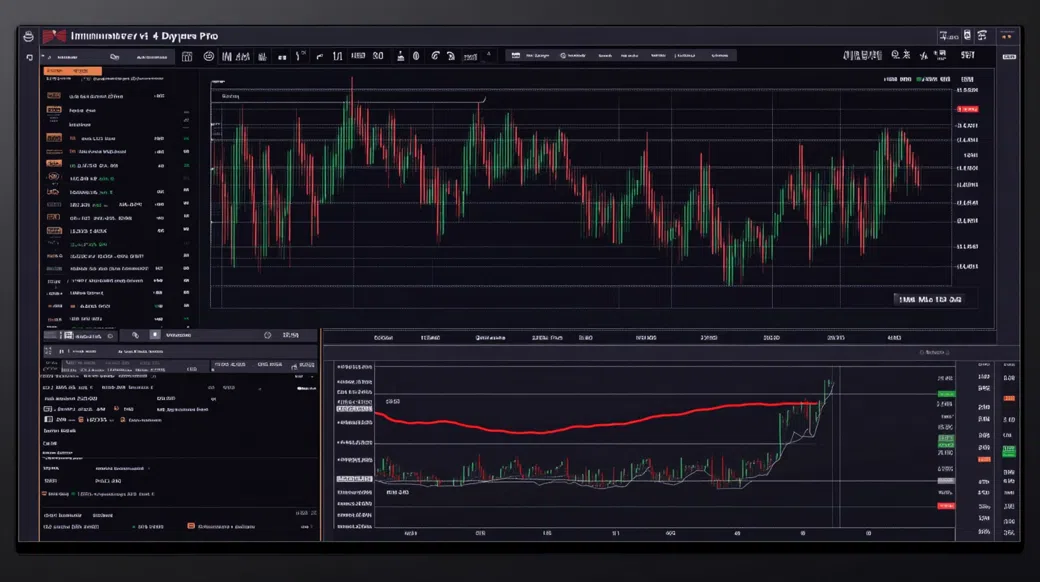
The platform stack typically revolves around a proprietary WebTrader with basic-to-mid charting: a standard indicator library, common drawing tools, and one-click order entry. Order types usually cover market and limit/stop, sometimes with take-profit/stop-loss attached—fine for discretionary intraday work, less ideal for systematic execution. Mobile apps on iOS/Android tend to mirror the watchlist and position management experience, though advanced chart templates and multi-chart layouts can be thinner on phones. Where these WebTraders often show their limits is auditability: fewer execution reports, less granular trade analytics, and fewer integrations than MT4/MT5 or cTrader ecosystems that many platforms like Fruit Avoirançe compete against.
Trading Fees, Spreads, and Account Types at Fruit Avoirançe
Cost-wise, the common pattern is a spread-led Standard account with EUR/USD around ~2.0 pips in normal liquidity, plus overnight swap/financing that matters if you hold positions beyond the session. Some brokers in this lane advertise “raw” pricing: something like 0.0–0.4 pips on majors paired with a $6–$8 round-turn commission—but the all-in result still depends on fills and slippage at the moments you actually trade. Minimum deposits are often pitched as accessible; a typical figure is $250. Leverage can run high (often up to 1:500), which is precisely where discipline has to replace excitement: leverage is a tool, not a personality.
When Do Traders Start Looking for Fruit Avoirançe Alternatives?
The first real trigger is usually not price—it’s confidence. When a platform operates offshore, traders begin to ask different questions: What is the dispute path? Are client funds segregated? Do I have negative balance protection, and is it enforced in stress? Those concerns push many people toward Fruit Avoirançe alternatives that sit under FCA, ASIC, CySEC, or NFA oversight. Cost and tooling still matter, but they tend to become decisive only after the safety floor is set.
- You want an FCA/CySEC/ASIC-regulated account with clearer rules on segregated client funds and retail protections like negative balance protection in relevant regions.
- Your strategy needs MT4/MT5 or cTrader for automation, custom indicators, or tighter control of order handling than a proprietary WebTrader provides.
- Withdrawals feel “manual” (extra steps, repeated documents, long queues), and you’d prefer a broker with predictable banking rails and transparent fee schedules.
- You’re trying to build exposure to real equities/ETFs instead of equity CFDs, and you want shareholder rights, corporate actions handling, and proper custody.
How to Choose a Reliable Alternative to the Fruit Avoirançe Trading Platform
I think of broker selection like position sizing: start with the downside you refuse to accept, then work backwards into features and costs. For alternatives to the Fruit Avoirançe trading platform, the “downside you refuse” is usually counterparty and process risk—regulatory recourse, cash handling, and execution transparency. After that, you can optimize for instruments, platforms, and total trading cost.
Regulation, Safety, and Investor Protection
In the UK, FCA oversight can bring access to the FSCS (up to £85,000, eligibility rules apply). In Cyprus/EU contexts, the ICF can cover up to €20,000 in certain cases. ASIC is stricter on conduct and disclosure, while the US framework (NFA/CFTC) is the most constrained on leverage and product scope. Look for segregated client funds, clear legal entity mapping, and published policies on negative balance protection—these are practical differences between regulated options vs Fruit Avoirançe, not just badges on a homepage.
Available Markets and Instruments
Decide what you actually need to trade. FX and index CFDs suit tactical trading; real stocks/ETFs matter for long-horizon compounding; listed options and futures are for precise hedging and defined risk. If you expect to rotate between equities, bonds, and derivatives, a multi-asset broker will beat most competitors to Fruit Avoirançe on breadth. If you’re purely FX/CFD, instrument count matters less than execution consistency and the broker’s margin policy during volatility spikes.
Trading Costs: Spreads, Commissions, and Other Fees
Serious comparisons use all-in round-turn cost: spread paid on entry/exit plus commission if applicable. A “raw” account at 0.1 pip plus commission can be cheaper than a 1.0–1.2 pip spread-only account, but only if your fills are stable and you don’t get clipped by slippage. Also scan for swap/overnight rates, deposit/withdrawal fees, and inactivity charges; these “small” items compound faster than most traders admit in their P&L diaries.
Platforms, Tools, and Execution Quality
Platform choice is behavior choice. MT4/MT5 and cTrader ecosystems enable automation, detailed reporting, and a wider third-party toolchain than a typical WebTrader. Execution model matters too: market maker versus STP/ECN/DMA affects how price improvement, requotes, and slippage are handled. If you scalp around data releases, latency and partial fills are not academic. This is also where Fruit Avoirançe is often hardest to benchmark: proprietary platforms rarely disclose enough execution statistics to evaluate them like you would a venue with deeper reporting.
Support, Education, and Overall User Experience
Good support is not “friendly chat.” It’s fast answers on margin methodology, corporate actions (if you trade equities), and a human who can explain a rejected withdrawal or a trade dispute with timestamps. For global users, language coverage and support hours matter—especially if you trade US sessions from Europe. Finally, check mobile parity: if the app is where you manage risk, it must be robust, not decorative.
Fruit Avoirançe and Different Asset Classes: When Alternatives May Be Better
Fruit Avoirançe Forex and CFD Trading
On paper, Fruit Avoirançe’s FX/CFD offering looks serviceable: roughly a few dozen FX pairs, 8–15 indices, and a small commodity shelf, paired with leverage that can run to 1:500. The catch is that leverage doesn’t compensate for wide effective spreads or uneven fills. If EUR/USD is commonly around ~2.0 pips on a standard setup, the cost drag is immediate for active styles. For tighter pricing and better platform choice, FX/CFD specialists like Pepperstone and IC Markets are often used as benchmarks, particularly on MT4/MT5/cTrader with raw/commission structures. With Fruit Avoirançe alternatives, the practical upgrade is not “more instruments”—it’s a cleaner execution stack and more transparent trade-cost math.
Fruit Avoirançe Stock and ETF Trading
Traders frequently discover a mismatch here: many offshore CFD brokers offer “stocks” as CFDs rather than real shares, which means no shareholder rights, no true custody, and different tax documentation than a cash equity account. If your plan involves long-term allocation, dividend handling, or transferring positions between custodians, a CFD wrapper is simply the wrong vehicle. Brokers similar to Fruit Avoirançe rarely compete well on this dimension. A multi-asset venue like Interactive Brokers is built for real stocks/ETFs plus options and futures; Saxo Bank also covers broad listed markets with a strong European footprint. For investors, that shift—from price betting to ownership—is the most meaningful reason to consider top substitutes for Fruit Avoirançe.
Fruit Avoirançe Crypto Trading
In this segment, “crypto trading” typically means crypto CFDs: you’re trading price exposure, not holding coins on-chain, and you won’t be withdrawing BTC to a wallet. That can be fine for short-term hedging or tactical positioning, but it introduces additional risk layers: wider spreads in fast markets, weekend liquidity gaps, and financing costs if you hold. Regulated brokers differ here. Some CFD providers like IG offer crypto CFD exposure in eligible jurisdictions, while others restrict it or provide only limited tokens. If you need broader risk controls—like clearer margin rules and robust reporting—Fruit Avoirançe alternatives under established regulators generally provide a more predictable framework, even if the product set is narrower by design.
Best Fruit Avoirançe Alternatives for 2026: Comparison of Top Trading Platforms
Saxo Bank: Key Facts and How It Compares to Fruit Avoirançe
Regulation: FCA, MAS, DFSA (entity-dependent)
Markets: Stocks, ETFs, bonds, FX, CFDs, options, futures
Fees: FX spreads typically from ~0.6–1.2 pips depending on account tier; commissions apply on listed products
Platform: SaxoTraderGO, SaxoTraderPRO
Best For: Multi-asset traders who want a European-grade platform stack
Pepperstone: Key Facts and How It Compares to Fruit Avoirançe
Regulation: FCA, ASIC, CySEC, DFSA
Markets: FX, CFDs (indices, commodities, some shares as CFDs, crypto CFDs in eligible regions)
Fees: Standard spreads often around ~1.0 pip on EUR/USD; Razor/Raw-style pricing can run ~0.0–0.3 pips plus commission (varies by platform/entity)
Platform: MT4, MT5, cTrader
Best For: Execution-focused FX traders using MT4/MT5 or cTrader
Interactive Brokers (IBKR): Key Facts and How It Compares to Fruit Avoirançe
Regulation: SEC/FINRA, FCA, IIROC (entity-dependent)
Markets: Stocks, ETFs, options, futures, FX, bonds
Fees: Generally low commissions on listed markets; FX pricing typically tight with a commission model (varies by region and schedule)
Platform: Trader Workstation (TWS), IBKR Mobile, Client Portal
Best For: Portfolio builders who want real-market access (DMA-style) and deep product coverage
IG: Key Facts and How It Compares to Fruit Avoirançe
Regulation: FCA, ASIC, MAS
Markets: CFDs (FX, indices, commodities, shares as CFDs), spread betting (UK/IE), crypto CFDs in eligible regions
Fees: Spread-led pricing; majors can be competitive in liquid hours, with costs varying by instrument and volatility
Platform: IG Web Platform, IG Mobile (MT4 available in some regions)
Best For: CFD traders who value broad market coverage and strong compliance culture
OANDA: Key Facts and How It Compares to Fruit Avoirançe
Regulation: CFTC/NFA, FCA, ASIC, IIROC
Markets: FX (plus CFDs in eligible regions)
Fees: Spread-based FX pricing; typical costs depend on pair and market conditions, with transparent reporting
Platform: OANDA Trade (web/mobile), MT4
Best For: Risk-first FX traders who want a long-standing, rule-heavy broker
Trading 212: Key Facts and How It Compares to Fruit Avoirançe
Regulation: FCA, CySEC, FSC Bulgaria
Markets: Stocks, ETFs (investment account); CFDs (where offered)
Fees: Investing accounts often emphasize low explicit commissions; CFD costs are primarily spread/financing and vary by instrument
Platform: Trading 212 web and mobile platforms
Best For: App-native investors mixing ETFs with occasional CFD usage (where suitable)
Comparison Summary
| Platform | Regulation | Main Markets | Typical Costs | Best For |
|---|---|---|---|---|
| Saxo Bank | FCA, MAS, DFSA (entity-dependent) | Stocks/ETFs/bonds + FX/CFDs + options/futures | FX ~0.6–1.2 pips (tier-dependent); commissions on listed markets | Multi-asset traders who want a European-grade platform stack |
| Pepperstone | FCA, ASIC, CySEC, DFSA | FX + CFD suite | EUR/USD ~1.0 pip (Standard) or ~0.0–0.3 + commission (Raw-style) | Execution-focused FX traders using MT4/MT5 or cTrader |
| Interactive Brokers (IBKR) | SEC/FINRA, FCA, IIROC | Real stocks/ETFs/options/futures + FX + bonds | Low commissions on venues; FX typically tight with commissions | Portfolio builders who want real-market access (DMA-style) and deep product coverage |
| IG | FCA, ASIC, MAS | CFDs across FX/indices/commodities; share CFDs; spread betting (UK/IE) | Mostly spread-led; varies by market/volatility | CFD traders who value broad market coverage and strong compliance culture |
| OANDA | CFTC/NFA, FCA, ASIC, IIROC | FX (CFDs in eligible regions) | Spread-based; depends on pair and conditions | Risk-first FX traders who want a long-standing, rule-heavy broker |
| Trading 212 | FCA, CySEC, FSC Bulgaria | Stocks/ETFs (investing) + CFDs (where offered) | Investing: low explicit commissions; CFDs: spreads + financing | App-native investors mixing ETFs with occasional CFD usage (where suitable) |
How to Safely Move from Fruit Avoirançe to Another Broker
Switching brokers is closer to changing a prime broker than changing a charting app: the operational details are where money gets stuck. Treat the move as a controlled sequence—verification, then account readiness, then position cleanup, then cash movement. And keep leverage in check during the transition; when platforms change, mistakes happen faster. If you’re exiting Fruit Avoirançe, assume you will need extra time for compliance checks and plan your liquidity accordingly.
- Confirm the new broker’s legal entity on the regulator’s public register (FCA Register, ASIC Connect, CySEC register, or NFA BASIC) and match the name to your account paperwork.
- Open the new account and complete KYC/AML first (ID and proof of address); don’t initiate large withdrawals until you have a working destination account.
- Flatten exposure on the old account: close open CFD positions rather than expecting any position transfer—most retail brokers do not port trades between firms.
- Withdraw using the same funding method you used to deposit whenever possible; many firms enforce this path to satisfy anti-money-laundering rules.
- Export statements, trade confirmations, and funding history for taxes and dispute resolution before you stop using the old dashboard.
Ready to Explore Fruit Avoirançe?
If you’re still evaluating, review the current onboarding flow, supported regions (the US is typically excluded), and the platform tools you’ll actually use when volatility hits. Then compare those realities to the broker profiles above—especially regulation, execution model, and total cost per round turn.
Visit Fruit AvoirançeFAQ: Fruit Avoirançe Alternatives and Trading Platforms
What is the best alternative to Fruit Avoirançe in 2026?
The best option depends on whether you need real multi-asset access or just FX/CFDs: Interactive Brokers and Saxo Bank are stronger picks for stocks/ETFs/options/futures, while Pepperstone and OANDA are often chosen for FX workflow and execution. For a CFD-centric, broad-market experience under top-tier oversight, IG is a common reference point. In practice, “best Fruit Avoirançe alternatives 2026” means matching your strategy to regulation, platform stack, and all-in trading cost.
Is Fruit Avoirançe a safe broker/platform?
Fruit Avoirançe appears to operate under an offshore/unregulated framework (commonly seen under jurisdictions such as Seychelles in this broker category), which generally provides fewer investor-protection layers than FCA/ASIC/CySEC/NFA-regulated firms. That doesn’t automatically mean wrongdoing, but it does change your risk profile—especially around dispute resolution and safeguards like compensation schemes. If safety is your priority, shortlist Fruit Avoirançe alternatives with clear regulator records and segregated client-funds policies.
Can I trade stocks, futures, or crypto with Fruit Avoirançe?
With Fruit Avoirançe, exposure is typically centered on forex and CFDs; “stocks” are often offered as share CFDs rather than real shares, and listed futures access is commonly not part of the package. Crypto, when offered, is usually via crypto CFDs—price exposure without on-chain ownership. If you need real equities or exchange-traded derivatives, brokers similar to Fruit Avoirançe rarely compete with IBKR or Saxo on market access.
What should I check before switching from Fruit Avoirançe to another platform?
Before switching, verify the new broker’s exact legal entity on the regulator register, then confirm funding/withdrawal rules and negative balance protection terms in your region. Next, measure your expected all-in cost (spread + commission + swap) for the instruments you actually trade, not a marketing screenshot. Finally, test the platform with small size first—moving from a WebTrader to MT5/cTrader changes order handling and can change your slippage in fast markets.
About the Author: Erik Lindström is a Stockholm-based former fixed-income analyst who now covers European brokerage ecosystems and Nordic fintech innovation from a trader’s perspective. He focuses on execution details, regulation, and the small operational risks that quietly shape returns—because risk management is an art, not a formula.


