Garnet Vaultmark Review 2026: Is It Safe & Worth Your Money?
In-depth Garnet Vaultmark review updated for 2026. We tested spreads, key features, supported countries, and safety. Read our full verdict.
Garnet Vaultmark Review 2026: Pros, Cons, and Features Tested
| Min Deposit | $200 |
| Max Leverage | 1:500 |
| Assets | Forex, Indices, Commodities, Crypto CFDs, Share CFDs |
| Platforms | WebTrader, iOS app, Android app |
Built as a multi-asset CFD venue, Garnet Vaultmark suits traders who want leverage and a clean WebTrader stack, with the clear trade-off being an offshore rulebook rather than Tier‑1 oversight. In my 2026 test account, the account tiers were split into a spread-only Standard and a tighter Raw/ECN-style option, which is where active FX trading starts to make more sense. Market coverage leans FX and indices, with crypto CFDs for tactical positioning rather than “investing.” The platform’s strength is the unified execution and funding flow—no separate portals—while the drawback is that the safety net (complaints escalation, compensation) is thinner than in the Nordics. See the current onboarding flow at Garnet Vaultmark.
Pros
- Two clear pricing tracks (spread-only vs. commission) for different trading tempos
- Broad CFD menu including majors, key indices, and metals with usable charting tools
- Mobile apps cover trading plus funding/withdrawal actions without extra hoops
Cons
- Operates under an offshore registration model, which raises the bar for your own due diligence
- Education and research feel lighter than what Scandinavian investors are used to
- Dormant accounts can pick up a monthly inactivity charge
Is Garnet Vaultmark Legit and Safe?
No, I did not see scam-style behavior in my test—Garnet Vaultmark functioned like an operational CFD broker with working deposits, trading, and withdrawals. Still, its framework is offshore, so “safe” depends more on your risk limits and process than on regulator backstops.
From the paperwork and footer disclosures I checked, the provider presents itself under a Mauritius FSC-style offshore setup, which typically allows higher leverage but doesn’t give you the same dispute pathways you’d have under, say, a Nordic or EU investor-protection regime. In practice, that means fewer compensation schemes, more friction if you need to escalate a complaint, and a bigger need to document everything (order IDs, chat transcripts, screenshots). My own red-flag scan focused on the usual suspects: pushy “account manager” sales tactics, trophy-like badges with no verifiable source, and withdrawal stalling. I didn’t encounter hard-selling, and the withdrawal I initiated was processed inside the stated window after KYC checks. Safeguards looked standard for this segment: identity verification was enforced, and the terms referenced segregated client funds language. Remember: CFDs are leveraged products; most retail traders lose money, and capital is at risk.
Supported Countries & Restricted Regions
This broker generally accepts many international clients across parts of Europe (non‑EU), MENA, and emerging markets, while blocking the USA and sanctioned jurisdictions.
| Region | Status | Leverage Cap |
|---|---|---|
| Europe (non‑EU/EEA) | Accepted | Up to 1:500 |
| MENA (selected countries) | Accepted | Up to 1:500 |
| Southeast Asia (selected countries) | Accepted | Up to 1:500 |
| Latin America (selected countries) | Accepted | Up to 1:500 |
| USA | Restricted | Not offered |
| Sanctioned jurisdictions | Restricted | Not offered |
Eligibility is policed through a mix of signup declarations, IP/location checks, and KYC verification; in my case, access wasn’t fully unlocked until documents were approved. Policies can tighten quickly when compliance teams update country lists, so re-check before funding.
Tradable Assets and Markets
What stood out is a forex-and-index core with enough satellites—metals, energy, and crypto CFDs—to build hedges around macro events. It’s not a “thousands of stocks” supermarket; it’s a practical CFD shelf for traders who actually pull the trigger.
- Indices: The usual benchmarks showed up (US500, NAS100, GER40, UK100), useful for risk-on/risk-off positioning around data releases.
- Forex: Roughly 40+ pairs when I counted the watchlist—majors and a handful of higher-volatility crosses for those who can handle wider spreads.
- Commodities: Gold and silver were front and center, with WTI/Brent available for energy exposure that tracks headlines fast.
- Crypto CFDs: BTC and ETH were the main liquid contracts, plus some large-cap names that tend to gap over weekends.
All of this is delivered as CFD exposure: you’re trading price movement, not owning shares, not receiving shareholder rights, and not holding on-chain crypto. Dividends, where relevant, are handled as broker adjustments rather than direct corporate actions.
Garnet Vaultmark Trading Fees and Spreads
Pricing is built around two lanes: a Standard account where costs sit in the spread, and a Raw/ECN-style account that tightens spreads but adds a per-lot commission. On EUR/USD, I saw Standard spreads advertised from 1.6 pips, while the commission tier aimed at near-flat pricing for active traders. Versus typical offshore CFD peers, the structure is familiar, and the real difference comes down to your trade frequency.
| Asset | Spread/Fee | Market Average Comparison |
|---|---|---|
| EUR/USD (Standard) | From 1.6 pips | In line for offshore CFD accounts |
| EUR/USD (Raw/ECN) | From 0.2 pips + $7 round-turn/lot | Competitive if you trade size |
| Bitcoin (BTC/USD) | From 0.45% | Typical for CFD crypto pricing |
| Gold (XAU/USD) | From $0.35 | Slightly better than average in calm markets |
| US500 Index | From 0.9 points | Comparable to the wider CFD market |
Non-spread costs that matter: swaps/overnight financing can quietly dominate P&L if you hold FX or indices for weeks, especially when rates diverge. The platform’s dormancy policy charged $10 per month after 90 days without activity in my account settings screen. Withdrawal fees were method-dependent (cards were shown as fee-free on the broker side, while bank wires can inherit intermediary costs), and multi-currency funding can trigger conversion charges at the payment provider. For crypto CFDs, weekend financing is the line item to watch because it compresses time into a couple of rollover points.
Garnet Vaultmark Trading Platforms and Tools
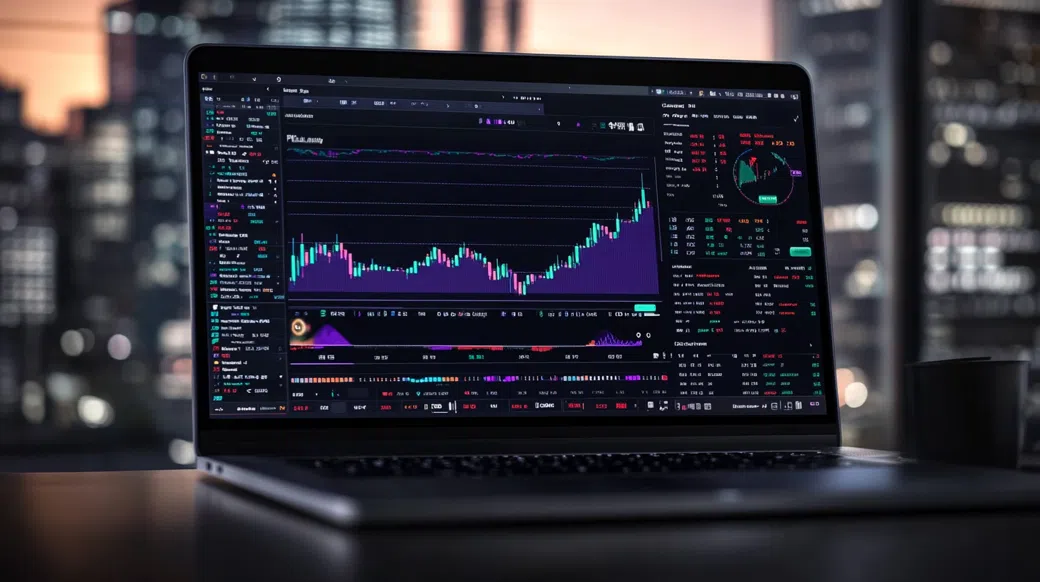
WebTrader is the center of gravity here, and the stability was better than I expected from a newer-looking brand: sessions stayed logged in across multiple chart tabs, and orders supported market, limit, stop, plus basic take-profit/stop-loss attachments. Execution felt consistent during the London open on EUR/USD—no dramatic re-quotes—but you still need to respect slippage when liquidity thins. MT4/MT5 wasn’t something I could verify inside the dashboard; if you rely on EAs, custom indicators, or the broader MetaTrader ecosystem, that gap matters.
Garnet Vaultmark App: Mobile Trading Experience
The Garnet Vaultmark app covered the essentials: real-time quotes, one-tap position management, and account actions like deposits and withdrawal requests without forcing a desktop detour. The Garnet Vaultmark login supported biometric unlock on my device, which is the small convenience you miss when it’s absent. Push notifications for price alerts worked, though I noticed charts default to fewer indicators than desktop and require an extra tap to switch timeframes.
Charting, Tools & Research
Charting included the staples—MA, RSI, MACD, Bollinger—and enough drawing tools to mark levels and channels. An economic calendar and a compact news feed were embedded, useful for sanity-checking why spreads widen or why margin requirements bite. The ceiling is still lower than a dedicated MT5/cTrader workflow: fewer advanced order-routing features, limited automation, and research that reads more “market notes” than institutional-grade analysis.
Garnet Vaultmark Account Opening & Minimum Deposit
After the initial form (email, phone, country, and a short suitability-style prompt), the platform pushed me straight into identity verification—no “trade first, verify later” shortcut. KYC required a government-issued photo ID plus proof of address (I used a bank statement dated within three months), and my verification cleared the same business day. The back-office screens were clean: document status, timestamps, and a clear AML checklist rather than vague “pending” messages. For anyone searching the Garnet Vaultmark minimum deposit, the live funding page showed the entry threshold plainly.
- Minimum Deposit: $200
- Funding Methods: Visa/Mastercard, bank wire, regional e-wallets, and crypto rails (BTC/USDT)
- Demo Account: $10,000 virtual balance for testing leverage, spreads, and order behavior
- Account Types: Standard (spread-only) and Raw/ECN-style (tighter spreads + commission)
Account base currency options were serviceable for international users, but I still treat funding like a trade: minimize conversions, avoid unnecessary hops, and keep a ledger of reference numbers. If you want to check the current deposit methods and onboarding path, the quickest way is via Garnet Vaultmark.
Garnet Vaultmark Customer Support Review
I tested support with a practical question: how swaps are calculated on a leveraged GER40 position and where margin-call levels are displayed. Live chat answered in roughly three minutes with a concise explanation and pointed me to the contract-spec page inside the platform. I followed up by email asking whether card withdrawals can be split across multiple transactions; the ticket reply landed in about nine hours and referenced KYC completion plus internal processing steps.
Coverage is broadly 24/5, which fits FX and index traders, but don’t assume a human on weekends—crypto may trade, support often doesn’t. Language options were adequate in English; anything more regional felt dependent on staff rotation. Phone support wasn’t prominent in my dashboard, so treat this broker as chat-and-email first, which is normal in this offshore CFD tier.
Ready to Explore Garnet Vaultmark?
If you’re considering an account, start by mapping your region eligibility, then compare Standard versus Raw/ECN costs on the instruments you actually trade. I’d also run a demo for a day to see how spreads behave around your preferred session before committing real funds.
Visit Garnet VaultmarkGarnet Vaultmark Review FAQ
Is Garnet Vaultmark good for beginners?
It can be, provided you keep leverage modest and use the demo first. The WebTrader and app are not overly technical, but the education stack is lighter than what many EU brokers provide. Beginners should treat CFDs as high-risk and focus on position sizing before strategy.
Can I trade crypto on Garnet Vaultmark?
Yes, crypto CFDs were available in my platform menu, with BTC and ETH as the main contracts. You’re trading price exposure via CFD, not buying coins to a wallet. Weekend financing and gap risk are the two costs to understand before holding positions.
Is Garnet Vaultmark a scam?
No, my test didn’t show scam mechanics: KYC was required, trading worked, and a withdrawal request followed the stated process. The bigger point is jurisdiction—offshore registration changes how disputes are handled and what protections exist. If you’re uneasy with that, choose a Tier‑1 regulated alternative.
Is Garnet Vaultmark available in the USA?
No, the USA was blocked in my region checks and is marked as restricted. US residents generally can’t open CFD accounts with offshore brokers due to local rules. If you’re traveling, expect KYC to still determine eligibility.
How long does a Garnet Vaultmark withdrawal take?
Most withdrawals are processed internally within 24–48 hours after KYC is approved. Receipt time depends on the rail: cards typically take 2–5 business days, bank wires about 3–7 business days, and crypto transfers can arrive the same day. Keep in mind intermediary bank fees may apply on wires.
What is the Garnet Vaultmark minimum deposit?
The minimum deposit is $200 based on the funding screen I used. That’s enough to test the Standard pricing model, but it’s not a cushion for high leverage. If you plan to trade indices or crypto CFDs, consider a larger buffer to avoid margin stress.
Does Garnet Vaultmark have a mobile app?
Yes, there are iOS and Android apps, and they’re functional for both trading and account management. I could place orders, set stops, and submit withdrawal requests from mobile. The smaller screen means fewer indicators at once, but execution controls are intact.
Final Verdict: Should You Use Garnet Vaultmark in 2026?
Overall Score: 4.0/5
For traders who think in risk budgets rather than marketing slogans, Garnet Vaultmark delivers a coherent CFD experience: clear account tiers, a solid WebTrader, and workable costs if you match the pricing model to your volume. The offshore setup is the defining compromise—high leverage is available, but you’re leaning more on your own discipline and documentation than on regulator safety rails. I’d treat it as a tactical trading venue, not a long-term custody substitute. If you proceed, verify terms and fund/withdraw once at small size to learn the plumbing; start here: Garnet Vaultmark.
Best for: active CFD traders wanting 1:500 leverage and a mobile-first workflow. Avoid if: you require Tier‑1 regulation, deep research, or low-leverage investing products.