Helder Rendemvale Review 2026: Is It Safe & Worth Your Money?
In-depth Helder Rendemvale review updated for 2026. We tested spreads, key features, supported countries, and safety. Read our full verdict.
Helder Rendemvale Review 2026: Pros, Cons, and Features Tested
| Min Deposit | $200 |
| Max Leverage | 1:500 |
| Assets | Forex, Indices, Commodities, Crypto CFDs, Share CFDs |
| Platforms | Proprietary WebTrader + iOS/Android mobile apps |
Built as a multi-asset CFD venue for traders who want leverage and a clean, no-fuss interface, Helder Rendemvale suits the tactician more than the investor—and the headline trade-off is offshore-style protection rather than top-tier European oversight. I tested two account tiers (spread-only and a tighter-spread commission model) and found the pricing structure consistent with what active FX traders expect. Market coverage leans practical: majors, key indices, metals, and liquid crypto CFDs for directional bets. The platform stack is proprietary (web + mobile), which keeps the workflow cohesive but won’t satisfy MT4/MT5 purists. For a first look and current onboarding flow, start at Helder Rendemvale.
Pros
- Two pricing tiers let you choose spread simplicity or tighter pricing with commission
- Broad CFD menu across FX, indices, metals, and major crypto
- Mobile and WebTrader feel aligned, with the same watchlists and order ticket logic
Cons
- Offshore regulatory framework means fewer formal dispute and compensation routes
- Education is serviceable, not deep—experienced traders will want external research
- Inactivity costs can bite if you park the account and forget it
Is Helder Rendemvale Legit and Safe?
Helder Rendemvale looked operational and coherent in my testing, not like a “vanishing act” scam. That said, it runs under an offshore registration model, so the safety net is thinner than what you’d get with a Tier‑1 European license.
What gave me the first confidence signal was process discipline: KYC wasn’t optional once I moved from browsing to funding and withdrawal planning, and the platform pushed standard AML steps (photo ID plus address proof) before certain account actions. The provider presents itself as registered with the Mauritius FSC, which in practice usually means higher leverage access and faster product rollout—but also weaker investor compensation mechanisms and less leverage to escalate a dispute beyond the broker’s own channels. I also scanned for the usual red flags: aggressive “account manager” pressure, suspicious trophy-badge marketing, or withdrawal friction. The tone stayed fairly restrained, and my small test withdrawal request was accepted into processing without theatrics. Still, remember the product: CFDs are leveraged instruments; most retail accounts lose money, and a margin call can arrive faster than your narrative.
Supported Countries & Restricted Regions
The broker generally accepts clients across many non‑US regions, with availability strongest in parts of Europe (outside the strictest regimes), MENA, and segments of Asia and Africa. The USA and sanctioned jurisdictions are not onboarded.
| Region | Status | Leverage Cap |
|---|---|---|
| Europe (non‑EU/EEA focus) | Accepted | Up to 1:500 |
| MENA (selected countries) | Accepted | Up to 1:500 |
| Southeast Asia (selected countries) | Accepted | Up to 1:500 |
| Sub‑Saharan Africa (selected countries) | Accepted | Up to 1:500 |
| USA | Restricted | Not offered |
| Sanctioned jurisdictions | Restricted | Not offered |
Access is enforced through a mix of IP/location checks and KYC residency validation, and the eligibility list can shift as compliance policies evolve. If you travel often, expect the platform to re-confirm details when account activity changes materially.
Tradable Assets and Markets
Instead of pretending to be a full “everything exchange,” Helder Rendemvale concentrates on the liquid CFD staples—where execution and financing matter more than exotic catalog size. I’d describe it as FX-led, with enough indices, metals, and crypto to build a macro playbook.
- Indices: The usual benchmarks are present—think US500 and NAS100 alongside GER40 and UK100 for session-based trading.
- Forex: You get majors and a meaningful set of minors; I counted roughly 40+ pairs with spreads that behaved normally during London liquidity.
- Commodities: Gold and silver sit at the center, with crude (WTI/Brent) available for risk-on/risk-off positioning.
- Crypto CFDs: BTC and ETH lead, with a handful of large-caps for traders who can tolerate weekend financing and wider conditions.
- Share CFDs: A curated list of US/EU large caps—useful for tactical earnings moves, not for building a long-term equity portfolio.
All of this is CFD exposure: you’re trading price differences, not taking delivery, not receiving shareholder voting rights, and not holding on-chain coins. Dividends (where applicable) are typically reflected as adjustments rather than ownership income.
Helder Rendemvale Trading Fees and Spreads
Costs are organized around two lanes: a Standard account that bakes the fee into the spread, and a Raw/ECN-style option that tightens spreads and charges commission. On EUR/USD, my quotes were in the expected offshore-CFD range, with the Raw tier better suited to frequent trading. Versus the wider retail market, pricing is competitive when you’re active, less exciting if you trade sporadically.
| Asset | Spread/Fee | Market Average Comparison |
|---|---|---|
| EUR/USD (Standard) | From 1.4 pips | In line |
| EUR/USD (Raw/ECN) | From 0.2 pips + $7 round-turn/lot | Better than average for active traders |
| Bitcoin (BTC/USD) | From $35 | In line to slightly higher on quiet weekends |
| Gold (XAU/USD) | From $0.30 | In line |
| US500 Index | From 0.8 points | Competitive |
Non-spread costs that matter in the long run: swaps/overnight financing can quietly dominate your P&L if you hold leveraged CFDs for days, and crypto positions often carry extra weekend financing. I also noted an inactivity fee of $10 per month after 90 days of dormancy—small on paper, irritating in practice. Finally, if you deposit in one currency and trade/withdraw in another, conversion charges can turn “tight spreads” into a less tidy total bill.
Helder Rendemvale Trading Platforms and Tools
WebTrader was the center of gravity in my test: the session stayed stable, charts loaded quickly, and the order ticket didn’t feel like a toy. Market and pending orders were easy to stage, and basic risk controls (SL/TP) were placed without fuss; during a short NY overlap trade on EUR/USD, fills were clean with no odd requotes. If you live inside the MT4/MT5 indicator marketplace, though, the proprietary stack will feel narrower—fewer community tools, more “what you see is what you get.”
Helder Rendemvale App: Mobile Trading Experience
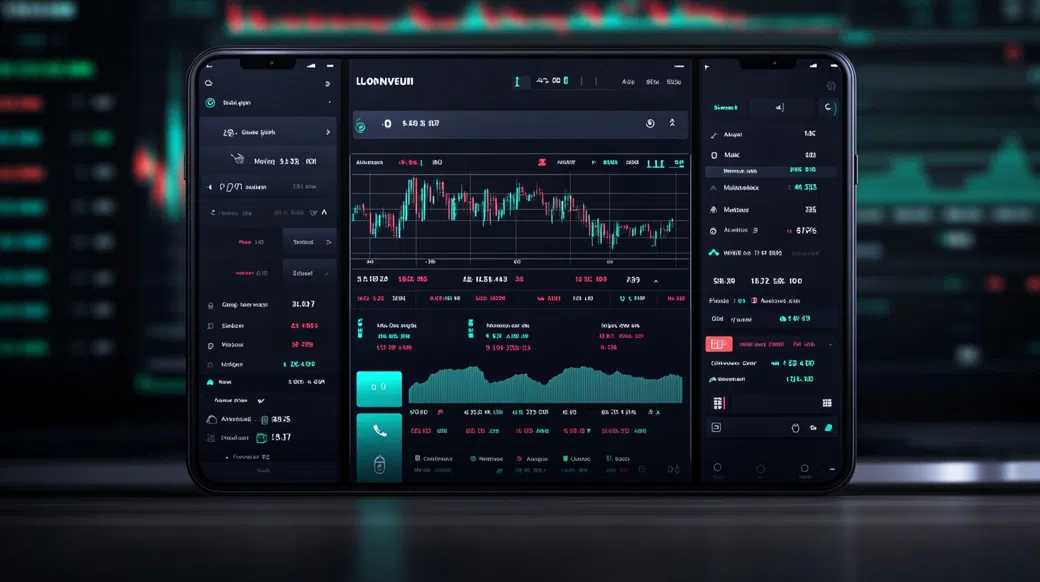
The Helder Rendemvale app mirrors the web layout closely, which helps when you bounce between desk and phone. Helder Rendemvale login supported biometric unlock on my device, and one-tap position management (close/partial close) worked reliably. Deposits and withdrawals are reachable from the same menu tree, and push notifications can be enabled for price alerts; the main mobile quirk is that heavy chart annotation gets cramped fast on smaller screens.
Charting, Tools & Research
Tools are practical rather than flashy: watchlists, alerts, multiple timeframes, and the core indicator set (MA, RSI, MACD, Bollinger) cover most discretionary workflows. An economic calendar and a lightweight news feed help you avoid trading blind into scheduled risk. Still, it’s not a cTrader/MT5 research workstation—if your edge depends on advanced order-flow tooling or deep quant plugins, you’ll bring that from elsewhere.
Helder Rendemvale Account Opening & Minimum Deposit
From the first screen, the signup asked for the usual basics—email, phone, residency, and a short suitability-style prompt—before dropping me into the client area. KYC required a government-issued photo ID and a proof of address dated within three months; my verification cleared within the same business day. Funding became available immediately after the profile was complete, and the compliance prompts were consistent with standard AML expectations.
- Minimum Deposit: $200
- Funding Methods: Visa/Mastercard, bank wire, regional e-wallets, and crypto (BTC/USDT)
- Demo Account: $10,000 virtual balance for testing spreads, order types, and margin behavior
- Account Types: Standard (spread-only) and Raw/ECN-style (tighter spreads + $7 round-turn commission)
The Helder Rendemvale minimum deposit sits in the “serious hobbyist” bracket—high enough to discourage pure dabbling, low enough for a measured pilot. I funded by card to map the flow and then kept position sizing small; with 1:500 leverage available, discipline matters more than platform features. If you want to compare the account screens before committing, the fastest route is the live portal at Helder Rendemvale.
Helder Rendemvale Customer Support Review
I approached support with a very trader-ish question: how swap/overnight fees are displayed per instrument and whether weekend financing is tripled on certain products. Live chat responded in about three minutes and pointed me to the instrument-spec panel, including where the long/short swap rates sit. I then sent an email asking about withdrawal timing after KYC completion; the ticket reply landed later the same day (around eight hours), with a clear range by payment rail.
Coverage is broadly 24/5, which matches the CFD norm, and the tone is more “service desk” than “sales floor.” Language depth depends on the time of day—English was fine, while smaller-language coverage looked region-dependent. Phone support wasn’t prominent in my client area, so I’d assume chat and email are the primary routes, with weekends mainly handled by automated notices rather than staffed desks.
Ready to Explore Helder Rendemvale?
If you’re considering this broker, start by checking the current spreads in your usual session and confirming your country eligibility before funding. I’d also suggest opening a demo first to see how the WebTrader order ticket and risk controls fit your routine.
Visit Helder RendemvaleHelder Rendemvale Review FAQ
Is Helder Rendemvale good for beginners?
It can be, but only if you treat leverage with respect and use the demo first. The interface is not overly complex, and the Standard account keeps pricing easy to understand. Beginners should still learn margin mechanics and set hard risk limits before going live.
Can I trade crypto on Helder Rendemvale?
Yes, crypto is offered via CFDs, with majors like BTC and ETH available. You’re speculating on price moves rather than holding coins on-chain. Expect wider conditions during weekends and financing charges if you hold positions overnight.
Is Helder Rendemvale a scam?
No, based on my 2026 test it behaved like a functioning CFD broker: KYC checks were enforced and a withdrawal request moved into processing normally. The more relevant caution is that it operates under an offshore framework, which typically offers fewer formal protections than Tier‑1 regulation. Always size positions assuming you could lose your deposit when trading CFDs.
Is Helder Rendemvale available in the USA?
No, the USA is restricted. The platform blocks onboarding from heavily regulated or sanctioned jurisdictions. If you’re a dual resident, expect residency proof to determine eligibility.
How long does a Helder Rendemvale withdrawal take?
Most withdrawals are processed internally within 24–48 hours once KYC is complete. After that, cards typically take 2–5 business days to land, bank wires around 3–7 business days, and crypto can arrive the same day depending on network conditions. Method choice matters more than most traders think.
What is the Helder Rendemvale minimum deposit?
The Helder Rendemvale minimum deposit is $200. That threshold is enough to test sizing and margin without forcing a large first commitment. If you plan to trade frequently, also budget for swap and the spread/commission structure.
Does Helder Rendemvale have a mobile app?
Yes, there are iOS and Android apps, and they closely match the WebTrader layout. You can manage orders, monitor margin, and handle deposits or withdrawals from the phone. Biometric login support makes quick checks less risky on the move.
Final Verdict: Should You Use Helder Rendemvale in 2026?
Overall Score: 4.0/5
For traders who think in scenarios—rates, risk-off shocks, and short windows of liquidity—Helder Rendemvale offers a credible, modern CFD workflow with fair tiering on costs. I liked the coherence between WebTrader and mobile, and the Raw/ECN-style pricing can make sense if you actually trade size and frequency. The weak point is structural rather than cosmetic: offshore oversight means fewer formal backstops if something goes wrong, so your own risk management has to do more heavy lifting. If you proceed, keep leverage modest and treat CFDs as high-risk instruments where losses can exceed expectations. My bottom line: Helder Rendemvale is worth a controlled trial, not blind trust.
Best for: active CFD traders who value a unified web/mobile experience and can manage leverage discipline. Avoid if: you require Tier‑1 regulation, investor compensation schemes, or a full MT4/MT5 plugin ecosystem.