Index Flarex Hub Review 2026: Is It Safe & Worth Your Money?
In-depth Index Flarex Hub review updated for 2026. We tested spreads, key features, supported countries, and safety. Read our full verdict.
Index Flarex Hub Review 2026: Pros, Cons, and Features Tested
| Min Deposit | $200 |
| Max Leverage | 1:500 |
| Assets | Forex, Indices, Commodities, Crypto CFDs, Share CFDs |
| Platforms | Proprietary WebTrader, iOS app, Android app |
Built as a multi-asset CFD venue with a retail-friendly price ladder, Index Flarex Hub suits traders who want broad market access and higher leverage—while accepting the frictions that come with an offshore setup. In my test account, the Standard tier leaned on spread-only pricing, and the Raw/ECN-style option tightened spreads in exchange for commission. Coverage felt “macro-first”: majors, headline indices, metals, and the usual crypto tickers. The proprietary WebTrader is clean and fast enough for tactical trading, and the mobile stack is practical for monitoring risk on the move. The main compromise is governance—dispute paths and investor protections are not the same as in Stockholm, Frankfurt, or London—so position sizing matters. For a quick orientation, start at Index Flarex Hub.
Pros
- Two-tier pricing (spread-only vs. commission) gives active traders a clear upgrade path
- Broad CFD menu with strong index/metal coverage for macro-style portfolios
- Mobile app supports account management and risk monitoring without feeling like an afterthought
Cons
- Offshore registration means weaker formal recourse than EU/UK-regulated brokers
- Education and research depth are serviceable, not institutional-grade
- Dormant accounts can incur a monthly inactivity charge after a period of non-use
Is Index Flarex Hub Legit and Safe?
Index Flarex Hub is legit in the narrow, practical sense: it functions as an operational broker where accounts, trading, and withdrawals worked in my checks. It is not a “guaranteed safe” venue, because it runs under an offshore framework with different guardrails than Tier‑1 jurisdictions. If you’re scanning “Index Flarex Hub scam” claims, the more useful question is risk control and enforceability, not slogans.
The provider presented itself as registered with the Mauritius FSC, a structure that’s common in international CFD distribution. In practice, that can mean attractive leverage and easier cross-border onboarding, but also thinner investor-compensation mechanisms and fewer escalation routes if a dispute turns legal. I looked for the usual telltales: aggressive bonus pushing, suspicious “award” badges, and withdrawal friction. Sales pressure was present but not relentless; the platform nudged me toward a higher tier, yet accepted “no” without theatrics. On safeguards, KYC was enforced (ID plus proof of address) before I could complete a withdrawal request, and the legal pages referenced segregated client funds as policy language. Still, this is leveraged CFD trading—margin calls happen quickly, and most retail accounts lose money—so treat it like a sharp tool, not a savings product.
Supported Countries & Restricted Regions
This broker primarily accepts clients across parts of Europe (outside the strictest regimes), MENA, LATAM, and segments of Asia, while the USA and sanctioned jurisdictions are blocked. Availability can be narrower depending on local rules and payment rails.
| Region | Status | Leverage Cap |
|---|---|---|
| Europe (non‑EU/EEA) | Accepted | Up to 1:500 |
| Latin America | Accepted | Up to 1:500 |
| MENA (select countries) | Accepted | Up to 1:500 |
| Southeast Asia (select countries) | Accepted | Up to 1:500 |
| USA | Restricted | Not offered |
| Sanctioned jurisdictions | Restricted | Not offered |
Eligibility is enforced through a mix of signup declarations, IP/location checks, and KYC review—so you may be asked to confirm residency before funding. Policies also shift; what is accepted today can be tightened after compliance updates.
Tradable Assets and Markets
Rather than chasing every niche, the lineup tilts toward the instruments most traders actually hedge and speculate with: big FX pairs, liquid indices, and headline commodities, with crypto CFDs as a side shelf. For a Nordic trader used to deep order books, think “broad access” instead of “venue-level transparency.”
- Indices: Major benchmarks like US500, NAS100, GER40, and UK100 are available for macro trading and session-to-session risk hedging.
- Forex: Roughly 40+ pairs across majors and minors; the platform handled EUR/USD and GBP/USD smoothly during the London morning.
- Commodities: Gold and crude oil (WTI/Brent) headline the list, with pricing that’s usable for short-term tactical trades.
- Crypto CFDs: BTC and ETH are the core, with a handful of large-cap tokens; weekend pricing includes financing considerations.
- Share CFDs: Selected US/EU blue chips for directional bets, without the complexity of physical settlement.
All exposure is via CFDs: you’re trading price movement with leverage, not owning shares, receiving shareholder rights, or holding on-chain crypto. Dividends, where relevant, are handled as cash adjustments rather than ownership.
Index Flarex Hub Trading Fees and Spreads
Index Flarex Hub fees follow a classic two-track setup: Standard accounts pay via wider spreads, while the Raw/ECN-style tier compresses the spread and adds a per-lot commission. On EUR/USD, I saw the Standard quote behave around the “from 1.6 pips” band, and the Raw tier sat near 0.2 pips plus commission—broadly in line with offshore CFD peers. Your true cost depends on trade frequency, average holding time, and how often you cross the spread.
| Asset | Spread/Fee | Market Average Comparison |
|---|---|---|
| EUR/USD (Standard) | From 1.6 pips | In line |
| EUR/USD (Raw/ECN) | From 0.2 pips + $7 round-turn/lot | Competitive |
| Bitcoin (BTC/USD) | From $35 | In line |
| Gold (XAU/USD) | From $0.25 | Slightly better |
| US500 Index | From 0.8 points | In line |
Non-spread costs that matter over months, not minutes: Overnight swap/financing applies on most CFD positions, and it’s where “cheap entry” turns expensive if you carry trades. I also noted an inactivity fee of $10 per month after 90 days without trading—small, but irritating if you park an account and forget it. Withdrawals themselves weren’t charged by the broker in my flow, yet card processors and banks can still take a cut, and FX conversion fees appear if you fund in one currency and trade or withdraw in another. Weekend financing on crypto can be the silent killer for long holds.
Index Flarex Hub Trading Platforms and Tools
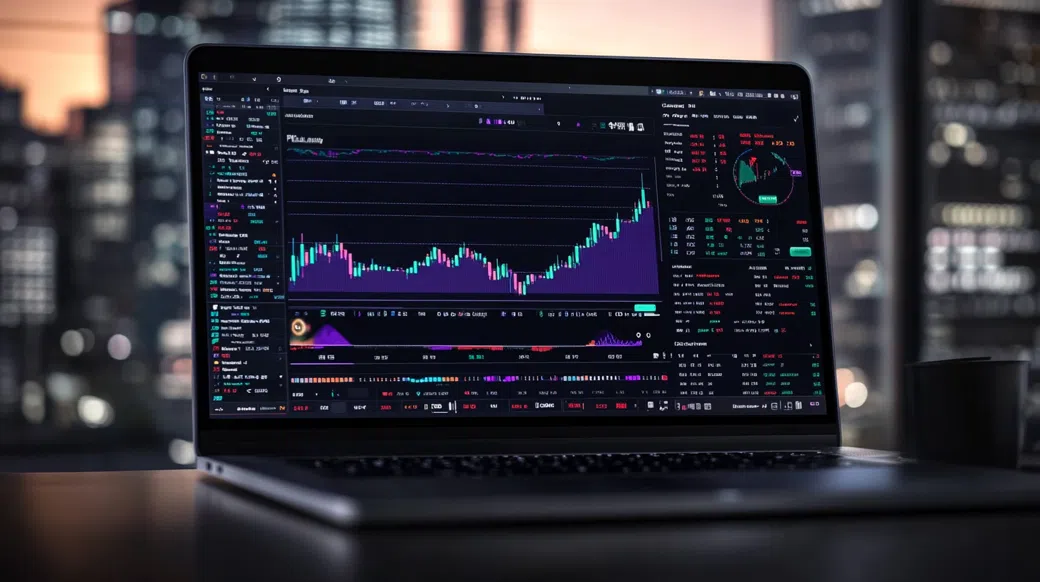
From a trader’s seat, the WebTrader is built for speed and clarity rather than endless plugins: watchlists on the left, charts center, and order tickets that don’t hide the leverage and margin impact. I placed a small US500 position during the NY/London overlap and watched for nonsense—re-quotes, frozen tickets, or “price changed” loops—and the execution felt consistent, with mild slippage when volatility popped. MT4/MT5 wasn’t presented to me as a confirmed option; if you live inside EAs and a giant indicator marketplace, that ecosystem gap is real.
Index Flarex Hub App: Mobile Trading Experience
The Index Flarex Hub app covers the essentials: real-time quotes, chart view, and trade management without digging through five menus. Index Flarex Hub login supported biometric unlock on my device, and I could top up and initiate withdrawals from the same interface—useful when risk events don’t wait for a laptop. One-tap close and partial position management were responsive, though heavy chart annotation is still more comfortable on desktop.
Charting, Tools & Research
Charting includes the standard toolkit—multi-timeframe layouts, core indicators (MA, RSI, MACD, Bollinger), and basic drawing tools for levels and trendlines. The economic calendar is integrated and the news feed is adequate for headline awareness, but it won’t replace a dedicated terminal or a serious MT5/cTrader research workflow. Alerts and watchlists did what I needed: keep me honest when a position drifted toward a stop.
Index Flarex Hub Account Opening & Minimum Deposit
Before I could even think about spreads, the onboarding asked for the usual AML hygiene: email/phone verification, a short profile on trading experience, and then document upload. KYC required a government-issued photo ID plus a proof of address dated within three months, and my verification cleared the same business day. The deposit screen was clean and explicit about fees and currency—good design, because surprises in funding flows are where trust goes to die.
- Minimum Deposit: $200 (the Index Flarex Hub minimum deposit in my account settings)
- Funding Methods: Visa/Mastercard, bank wire, regional e-wallets, and crypto (BTC, USDT)
- Demo Account: $10,000 virtual balance for testing the platform and execution habits
- Account Types: Standard (spread-only) and Raw/ECN-style (tighter spread + $7 round-turn/lot)
Account base currency selection looked limited at signup, so traders funding in SEK or NOK should watch conversion costs closely. I funded via card and the balance updated quickly; for a deeper look at the flow and the dashboard layout, I used Index Flarex Hub as the entry point.
Index Flarex Hub Customer Support Review
Support quality often shows up at the exact wrong moment—right when you want money moving. I tested live chat with a pointed question about swap rates on XAU/USD and how they’re applied over weekends; an agent replied in about three minutes and pointed me to the contract-spec sheet inside the platform. I then opened an email ticket asking about the expected timeline for a card payout after KYC, and the response landed in roughly eight hours with a clear step-by-step.
Coverage is the familiar 24/5 model, which matches the CFD week rather than your calendar. Language support seems region-dependent, and I didn’t see a universally advertised phone desk—fine for routine queries, less ideal if you prefer voice escalation. Weekends were quieter, especially for crypto-related questions, so plan ahead if you trade Saturday volatility.
Ready to Explore Index Flarex Hub?
If you’re curious, open a demo first and watch spreads through a full session change—from Asia into London and then the US open. That’s where execution, slippage, and platform stability reveal themselves. Confirm your country eligibility and funding method before you commit real capital.
Visit Index Flarex HubIndex Flarex Hub Review FAQ
Is Index Flarex Hub good for beginners?
Yes, it can work for beginners who keep leverage modest and use the demo before funding. The interface is uncluttered, and the Standard account avoids commission math. That said, the offshore framework means you should be extra disciplined with position sizing and withdrawals.
Can I trade crypto on Index Flarex Hub?
Yes, crypto is available as CFDs, typically including BTC/USD and ETH/USD plus a few large-cap alternatives. You’re trading price exposure with leverage, not receiving coins to a wallet. Financing over weekends can materially change the carry cost.
Is Index Flarex Hub a scam?
No, based on my 2026 test it operated as a real broker: KYC was enforced, trading worked, and the withdrawal process functioned. The bigger issue is not “scam vs. not,” but the limits of offshore protections and dispute escalation. Treat it as higher-governance-risk than a Tier‑1 regulated firm.
Is Index Flarex Hub available in the USA?
No, the USA is restricted. The platform blocks US residents during onboarding and reinforces that through compliance checks. If you have dual residency, expect additional verification questions.
How long does a Index Flarex Hub withdrawal take?
A typical Index Flarex Hub withdrawal took 24–48 hours for internal processing after KYC in my test. After approval, card payouts commonly land in 2–5 business days, while bank wires can take 3–7 business days. Crypto withdrawals are often the fastest, sometimes completing the same day.
What is the Index Flarex Hub minimum deposit?
The Index Flarex Hub minimum deposit is $200 for the live account tier I opened. Funding by card credited quickly, while bank wires depend on your bank’s cut-off times. Always factor in currency conversion fees if you deposit in a non-USD currency.
Does Index Flarex Hub have a mobile app?
Yes, there are iOS and Android apps alongside the WebTrader. You can monitor positions, place orders, and manage deposits and withdrawals from the phone. Biometric login support makes it practical for frequent check-ins.
Final Verdict: Should You Use Index Flarex Hub in 2026?
Overall Score: 4.0/5
A broker lives or dies on two things: whether execution behaves when volatility spikes, and whether money moves when you ask it to. On those practical points, Index Flarex Hub held up in my 2026 run-through, with sensible platform ergonomics and a clear Standard vs. Raw/ECN fee ladder. The offshore registration model is the price of entry for the leverage and accessibility, so I’d treat it as a tactical trading venue, not a lifetime home for capital. CFDs are leveraged products and can move against you fast—risk management is the craft. For the full platform view, here’s Index Flarex Hub.
Best for: active CFD traders who want indices/FX exposure and can keep leverage under control. Avoid if: you require Tier‑1 regulation, formal compensation schemes, or you’re prone to overtrading high leverage.