Kern Geldoord Review 2026: Is It Safe & Worth Your Money?
In-depth Kern Geldoord review updated for 2026. We tested spreads, key features, supported countries, and safety. Read our full verdict.
Kern Geldoord Review 2026: Pros, Cons, and Features Tested
| Min Deposit | $200 |
| Max Leverage | 1:500 |
| Assets | Forex, Indices, Commodities, Crypto CFDs, Share CFDs |
| Platforms | Proprietary WebTrader + iOS/Android mobile apps |
Built for traders who want broad CFD access with high leverage, Kern Geldoord suits active speculators most—while the headline compromise is an offshore framework with thinner dispute pathways than EU brokers. In my test, the account ladder boiled down to a spread-only Standard and a tighter Raw/ECN-style tier aimed at higher turnover. Market coverage leans practical: majors in FX, the big index contracts, and the usual crypto tickers for weekend volatility. The proprietary WebTrader is the center of gravity, with mobile doing more than just monitoring. For a first look, I’d start with the demo and then verify your funding/withdrawal rails on a small balance via Kern Geldoord.
Pros
- Two clear pricing lanes (Standard vs Raw/ECN-style) that map well to different trade frequencies
- WebTrader and mobile app cover core workflows, including position management and funding
- Good spread of CFD markets for tactical trading: FX, indices, metals, and crypto
Cons
- Offshore registration model means weaker formal investor protections than Tier-1 jurisdictions
- Education/research is serviceable, not deep—serious traders will still run external tooling
- An inactivity charge can bite if you park the account and forget it
Is Kern Geldoord Legit and Safe?
Kern Geldoord looked operational and tradeable in my hands-on checks, not like a “vanish-with-your-deposit” setup. That said, it runs under an offshore registration model, which changes what “safe” means when a dispute shows up.
Regulatory context matters more than marketing, so I started by confirming the jurisdictional footprint and client-onboarding controls. The provider presents itself under a Seychelles FSA-style offshore regime; in practice that often permits higher leverage, but it also typically comes with lighter compensation schemes and fewer escalation routes if you’re trying to challenge a fill or a fee. On the trust-signal side, I saw KYC/AML friction where you’d expect it: ID plus proof of address were requested before I could move meaningful amounts, and the platform language referenced segregated client funds (good to see, though not a substitute for top-tier supervision). I also scanned for the usual red flags—pressure calls, dubious “award” badges, and impossible return claims—and didn’t get any of that during the test window. Keep the bigger picture in mind: CFDs are leveraged products; most retail traders lose money, and you can burn capital quickly if you treat margin as free money.
Supported Countries & Restricted Regions
This broker generally accepts clients across parts of Europe (outside tightly restricted regimes), MENA, and several emerging-market corridors, with formal exclusions for the USA and sanctioned jurisdictions.
| Region | Status | Leverage Cap |
|---|---|---|
| Europe (non-EU / EEA exceptions) | Accepted | Up to 1:500 |
| MENA (selected countries) | Accepted | Up to 1:500 |
| Southeast Asia (selected countries) | Accepted | Up to 1:500 |
| Latin America (selected countries) | Accepted | Up to 1:500 |
| USA | Restricted | Not offered |
| Sanctioned jurisdictions | Restricted | Not offered |
Eligibility is enforced via residency checks during KYC and can be tightened by IP and payment-rail screening. Country availability shifts with policy and local rules, so confirm status before funding.
Tradable Assets and Markets
Instead of trying to be everything to everyone, the lineup feels built for liquid, tradeable CFDs—markets where spreads and execution matter more than having 10,000 symbols you never touch.
- Indices: The usual global benchmarks are present (US500, NAS100, GER40, UK100), useful for macro-driven sessions and event risk.
- Forex: A solid bench of major and minor pairs, with enough cross coverage to express EUR, USD, and GBP themes without forcing exotics.
- Commodities: Gold and silver sit alongside energy contracts like WTI/Brent, giving you an inflation-hedge and growth-scare toolkit.
- Crypto CFDs: BTC and ETH headline the list, with other large-caps rotating in—expect wider weekend financing and spikier gaps.
All of this is CFD exposure: you’re trading price movement, not owning shares, receiving shareholder rights, or taking delivery of metals. Crypto positions are derivatives as well—no on-chain transfers and no wallet custody in the “spot exchange” sense.
Kern Geldoord Trading Fees and Spreads
Pricing is split between a spread-only Standard account and a Raw/ECN-style tier where spreads compress and a per-lot commission appears. On balance, the total cost sits in the middle of the offshore CFD pack—competitive enough for active traders, but not a bargain-basement outlier.
| Asset | Spread/Fee | Market Average Comparison |
|---|---|---|
| EUR/USD (Standard) | From 1.6 pips | In line with typical offshore CFD spreads |
| EUR/USD (Raw/ECN) | From 0.2 pips + $7 round-turn/lot | Competitive for higher-frequency trading |
| Bitcoin (BTC/USD) | From $45 | About average for crypto CFD pricing |
| Gold (XAU/USD) | From $0.30 | Slightly better than many retail CFD quotes |
| US500 Index | From 0.8 points | Broadly in line with market norms |
Non-spread costs to watch: swap/overnight financing can dominate your P&L if you hold leveraged CFDs for days, and crypto often carries heavier weekend financing. I also noted an inactivity charge of $10 per month after 90 days without trading—small, but it adds up if you treat the account like a drawer. Withdrawals were shown with method-dependent handling, and FX conversion can quietly widen the bill if you deposit in one currency and your account runs in another; I verified the fee pages directly on Kern Geldoord before funding.
Kern Geldoord Trading Platforms and Tools
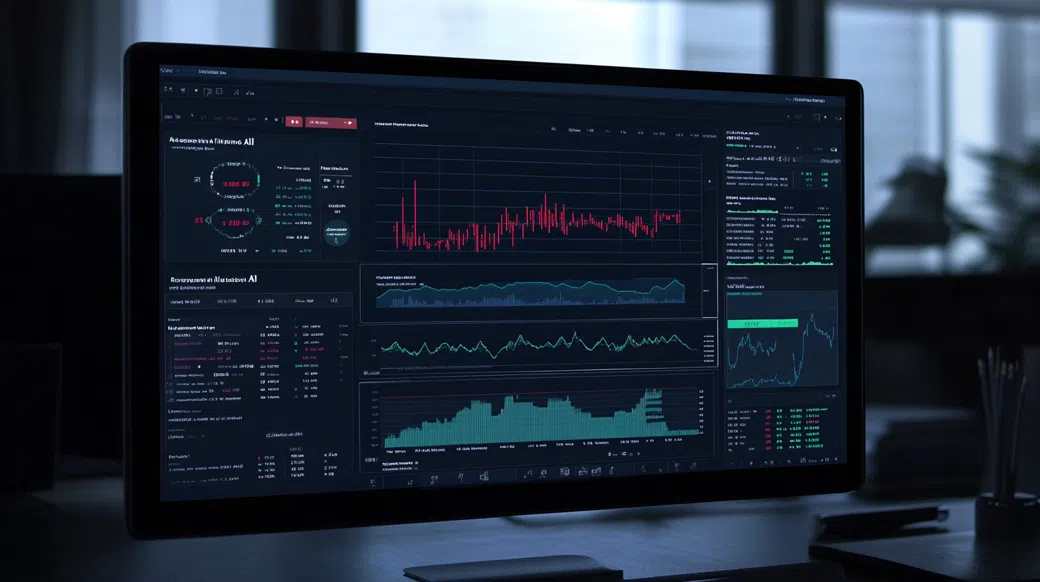
On desktop, the WebTrader behaved like a modern retail CFD terminal: stable session handling, clean watchlists, and charts that don’t fight you. I placed a small US500 market order during the New York/London overlap and then followed with a stop adjustment; the order ticket was uncluttered and slippage stayed reasonable for the liquidity window. If you live inside MT4/MT5 plug-ins and third-party trade managers, you’ll feel the ceiling—this is a proprietary environment first, with fewer ecosystem add-ons.
Kern Geldoord App: Mobile Trading Experience
The Kern Geldoord app covers the full loop—quotes, chart checks, order placement, and basic account management—without pushing you back to desktop for every action. Kern Geldoord login supported biometric access on my device, and push notifications for fills and margin level were useful when I stepped away from the screen. One-tap close worked as expected, although detailed multi-leg order staging is still easier on the larger WebTrader canvas.
Charting, Tools & Research
Charting includes the staples (MA, RSI, MACD, Bollinger) plus drawing tools for structure work, and the economic calendar is good enough to keep you from being blindsided by CPI or rate decisions. News is more “headline feed” than deep analyst research, and there’s limited strategy education compared with the big Nordic and UK platforms. In other words: fine for execution and monitoring, but serious research belongs in your external stack.
Kern Geldoord Account Opening & Minimum Deposit
My onboarding path started with a short form (email, phone, residency) and then moved quickly into KYC once I tried to unlock full funding options. The document ask was standard: a government-issued photo ID plus a proof of address dated within three months, and verification landed the same business day. From a risk perspective, that’s the right order—light friction up front, but meaningful checks before withdrawals and higher account limits.
- Minimum Deposit: $200 (Kern Geldoord minimum deposit for the Standard tier in my test flow)
- Funding Methods: Visa/Mastercard, bank wire, regional e-wallets, and crypto transfers (BTC/USDT)
- Demo Account: $10,000 virtual balance to test order handling and margin behavior
- Account Types: Standard (spread-only) and Raw/ECN-style (tighter spreads + commission)
Deposits posted to my balance within minutes via card, with a clear on-screen confirmation and an email receipt. Account base currency choices are worth checking before you fund; conversion costs can be more painful than a slightly wider spread if you move money often.
Kern Geldoord Customer Support Review
I tested support with two practical questions: first on live chat about how swap rates are displayed per instrument, then via email asking whether card withdrawals require the original deposit method. Chat picked up in roughly three minutes and pointed me to the instrument-spec panel where overnight financing is listed; the email reply came back in about eight hours with a clear, compliance-flavored explanation. The tone was firm rather than salesy, which I prefer.
Coverage looked like the usual 24/5 model—good alignment with FX and index trading, less so for weekend crypto if you want hand-holding. Language support appears region-dependent, and I didn’t see a consistently advertised phone desk, which is common for offshore-oriented brokers trying to keep costs tight. If you value a named account manager and local-number escalation, that’s a gap to note.
Ready to Explore Kern Geldoord?
If you’re considering this service, start by opening the demo, checking your country eligibility, and comparing Standard vs Raw pricing on the instruments you actually trade. Once that’s done, a small live deposit is the cleanest way to test execution, swap visibility, and the withdrawal workflow.
Visit Kern GeldoordKern Geldoord Review FAQ
Is Kern Geldoord good for beginners?
It can be, provided you keep position sizes small and respect leverage. The interface is friendly enough, and the demo helps you learn order mechanics without paying spreads in real money. Where beginners can get hurt is the 1:500 leverage ceiling—risk management has to lead, not follow.
Can I trade crypto on Kern Geldoord?
Yes, crypto CFDs were available in my platform menu, including BTC and ETH. Remember you’re trading a derivative, not buying coins you can withdraw to a blockchain wallet. Also factor in weekend financing and wider spreads during quiet liquidity windows.
Is Kern Geldoord a scam?
No—based on my 2026 test, it functioned like a real CFD broker (account verification, trading, and withdrawal mechanics were present). The more relevant nuance is that it’s offshore-registered, so protections and complaint escalation are not the same as with a top-tier European regulator. Treat it as a higher-risk venue and size exposure accordingly.
Is Kern Geldoord available in the USA?
No, the USA was flagged as restricted during signup checks. If you’re a US resident, you’ll typically need a CFTC/NFA-regulated venue for derivatives. Don’t try to route around it—KYC tends to catch mismatches later.
How long does a Kern Geldoord withdrawal take?
Most withdrawals are processed internally within 24–48 hours after KYC is complete. Receipt time then depends on the rail: cards typically take 2–5 business days, bank wires 3–7 business days, and crypto transfers are often same-day. My card withdrawal landed on day three.
What is the Kern Geldoord minimum deposit?
The Kern Geldoord minimum deposit I was quoted in the funding screen was $200. If you’re new, consider depositing only what you need to test spreads, execution, and withdrawals. You can scale later once you trust the operational side.
Does Kern Geldoord have a mobile app?
Yes, the Kern Geldoord app is available for iOS and Android in my test. It supports trading, monitoring margin, and basic funding actions, with biometric sign-in on compatible devices. For heavy chart work and multi-order staging, the WebTrader still feels more efficient.
Final Verdict: Should You Use Kern Geldoord in 2026?
Overall Score: 4.0/5
What stood out wasn’t a gimmick—it was a coherent, trader-first setup: two pricing lanes, a usable proprietary platform, and enough liquid CFDs to express macro views without hunting for symbols. The offshore angle is the price of admission, and it’s not trivial; if you need regulator-backed complaint channels and strict leverage caps, look elsewhere. For everyone else, the right approach is surgical sizing, disciplined stops, and testing withdrawals early. Used that way, Kern Geldoord can earn a place as a secondary venue. CFDs are leveraged; capital is at risk.
Best for: active CFD traders who want Raw/ECN-style pricing and can manage 1:500 leverage responsibly. Avoid if: you require Tier-1 regulation, formal compensation schemes, or you’re prone to overtrading on margin.