Klarheit Fundex Alternatives 2026: Safer Broker Options
A risk-aware guide to Klarheit Fundex alternatives in 2026. Compare regulated brokers, platforms, costs, and migration steps for US/EU traders.
Klarheit Fundex Trading Platform Alternatives 2026: Reliable Options for Online Traders
Some platforms sell the idea of “more leverage, more opportunity” the way a street vendor sells umbrellas when the sky turns grey. That framing matters, because leverage is a tool that amplifies both skill and mistakes—and in CFDs, mistakes arrive fast. Klarheit Fundex appears to sit in the offshore CFD-and-forex segment: a proprietary WebTrader-style platform, a mobile app, and a product mix that typically revolves around FX pairs, indices, commodities, and crypto CFDs. From what’s commonly observed in this category, account entry often starts around a $250 minimum deposit, EUR/USD pricing tends to hover near 2.0 pips on a standard-style account, and headline leverage can reach roughly 1:500.
For a global audience with a US/EU tilt, the practical question isn’t whether you can place trades—it’s whether the setup around those trades protects you when things go wrong: dispute resolution, negative balance protection, withdrawals, and whether client funds sit in segregated accounts under a meaningful regulator. That’s where many readers begin searching for Klarheit Fundex substitutes. This guide to Klarheit Fundex alternatives takes a measured route: what the platform category usually looks like, what to verify, and which regulated brokers are credible contenders in 2026 depending on whether you care most about FX execution, real stocks/ETFs, or professional-grade risk controls.
Disclaimer: This article is for informational purposes only and does not constitute investment advice. CFDs and other leveraged products carry a high risk of loss, and you can lose more than your initial margin in fast markets.
Key Takeaways (TL;DR)
- If your strategy depends on predictable execution (slippage control, order handling), prioritize brokers that clearly state their execution model (STP/ECN/DMA vs. market maker) and publish robust trade reporting.
- For long-term investors, the biggest “alternative” may be switching from CFD-only exposure to owning real stocks/ETFs through a multi-asset broker like IBKR or Saxo Bank.
- Plan the move like a small project: complete KYC at the new broker first, export trading history for taxes, then withdraw using the same funding rail you used to deposit (AML norms).
What Is Klarheit Fundex and How Does Its Trading Platform Work?
Seen through a Scandinavian risk lens, Klarheit Fundex looks less like a traditional broker-dealer and more like an offshore CFD venue aimed at fast onboarding and short-term speculation. Publicly, brands in this lane often operate under light-touch frameworks such as the Seychelles FSA, and the product shelf typically centers on leveraged CFDs rather than cash equities or exchange-traded futures. That implies a different set of safeguards than traders might expect from FCA- or NFA-supervised firms—especially around investor protection schemes, complaint handling, and how client money is ring-fenced. In other words, it may suit a certain type of tactical trader, but it’s not built like a multi-asset custody platform.
Klarheit Fundex Web Trading Platform: Core Features and Tools
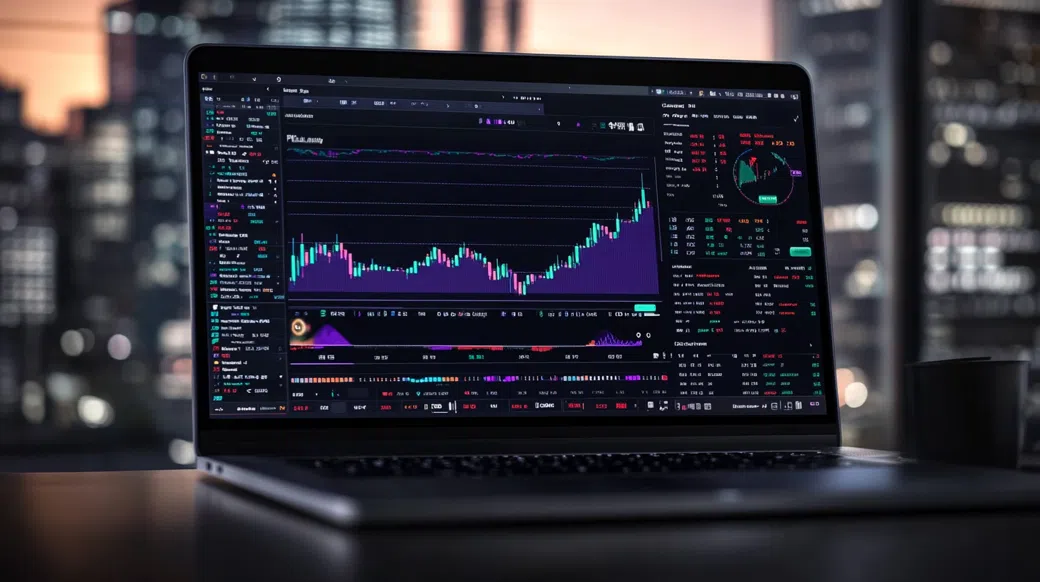
The proprietary WebTrader approach usually favors convenience over depth: charts are serviceable, indicators cover the basics, and the workflow is designed for quick order entry rather than research-heavy decision-making. Expect common order types (market, limit, stop) and a straightforward positions panel, with account metrics like margin level and available funds visible at a glance. Mobile tends to mirror the web layout, which is useful, but advanced tools—custom scripts, detailed order-routing options, or institutional-style analytics—are rarely the priority in platforms like Klarheit Fundex. If you need MT4/MT5 or cTrader for automation, strategy testing, or more granular execution controls, this category can feel like trading with mittens on.
Trading Fees, Spreads, and Account Types at Klarheit Fundex
Cost presentation in offshore CFD venues often looks clean until you translate it into “all-in” trading friction. A typical reference point here is EUR/USD around 2.0 pips on a standard-style account, with the usual extras: swap/overnight financing on leveraged positions, possible withdrawal charges depending on method, and occasional inactivity fees when accounts go dormant. Some brokers in this segment advertise a raw/ECN-like tier (often 0.0–0.4 pips) but then attach a round-turn commission in the neighborhood of $5–$8 per standard lot; the only honest comparison is total round-turn cost plus expected slippage. That’s the benchmark you should use when weighing competitors to Klarheit Fundex.
When Do Traders Start Looking for Klarheit Fundex Alternatives?
Cost is the spark, but trust is the fuel. Traders often tolerate a 2.0-pip EUR/USD spread for a while—until a withdrawal takes longer than expected, a margin call behaves differently than planned, or a news spike introduces slippage that the platform doesn’t explain well. At that point, “Klarheit Fundex alternatives” becomes less of a shopping query and more of a risk-management decision: moving from an offshore CFD setup toward clearer rules, stronger dispute channels, and a platform stack that matches the strategy rather than fighting it.
- You want MT4/MT5 or cTrader to run an Expert Advisor, automate risk controls, or use advanced order management that a basic WebTrader can’t replicate.
- Your trading horizon shifts from intraday CFDs to building positions in real stocks/ETFs, where custody and shareholder rights matter.
- You’re uncomfortable with 1:500 leverage being readily available; you prefer stricter margin frameworks and negative balance protection that’s explicitly documented.
- Withdrawal timelines or fee visibility feel inconsistent, and you’d rather work with a broker that has mature KYC/AML rails and auditable processes.
How to Choose a Reliable Alternative to the Klarheit Fundex Trading Platform
Think of broker selection like building a portfolio: you’re balancing return potential with operational risk. For alternatives to the Klarheit Fundex trading platform, your edge comes from matching the broker’s plumbing—regulation, execution, and costs—to your strategy’s weak points. A scalper bleeds on spreads and slippage; a swing trader bleeds on swaps; an investor bleeds if they never truly own the asset.
Regulation, Safety, and Investor Protection
Start with the regulator’s public register, not a logo on a website. FCA (UK), ASIC (Australia), CySEC (Cyprus/EU), and NFA/CFTC (US) supervision usually comes with clearer conduct rules and tighter expectations around segregated client funds. In the UK, FSCS coverage can protect eligible clients up to £85,000 if an FCA firm fails; in Cyprus, the ICF framework can cover eligible retail clients up to €20,000. Those schemes don’t remove trading risk, but they do change the outcome when the broker itself is the problem.
Available Markets and Instruments
A frequent mismatch with platforms like Klarheit Fundex is the difference between trading a stock CFD and owning the stock. If you need real equities and ETFs (for dividends, voting rights, or longer holding periods), look at multi-asset venues built for custody and exchange access. If your world is FX and index CFDs, an FX/CFD specialist may be fine—provided they’re transparent about instruments, contract specs, and whether crypto exposure is CFDs only. “More symbols” matters less than the right symbols.
Trading Costs: Spreads, Commissions, and Other Fees
Spreads are the headline, but round-turn cost is the truth. Compare (a) spread in pips, (b) commissions on raw accounts, (c) swap/overnight rates for your typical holding time, and (d) non-trading charges like inactivity or withdrawals. For example, a raw-style 0.2-pip EUR/USD spread plus a $7 round-turn commission can be cheaper than a 1.0–1.2 pip all-in standard spread—until slippage during news releases reverses the math. Track it like a trader, not like a brochure reader.
Platforms, Tools, and Execution Quality
Platform choice is strategy choice. MT4/MT5 remains common for FX automation; cTrader is favored by some for its interface and execution tooling; proprietary platforms can be excellent, but you need evidence—order handling, stability, and clear reporting. Execution model is the other half: market maker setups can be perfectly legitimate, while STP/ECN/DMA routes change how spreads, liquidity, and slippage show up in your fills. If you’re comparing Klarheit Fundex competitors, ask one blunt question: “How are my orders executed, and where can I read it in your legal docs?”
Support, Education, and Overall User Experience
Operational friction is a hidden fee. Look for support that matches your time zone (US/EU hours), offers clear escalation paths, and can answer margin, swap, and corporate-action questions without scripts. Education is useful when it teaches process—position sizing, drawdown control, and the mechanics of margin calls—not when it pushes leverage. Finally, mobile parity matters more than most admit: if you can’t manage risk from your phone during a volatility spike, your platform isn’t complete.
Klarheit Fundex and Different Asset Classes: When Alternatives May Be Better
Klarheit Fundex Forex and CFD Trading
In FX/CFDs, the gap between offshore platforms and top-tier brokers rarely shows up on the first day—it shows up over 200 trades. Klarheit Fundex-style venues often quote workable instrument lists (roughly a few dozen FX pairs plus indices and commodities), but the trade economics can be heavier: think EUR/USD around 2.0 pips on a standard account and leverage up to about 1:500. Regulated FX specialists such as Pepperstone or OANDA tend to win on execution transparency and tooling: MT4/MT5/cTrader support (depending on the broker), clearer disclosures around slippage, and a more mature approach to margin and negative balance protection. For active traders, shaving even 0.5–1.0 pip on average can be the difference between a strategy that survives and one that slowly decays.
Klarheit Fundex Stock and ETF Trading
Here’s where many “Klarheit Fundex trading platform alternatives 2026” searches end up: the trader realizes they don’t want a stock CFD; they want the stock. Offshore CFD brokers frequently offer equities only as derivatives (if at all), which means no direct ownership, limited corporate-action handling, and financing costs if you hold leveraged exposure. Interactive Brokers (IBKR) is the classic bridge for this problem: broad access to US/EU stocks and ETFs, plus options, futures, and bonds for those who manage risk across asset classes. Saxo Bank is another strong European-centric choice for multi-asset investors who value platform research and a more curated experience. For anyone building a long-term book, moving from “price exposure” to “asset ownership” is a meaningful upgrade.
Klarheit Fundex Crypto Trading
Crypto is often available in offshore CFD catalogs as a leveraged contract—price exposure without on-chain ownership. That’s not automatically bad, but it is different: you don’t withdraw coins to a wallet, and your risks are tied to the broker’s CFD framework, margin rules, and weekend liquidity. If crypto CFDs are part of your toolkit, regulated CFD venues like IG or Plus500 can be more straightforward for many EU/UK users, with clearer risk warnings and more established compliance processes. If, instead, you want spot crypto custody, that’s typically a different ecosystem entirely (and outside what most traditional brokers provide). The key is to decide whether you’re trading volatility or investing in an asset—and pick accordingly.
Best Klarheit Fundex Alternatives for 2026: Comparison of Top Trading Platforms
Interactive Brokers (IBKR): Key Facts and How It Compares to Klarheit Fundex
Regulation: SEC/FINRA (US), FCA (UK), IIROC (Canada)
Markets: stocks, ETFs, options, futures, bonds, FX
Fees: FX spreads typically from ~0.1–0.6 pips (volume/venue dependent); commissions vary by market and order type
Platform: Trader Workstation (TWS), IBKR mobile, web platform, API
Best For: Multi-asset traders who want real market access and portfolio-style risk control
Saxo Bank: Key Facts and How It Compares to Klarheit Fundex
Regulation: FCA (UK), MAS (Singapore), DFSA (Dubai)
Markets: stocks, ETFs, bonds, options, futures, FX, CFDs
Fees: FX spreads often from ~0.6–1.2 pips depending on tier; commissions apply on many cash equities/ETFs
Platform: SaxoTraderGO, SaxoTraderPRO
Best For: EU-focused investors wanting research, strong platforms, and broad product coverage
Pepperstone: Key Facts and How It Compares to Klarheit Fundex
Regulation: FCA (UK), ASIC (Australia), CySEC (EU), DFSA (Dubai)
Markets: FX, CFDs (indices, commodities, some crypto CFDs depending on region)
Fees: Standard spreads often from ~1.0–1.2 pips; Raw accounts can run ~0.0–0.3 pips + commission (varies by platform/account)
Platform: MT4, MT5, cTrader
Best For: Execution-sensitive FX traders using EAs or cTrader workflows
OANDA: Key Facts and How It Compares to Klarheit Fundex
Regulation: CFTC/NFA (US), FCA (UK), ASIC (Australia), IIROC (Canada)
Markets: FX, CFDs (availability varies by jurisdiction)
Fees: Pricing typically spread-based; EUR/USD often around ~0.6–1.2 pips depending on account and region
Platform: OANDA web/mobile, MT4 (in supported regions)
Best For: Risk-first FX traders who value strong regulatory coverage and clean reporting
CMC Markets: Key Facts and How It Compares to Klarheit Fundex
Regulation: FCA (UK), ASIC (Australia), BaFin (Germany)
Markets: CFDs (FX, indices, commodities, shares CFDs)
Fees: FX spreads often from ~0.7 pips on major pairs; additional costs depend on instrument and holding time (swap)
Platform: Next Generation (web/mobile), MT4 (in some regions)
Best For: Active CFD traders who want advanced charting in a proprietary platform
Plus500: Key Facts and How It Compares to Klarheit Fundex
Regulation: FCA (UK), CySEC (EU), ASIC (Australia), MAS (Singapore)
Markets: CFDs (FX, indices, commodities, shares CFDs, crypto CFDs where permitted)
Fees: Spread-based pricing; typical costs vary by instrument and volatility, with overnight funding for held CFD positions
Platform: Plus500 WebTrader, Plus500 mobile app
Best For: Simplicity seekers who prefer a streamlined CFD app over multi-platform setups
Comparison Summary
| Platform | Regulation | Main Markets | Typical Costs | Best For |
|---|---|---|---|---|
| Interactive Brokers (IBKR) | SEC/FINRA, FCA, IIROC | Real stocks/ETFs, options, futures, bonds, FX | FX often ~0.1–0.6 pips; market commissions vary | Multi-asset traders who want real market access and portfolio-style risk control |
| Saxo Bank | FCA, MAS, DFSA | Stocks/ETFs, bonds, options, futures, FX, CFDs | FX often ~0.6–1.2 pips (tiered); equity commissions apply | EU-focused investors wanting research, strong platforms, and broad product coverage |
| Pepperstone | FCA, ASIC, CySEC, DFSA | FX, CFDs | Raw ~0.0–0.3 pips + commission; Standard ~1.0–1.2 pips | Execution-sensitive FX traders using EAs or cTrader workflows |
| OANDA | CFTC/NFA, FCA, ASIC, IIROC | FX (core), CFDs in some regions | Often ~0.6–1.2 pips spread-based (varies) | Risk-first FX traders who value strong regulatory coverage and clean reporting |
| CMC Markets | FCA, ASIC, BaFin | CFDs (FX, indices, commodities, shares CFDs) | FX often from ~0.7 pips; swap costs for holds | Active CFD traders who want advanced charting in a proprietary platform |
| Plus500 | FCA, CySEC, ASIC, MAS | CFDs across major asset groups | Spread-based; overnight funding on held CFDs | Simplicity seekers who prefer a streamlined CFD app over multi-platform setups |
How to Safely Move from Klarheit Fundex to Another Broker
A broker switch is not a “click and go” event; it’s closer to rolling a position from one risk regime to another. Timing matters because leverage and margin rules can bite during the transition, and the worst moment to discover a KYC delay is when volatility spikes. If you’re moving from Klarheit Fundex to a regulated venue, structure the process so your capital and records are protected before you scale back up.
- Confirm the new broker’s license on the regulator’s own database (FCA Register, ASIC Connect, CySEC register, or NFA BASIC) and screenshot the entry for your records.
- Open the new account and complete KYC/AML verification first (ID plus proof of address), so you’re not forced to trade while waiting for approvals.
- Flatten exposure on the old account by closing open CFD positions rather than assuming any transfer is possible; if you still want the view, re-enter on the new platform with fresh sizing.
- Withdraw funds using the same payment route you used to deposit where possible—many brokers enforce this as an AML control, and deviations can slow the process.
- Export statements, trade history, and funding records before you lose access; these are essential for tax reporting and for resolving any later disputes.
Ready to Explore Klarheit Fundex?
If you’re still evaluating the platform itself, review the current onboarding flow, product list, and terms in your region—and compare them side by side with the regulated options above. A few minutes spent checking fees, leverage rules, and execution disclosures can prevent expensive surprises later.
Visit Klarheit FundexFAQ: Klarheit Fundex Alternatives and Trading Platforms
What is the best alternative to Klarheit Fundex in 2026?
The best option depends on whether you need real investing access or primarily trade CFDs intraday. For multi-asset exposure (real stocks/ETFs plus derivatives), Interactive Brokers and Saxo Bank are strong Klarheit Fundex alternatives in 2026. For FX-focused traders who care about execution and platform choice, Pepperstone and OANDA are often better fits than offshore CFD venues.
Is Klarheit Fundex a safe broker/platform?
Klarheit Fundex appears to operate in an offshore/unregulated-style framework (commonly associated with jurisdictions such as the Seychelles FSA), which usually provides fewer investor protections than FCA, ASIC, CySEC, or NFA oversight. That doesn’t automatically mean fraud, but it does mean weaker backstops: compensation schemes like FSCS/ICF may not apply, and dispute mechanisms can be less robust. If safety is your priority, “regulated options vs Klarheit Fundex” is the comparison that tends to matter most.
Can I trade stocks, futures, or crypto with Klarheit Fundex?
With brokers similar to Klarheit Fundex, stocks and ETFs are often offered as CFDs rather than as real exchange-traded ownership, and exchange-listed futures are frequently not offered to retail clients. Crypto exposure is commonly provided as crypto CFDs (price exposure, not on-chain coins). If you want real stocks/ETFs or listed futures, platforms like IBKR or Saxo Bank are usually the cleaner route.
What should I check before switching from Klarheit Fundex to another platform?
Before switching, verify the new broker on the regulator’s public register, then read the order execution and fees disclosures (spread, commission, swap, and margin rules). Next, complete KYC first and export your statements so your tax and audit trail is intact. Finally, test with a small deposit and a few low-size trades; with leverage, the first surprise is often the most expensive.
About the Author: Erik Lindström is a former fixed-income analyst from Stockholm who now covers European brokerage ecosystems and Nordic fintech innovation. He focuses on market structure, execution quality, and the practical details—because risk management is an art shaped by behavior, not just a spreadsheet.