Klarheit Fundex Review 2026: Is It Safe & Worth Your Money?
In-depth Klarheit Fundex review updated for 2026. We tested spreads, key features, supported countries, and safety. Read our full verdict.
Klarheit Fundex Review 2026: Pros, Cons, and Features Tested
| Min Deposit | $200 |
| Max Leverage | 1:500 |
| Assets | Forex, Indices, Commodities, Crypto CFDs, Share CFDs |
| Platforms | Proprietary WebTrader, iOS/Android apps |
Built as a multi-asset CFD venue, Klarheit Fundex suits traders who want broad market access and flexible leverage, but who can live with an offshore registration model and the thinner investor backstops that come with it. In my account test, the Standard tier leaned spread-only while the tighter Raw/ECN-style pricing clearly targets more active flow. Market coverage is deliberately mainstream—majors, big indices, metals, and the headline crypto pairs—rather than “everything under the sun.” The platform stack is WebTrader plus mobile, with enough charting to trade intraday without lugging a desktop around. For a first pass, I’d start on demo, then calibrate sizing; margin can make small mistakes expensive. Read more at Klarheit Fundex.
Pros
- Two-tier pricing lets you choose spread-only simplicity or tighter spreads with commission
- WebTrader is clean and fast for day-to-day CFD execution and watchlist management
- Good core lineup across FX, indices, metals, and major crypto CFDs
Cons
- Offshore framework means fewer formal dispute and compensation routes than Tier-1 hubs
- Education content feels light if you’re building skills from scratch
- Dormant accounts can pick up an inactivity charge
Is Klarheit Fundex Legit and Safe?
Klarheit Fundex looks operational rather than a “vanishing act” scam based on my ability to verify, trade, and withdraw—but it’s not the same thing as being Tier-1 regulated. The key caveat is that offshore registration usually brings looser investor-protection scaffolding and fewer escalation options if something goes wrong.
On the paperwork side, this provider presents itself under a Mauritius FSC registration, which is a common setup for international CFD brands that want to serve a wide map with higher leverage. In practice, that offshore status can mean faster product rollout and 1:500 leverage, but also weaker compensation schemes and a more limited complaints ladder than you’d get under, say, a Nordic or EU rulebook. During my test window, I looked for the usual red flags—aggressive “account manager” pressure, flashy award badges with no verifiable issuer, and friction when pulling funds. None of those dominated the experience, and KYC was enforced before withdrawals. The site language also referenced segregated client funds, though in offshore jurisdictions the enforcement and audit depth can vary. One more reminder from a fixed-income risk desk mindset: CFDs are leveraged instruments; most retail accounts lose money, and capital is at risk.
Supported Countries & Restricted Regions
This broker is set up for a broad international client base across parts of Europe (non-EU), MENA, Southeast Asia, and segments of Africa and LATAM, while the USA and sanctioned jurisdictions are off-limits.
| Region | Status | Leverage Cap |
|---|---|---|
| Europe (non-EU, e.g., Balkans) | Accepted | Up to 1:500 |
| MENA (selected countries) | Accepted | Up to 1:500 |
| Southeast Asia (selected countries) | Accepted | Up to 1:500 |
| Latin America (selected countries) | Accepted | Up to 1:500 |
| USA | Restricted | Not offered |
| Sanctioned jurisdictions | Restricted | Not offered |
Eligibility is checked through a mix of residency declarations, IP signals, and KYC documentation—so “it worked last month” isn’t a guarantee. If you sit near a regulatory border, confirm access before funding, because policy changes can land without much fanfare.
Tradable Assets and Markets
Rather than chasing exotic breadth, the lineup is built around the instruments people actually trade during the London and New York sessions. The emphasis feels FX-and-index first, with crypto CFDs present as a satellite offering.
- Indices: The usual liquid benchmarks show up—US500, NAS100, GER40, UK100—useful for macro-driven trading and hedging.
- Forex: Roughly 40+ pairs spanning majors and a practical set of minors; exotics exist but don’t dominate the menu.
- Commodities: Gold and silver are the mainstays, with crude (WTI/Brent) and natural gas for those who can handle gap risk.
- Crypto CFDs: BTC and ETH lead, plus a handful of large-cap names; pricing can widen sharply around weekend moves.
- Share CFDs: A selective list of US/EU blue chips for tactical exposure without building a long-term equity portfolio here.
All of this is CFD exposure: you’re trading price movements, not owning shares, receiving shareholder rights, or holding on-chain crypto. Dividends and corporate actions are typically reflected via account adjustments rather than direct ownership benefits.
Klarheit Fundex Trading Fees and Spreads
The cost structure is tiered: Standard pricing is spread-only, while the Raw/ECN-style option compresses spreads and adds a per-lot commission. On EUR/USD, the spread behavior I saw sits broadly in the middle of the offshore CFD pack—competitive enough for active trading, but not a “free lunch.”
| Asset | Spread/Fee | Market Average Comparison |
|---|---|---|
| EUR/USD (Standard) | From 1.6 pips | In line |
| EUR/USD (Raw/ECN) | From 0.2 pips + $7 round-turn/lot | Competitive |
| Bitcoin (BTC/USD) | From $35 spread | Slightly better than average |
| Gold (XAU/USD) | From $0.35 | In line |
| US500 Index | From 0.8 points | In line |
Non-spread costs that matter over time: Overnight swap/financing is the quiet tax on position traders, and it adds up quickly on indices and commodities. I also noted an inactivity fee of $10 per month after 90 days without trading, which makes “park it and forget it” a costly habit. Withdrawals themselves can be fee-free from the broker’s side depending on rail, but banks and card issuers may add their own charges, and FX conversion bites if you fund in one currency and settle in another.
Klarheit Fundex Trading Platforms and Tools
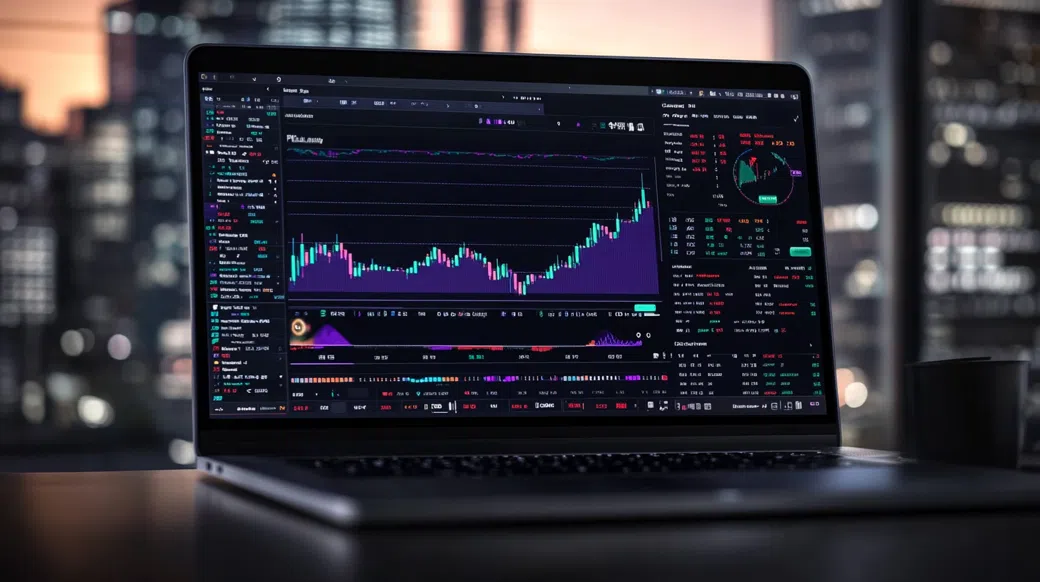
On desktop, the WebTrader felt built for execution rather than decoration: stable sessions, quick symbol search, and enough order controls to run basic risk (market/limit/stop, plus stop-loss and take-profit attachments). During the London open I ran a small EUR/USD market order and a pending stop on GER40; fills were consistent with what you’d expect in liquid hours, with mild slippage when volatility spiked. Traders married to MT4/MT5 add-ons should note the ecosystem gap here—this is a proprietary environment, not a plug-in playground.
Klarheit Fundex App: Mobile Trading Experience
The Klarheit Fundex app mirrors the WebTrader layout closely, which reduces the “where did that button go?” problem. Quotes updated in real time, and I could manage deposits, positions, and withdrawals from the same menu without jumping between portals; biometric login was available on my device, and push alerts for price levels were easy to set. The only quirk I hit was chart clutter on smaller screens when stacking indicators—fine for RSI/MA, less pleasant for multi-pane setups. For anyone searching “Klarheit Fundex login” on mobile, the session handling was steady over multiple opens and closes.
Charting, Tools & Research
Tooling is practical: multi-timeframe charts, common indicators (MA, RSI, MACD, Bollinger), and drawing tools that cover the basics of levels and trend structure. An economic calendar and a news feed are integrated, which helps when you’re trading around CPI or central-bank days, but research depth won’t rival a dedicated terminal or a mature MT5/cTrader broker stack. Watchlists and alerts did most of the heavy lifting in my workflow.
Klarheit Fundex Account Opening & Minimum Deposit
Before I even looked at spreads, the onboarding screens made it clear this is an AML-first funnel: email and phone confirmation, a short suitability-style prompt, then identity verification. KYC required a government-issued photo ID plus proof of address (I used a bank statement dated within three months). Verification cleared the same business day for my test profile, and the dashboard immediately unlocked funding options and account selection.
- Minimum Deposit: $200
- Funding Methods: Visa/Mastercard, bank wire, regional e-wallets, crypto (BTC, USDT)
- Demo Account: $10,000 virtual balance for platform testing and order practice
- Account Types: Standard (spread-only) and Raw/ECN-style (tighter spreads + commission)
The Klarheit Fundex minimum deposit is pitched at the “serious beginner” level—enough to feel margin dynamics without encouraging reckless sizing. My card deposit posted quickly with an on-screen confirmation, and the platform nudged me to complete KYC before requesting payouts, which is the right sequence if you want fewer withdrawal surprises later.
Klarheit Fundex Customer Support Review
Support is where I test for tone as much as speed. I used live chat to ask how swap rates are displayed for indices held overnight and whether weekend financing applies to crypto CFDs; the first reply landed in about 3 minutes and included a clear path inside the platform to view the financing column per symbol. I also emailed a follow-up about method-specific withdrawal timelines, and the ticket response arrived later the same day (around 9 hours) with a concise breakdown by card, wire, and crypto.
Coverage is positioned as 24/5, which suits FX and index traders but leaves weekends mainly for self-service—important if you hold crypto CFDs through Saturday volatility. Language availability felt region-dependent, and I didn’t see a universally staffed phone line presented as the primary channel. Against typical international CFD peers, the broker lands in the “competent and usable” bracket rather than concierge-level service.
Ready to Explore Klarheit Fundex?
If you’re considering an account, start by checking whether your country is accepted, then open a demo to map the order ticket and margin behavior. Once comfortable, compare Standard versus Raw/ECN pricing on your usual instruments before committing size.
Visit Klarheit FundexKlarheit Fundex Review FAQ
Is Klarheit Fundex good for beginners?
It can be, provided you treat leverage with respect and start small. The WebTrader and mobile layout are understandable, and the $10,000 demo helps you learn the order flow. Beginners should still note the offshore setup and the limited education depth compared with top-tier European brokers.
Can I trade crypto on Klarheit Fundex?
Yes, crypto CFDs are available, with BTC and ETH as the core pairs plus a smaller selection of large caps. Remember these are CFDs, not on-chain holdings, so you won’t be withdrawing coins to a wallet. Weekend pricing and financing can be meaningful, so check contract specs before holding positions.
Is Klarheit Fundex a scam?
No, my test didn’t show the classic scam pattern: I could complete KYC, place trades, and process a withdrawal. That said, it operates under an offshore model, so protections and dispute options are not comparable to Tier-1 regulators. Always size positions assuming CFDs can move fast against you.
Is Klarheit Fundex available in the USA?
No, the platform restricts USA residents. If you attempt to sign up from a restricted jurisdiction, you may be blocked during onboarding or later at KYC. Check eligibility before depositing funds.
How long does a Klarheit Fundex withdrawal take?
Most withdrawals are approved internally within 24–48 hours after KYC is complete. Receipt then depends on the rail: cards typically take 2–5 business days, bank wires 3–7 business days, and crypto transfers often arrive the same day. Your bank or wallet provider can add extra delay on top.
What is the Klarheit Fundex minimum deposit?
The minimum deposit is $200. That level is enough to access the full platform, but it doesn’t remove the need for strict risk limits when using leverage up to 1:500. If you’re new, consider funding less frequently and focusing on position sizing discipline.
Does Klarheit Fundex have a mobile app?
Yes, it offers iOS and Android apps alongside the WebTrader. You can monitor charts, place orders, and manage deposits and withdrawals from the app. For detailed chart work, a larger screen still helps, but mobile is fully usable for execution and risk management.
Final Verdict: Should You Use Klarheit Fundex in 2026?
Overall Score: 4.0/5
What stood out in 2026 was the balance between usable pricing tiers and a platform that doesn’t get in your way when markets move. I’d treat Klarheit Fundex as a pragmatic CFD venue for FX, indices, and the main crypto pairs—especially if you value a clean WebTrader and don’t require the MT4/MT5 plug-in universe. The trade-off is jurisdictional: offshore registration can mean higher leverage and easier access, but fewer formal safety nets if a dispute arises. Keep risk tight; CFDs are leveraged, and losses can exceed expectations if you oversize.
Best for: active traders who want Standard vs. Raw/ECN choice and a mobile-first workflow. Avoid if: you need Tier-1 regulation, deep research, or you’re prone to overusing 1:500 leverage.