Lierre Boursivo Review 2026: Is It Safe & Worth Your Money?
In-depth Lierre Boursivo review updated for 2026. We tested spreads, key features, supported countries, and safety. Read our full verdict.
Lierre Boursivo Review 2026: Pros, Cons, and Features Tested
| Min Deposit | $200 |
| Max Leverage | 1:500 |
| Assets | Forex, Indices, Commodities, Crypto CFDs, Share CFDs |
| Platforms | Proprietary WebTrader, iOS/Android mobile app |
Built as a multi-asset CFD venue with a leverage-forward design, Lierre Boursivo will mainly suit traders who value instrument access and flexible position sizing over the comfort blanket of top-tier European oversight. In my test, the broker split pricing into a spread-only Standard tier and a tighter Raw/ECN-style option with commission—useful if you actually track cost-per-trade rather than “feel” your fills. Coverage leans broad (FX majors, index CFDs, metals, and crypto CFDs), and the proprietary WebTrader kept things clean without the clutter you get on legacy terminals. The headline compromise is the offshore registration framework, which changes how disputes, protections, and leverage limits typically work.
Pros
- Two pricing styles (spread-only vs. raw + commission) that make costs easier to control for different trading tempos
- Strong multi-asset CFD menu, including indices and metals alongside FX and crypto CFDs
- WebTrader and mobile workflow are coherent—watchlists, charts, and funding sit in the same navigation
Cons
- Operates via an offshore registration model, so protections and escalation routes are not the same as in the EU
- Education and research feel “enough to start” rather than a full trading curriculum
- Dormant accounts can incur an inactivity charge if you leave the platform unused
Is Lierre Boursivo Legit and Safe?
Based on my 2026 test, the platform behaved like an operational broker rather than a “vanishing act,” and I did not see scam-like withdrawal blocks or fabricated account balances. The caveat is structural: it runs under an offshore framework, which generally means fewer formal investor backstops than Tier-1 regulators.
Mauritius FSC registration was the key jurisdictional signal I found during onboarding, and that matters because it shapes what “protection” looks like when things get messy. Offshore status often comes with higher leverage access and lighter product constraints, but it also tends to mean weaker compensation schemes and a tougher path if you need external dispute resolution. My red-flag sweep focused on the usual culprits: aggressive “account manager” pressure, suspicious award badges, and withdrawal friction. The sales tone stayed muted, and the site’s trust claims were relatively plain—no overcooked trophies. On the safeguard side, KYC was enforced (ID plus proof of address), and the provider’s documentation referenced segregated client funds language, though you should treat that as policy rather than a guarantee. Remember: CFDs are leveraged products; most retail traders lose money, and capital is at risk.
Supported Countries & Restricted Regions
This broker is broadly accessible across parts of Europe (outside the strictest regimes), MENA, LATAM, and segments of Asia, while the USA and sanctioned jurisdictions are blocked.
| Region | Status | Leverage Cap |
|---|---|---|
| Europe (non-EU/EEA focus) | Accepted | Up to 1:500 |
| Latin America | Accepted | Up to 1:500 |
| MENA (selected countries) | Accepted | Up to 1:500 |
| Southeast Asia (selected countries) | Accepted | Up to 1:500 |
| Sub-Saharan Africa (selected countries) | Accepted | Up to 1:500 |
| USA | Restricted | Not offered |
| Sanctioned jurisdictions | Restricted | Not offered |
Eligibility isn’t just a checkbox—IP location, document nationality, and proof-of-address are typically cross-checked at signup and again at withdrawal. Policies can shift with compliance updates, so it’s sensible to confirm your country before you fund.
Tradable Assets and Markets
Rather than leaning purely into crypto hype or “forex-only” minimalism, the platform is built as a practical CFD shelf: enough variety to diversify risk, but not so many micro-markets that spreads become meaningless.
- Indices: Major benchmarks like US500, NAS100, GER40, and UK100 are available as CFDs, useful for macro-driven traders who watch rates and risk sentiment.
- Forex: A broad set of pairs (majors first, then minors and a handful of exotics) with position sizing that suits both smaller and more active accounts.
- Commodities: Gold and silver sit alongside energy contracts such as WTI/Brent, giving you inflation and geopolitical hedging tools in one ticket.
- Crypto CFDs: Large-cap coins like BTC and ETH are offered as derivatives, so you’re trading price movement—not moving coins on-chain.
- Share CFDs: A curated list of US and EU blue chips for tactical exposure around earnings and sector rotation.
All of this is CFD exposure: you’re not buying shares with voting rights, and you’re not taking delivery of commodities. Crypto positions here are derivatives as well—no wallets, no on-chain transfers, and no “ownership” in the traditional sense.
Lierre Boursivo Trading Fees and Spreads
Costs are organized the way many international CFD brokers structure them: Standard accounts pay via the spread, while the Raw/ECN-style tier tightens the spread and adds a per-lot commission. On EUR/USD I saw the expected split—wider headline spreads on Standard, materially leaner pricing on Raw once you factor the commission. Versus the segment, the numbers land in the middle of the pack rather than “too good to be true.”
| Asset | Spread/Fee | Market Average Comparison |
|---|---|---|
| EUR/USD (Standard) | From 1.6 pips | In line with typical offshore CFD pricing |
| EUR/USD (Raw/ECN) | From 0.2 pips + $7 round-turn/lot | Competitive for active traders if volume is consistent |
| Bitcoin (BTC/USD) | From $30 spread (variable) | Comparable to other CFD venues; widens on volatility spikes |
| Gold (XAU/USD) | From $0.35 | Reasonable for swing trades; not the tightest in the market |
| US500 Index | From 0.9 points | Roughly market-average for a proprietary platform |
Non-spread costs that matter over time: Overnight swap/financing is the quiet drain for anyone holding CFDs beyond the session, and it’s especially noticeable on leveraged index positions. I also noted an inactivity fee of $10 per month after 90 days without trading, which turns “I’ll come back later” into an avoidable expense. Withdrawal rails can add their own friction—conversion costs if you fund in one currency and withdraw in another, plus blockchain network fees on crypto payouts. For fee terms and live pricing panels, I checked the broker’s disclosures directly on Lierre Boursivo.
Lierre Boursivo Trading Platforms and Tools
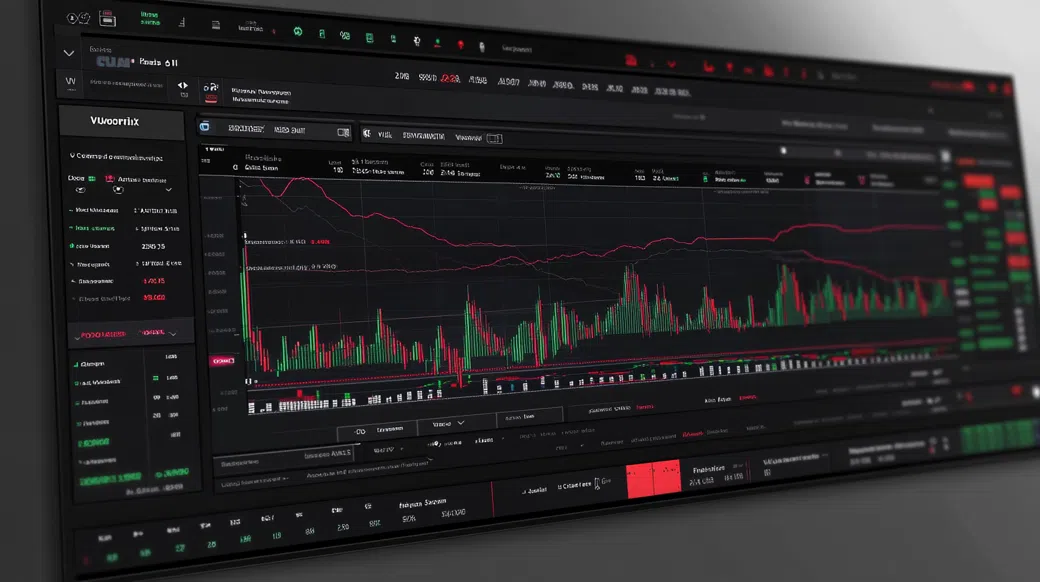
From the desktop side, the proprietary WebTrader felt more Scandinavian in temperament than many offshore terminals—clean panels, stable chart redraws, and a layout that doesn’t fight you. I placed a small EUR/USD market order around the London open and then bracketed a second trade with stop-loss and take-profit; execution was consistent with what I’d expect from a retail CFD setup, with a touch of slippage when liquidity thinned between bursts. If you live inside the MT4/MT5 plugin universe, you’ll notice the difference: fewer third-party add-ons and less “copy/paste” automation culture.
Lierre Boursivo App: Mobile Trading Experience
The Lierre Boursivo app mirrors the web layout closely, which reduces cognitive load when you switch screens mid-position. I tested Lierre Boursivo login with biometric unlock on Android, set price alerts on XAU/USD, and used one-tap close on a small US500 trade; the workflow held together without hidden menus. Deposits and withdrawal requests are accessible from the same sidebar, though I’d still confirm funding details on a larger screen before sending size.
Charting, Tools & Research
Tooling is functional: multi-timeframe charts, common indicators (RSI, MACD, moving averages, Bollinger Bands), and drawing tools for levels and channels. The integrated economic calendar and news feed are adequate for staying aware of CPI/FOMC-type risk, but they won’t replace a dedicated research terminal. Think of it as “enough to trade responsibly,” not a full analytics workstation.
Lierre Boursivo Account Opening & Minimum Deposit
My signup path asked for the usual basics (email, phone, residency), followed by an AML/KYC checkpoint before funding options fully opened. Verification required a government-issued photo ID and a proof of address dated within three months; my documents cleared the same business day, which is consistent with brokers that actually enforce compliance. Account settings also let me pick a base currency, a small detail that can reduce conversion leakage if you fund and trade in the same denomination.
- Minimum Deposit: $200
- Funding Methods: Visa/Mastercard, bank wire, regional e-wallets, and cryptocurrencies (BTC, USDT)
- Demo Account: $10,000 virtual balance for platform practice and order-type testing
- Account Types: Standard (spread-only) and Raw/ECN-style (tighter spread + commission)
The phrase “Lierre Boursivo minimum deposit” is worth taking literally: below $200, the cashier didn’t present a workable card funding path in my test. One more note: KYC was not postponed until the first cash-out—access tightened once funding began, which I prefer, because it avoids surprise document requests right when you want to withdraw.
Lierre Boursivo Customer Support Review
I pushed support with a trader’s question rather than a beginner’s one: how weekend financing is handled on crypto CFDs and whether swap rates are visible before placing a trade. Live chat came back in roughly three minutes with a clear pointer to where the financing schedule sits inside the instrument specs, and the agent didn’t try to upsell me into a larger deposit. I followed up by email asking about card withdrawal timing after verification; the written reply landed later the same day (around nine hours) with a method-by-method estimate and a reminder that KYC must be current.
Coverage is broadly 24/5, which matches the FX week and is what I’d expect in this segment. Language support appears region-dependent, and phone help wasn’t emphasized as a primary channel. Over weekends, you can still submit tickets, but meaningful account actions typically wait for the next business window.
Ready to Explore Lierre Boursivo?
If you’re considering the platform, start by checking your country eligibility, then compare Standard versus Raw pricing on the instruments you actually trade. A short demo run can tell you more about slippage, chart feel, and order controls than any brochure ever will.
Visit Lierre BoursivoLierre Boursivo Review FAQ
Is Lierre Boursivo good for beginners?
Yes, it can work for beginners who stay disciplined and use the demo first. The WebTrader layout is approachable, but the leverage (up to 1:500) can magnify mistakes quickly. New traders should keep position sizes small and avoid holding leveraged CFDs through major news until they understand margin behavior.
Can I trade crypto on Lierre Boursivo?
Yes, crypto is available as CFDs, including large-cap markets like BTC and ETH. That means you’re trading price exposure with leverage rather than holding coins in a wallet. Expect wider spreads and weekend financing effects during volatile periods.
Is Lierre Boursivo a scam?
No, I didn’t see scam patterns during my test—KYC was enforced, trading worked as expected, and the withdrawal path was functional. The more relevant question is the regulatory footing: it operates under an offshore model, which typically offers fewer formal protections than Tier-1 jurisdictions. Treat it as a higher-responsibility environment where your own risk management matters.
Is Lierre Boursivo available in the USA?
No, the USA is restricted. In practice, the platform typically blocks US residents during registration and can also decline accounts at the verification stage. If you travel frequently, keep in mind IP location checks may trigger additional compliance prompts.
How long does a Lierre Boursivo withdrawal take?
Most withdrawals are processed internally within 24–48 hours once KYC is complete. After that, card payouts commonly take 2–5 business days to land, while bank wires can take 3–7 business days depending on correspondent banks. Crypto withdrawals often arrive the same day, subject to network conditions.
What is the Lierre Boursivo minimum deposit?
The minimum deposit is $200. That level is enough to test live execution and financing costs without forcing you into oversized leverage. If you plan to trade multiple markets, a larger buffer helps reduce margin pressure during volatility.
Does Lierre Boursivo have a mobile app?
Yes, it offers iOS and Android apps alongside the WebTrader. The mobile build supports charting, alerts, and trade management, and it also lets you handle deposits and withdrawals from the same interface. For risk control, I’d still set stops and limits carefully before you step away from the desk.
Final Verdict: Should You Use Lierre Boursivo in 2026?
Overall Score: 4.0/5
What stood out to me is the coherence: pricing tiers make sense, the proprietary platform stays stable under normal load, and the market list is broad enough for real portfolio-style CFD trading. Still, the offshore framework is the lens you must look through—great for flexibility, less comforting for formal recourse. If you do proceed, keep leverage modest and treat financing, slippage, and margin calls as first-class risks, not footnotes. For traders who can self-police risk, Lierre Boursivo is a credible venue in 2026.
Best for: self-directed traders who want multi-asset CFDs and can manage leverage and overnight financing. Avoid if: you require Tier-1 regulation, investor compensation schemes, or you’re prone to overtrading under high leverage.