Peña Inveranza Review 2026: Is It Safe & Worth Your Money?
In-depth Peña Inveranza review updated for 2026. We tested spreads, key features, supported countries, and safety. Read our full verdict.
Peña Inveranza Review 2026: Pros, Cons, and Features Tested
| Min Deposit | $200 |
| Max Leverage | 1:500 |
| Assets | Forex, Indices, Commodities, Crypto CFDs, Share CFDs |
| Platforms | Proprietary WebTrader + iOS/Android app |
Designed as a multi-asset CFD venue, Peña Inveranza suits traders who want broad market access and flexible leverage, while accepting the thinner safety net that comes with an offshore framework. In my test account, the pricing split was clearly tiered (spread-only Standard vs. tighter Raw/ECN-style pricing with commission), which makes costs easier to map to your trading frequency. Coverage leans practical rather than encyclopedic—majors and key indices are the workhorses—paired with a clean WebTrader stack and a mobile companion. The platform’s edge is convenience and instrument range; the main compromise is that escalation and investor-protection standards won’t mirror top-tier EU brokers. For a first look, I started from the Peña Inveranza web terminal and worked outward.
Pros
- Two pricing tracks (Standard and Raw/ECN-style) that fit both casual and high-turnover trading
- Broad CFD menu spanning FX, indices, metals, and large-cap crypto
- Mobile app mirrors core order and funding functions without feeling “lite”
Cons
- Offshore registration model means fewer formal dispute routes and protections
- Education/research is functional, not deep enough for serious self-study
- Dormant accounts can face an inactivity charge after a period of no trading
Is Peña Inveranza Legit and Safe?
Peña Inveranza operates as a real, functioning broker rather than an outright “disappearing act,” but it sits in the higher-risk end of the spectrum due to offshore registration. That difference matters: you can trade, deposit, and withdraw, yet you should not expect the same investor-compensation scaffolding you’d get under a Tier-1 regulator.
From a due-diligence angle, the account I used was onboarded under a Mauritius FSC registration structure, which is common for international CFD providers that want to offer higher leverage and a wide client footprint. Offshore status isn’t automatically a red flag, but it changes the practical playbook: leverage can reach 1:500, while formal complaint escalation and compensation schemes are typically lighter, and cross-border disputes are harder to push uphill. During my test window, I scanned for the usual “tell” signs—overheated sales calls, suspicious trophy-badge marketing, or withdrawal friction—and didn’t see the aggressive patterns that often precede trouble. KYC was enforced (ID plus proof of address), and the legal language referenced segregated client funds, which is the right direction even if enforcement varies by jurisdiction. Keep the product risk front and center: CFDs are leveraged, margin calls arrive quickly, and most retail traders lose money over time.
Supported Countries & Restricted Regions
This broker focuses on international clients across parts of Europe (outside the strictest regimes), LATAM, and several MENA and Asian corridors, while staying closed to the USA and sanctioned locations.
| Region | Status | Leverage Cap |
|---|---|---|
| Europe (non-EU/EEA) | Accepted | Up to 1:500 |
| Latin America | Accepted | Up to 1:500 |
| MENA (selected countries) | Accepted | Up to 1:500 |
| Southeast Asia (selected countries) | Accepted | Up to 1:500 |
| USA | Restricted | Not offered |
| Sanctioned jurisdictions | Restricted | Not offered |
Eligibility isn’t just a checkbox: the provider applies KYC/AML screening and can block signups based on residency, IP patterns, or document country. Policies shift, so confirm access at the point of signup rather than relying on last quarter’s experience.
Tradable Assets and Markets
The lineup is built for the way most CFD traders actually behave: FX and index CFDs at the core, with commodities and crypto CFDs as tactical satellites. Depth is sufficient for active trading, though it’s not a “thousands of symbols” supermarket.
- Indices: Major benchmarks such as US500, NAS100, US30, GER40, and UK100 are available for macro-driven trading and intraday momentum.
- Forex: A broad set of pairs—majors first, then minors—with enough liquidity concentration for London and New York overlap trading.
- Commodities: Metals and energy are the staples; gold and WTI were the cleanest to monitor for spreads and swap behavior.
- Crypto CFDs: Large-cap coins like BTC and ETH are offered as CFDs, suited to short-term risk windows rather than “buy-and-hold.”
- Share CFDs: A selective list of US/EU blue chips for event-driven setups, without needing a full equity custody account.
All of this is CFD exposure—no shareholder voting, no physical delivery, and no on-chain crypto transfers. Dividends and corporate actions are handled via broker adjustments rather than ownership.
Peña Inveranza Trading Fees and Spreads
Costs are structured around two lanes: a Standard account where you “pay in the spread,” and a Raw/ECN-style account where spreads compress and a per-lot commission is added. On my pricing checks, it landed broadly in line with offshore CFD peers—competitive on the Raw tier, more average on Standard.
| Asset | Spread/Fee | Market Average Comparison |
|---|---|---|
| EUR/USD (Standard) | From 1.6 pips | In line |
| EUR/USD (Raw/ECN) | From 0.2 pips + $7 round-turn/lot | Better than average for active traders |
| Bitcoin (BTC/USD) | From $35 | In line |
| Gold (XAU/USD) | From $0.30 | Slightly better |
| US500 Index | From 0.8 points | In line |
Beyond spreads/commission, the quiet costs matter: overnight swap can add up quickly on leveraged FX and metals, and weekend financing tends to bite harder on crypto CFDs. I also noted an inactivity fee of $10 per month after 90 days without trading, which is small on paper but annoying if you park an account. Funding in a different base currency introduces conversion drag, and some withdrawal rails may pass along third-party banking charges—worth factoring before you scale position size on this service.
Peña Inveranza Trading Platforms and Tools
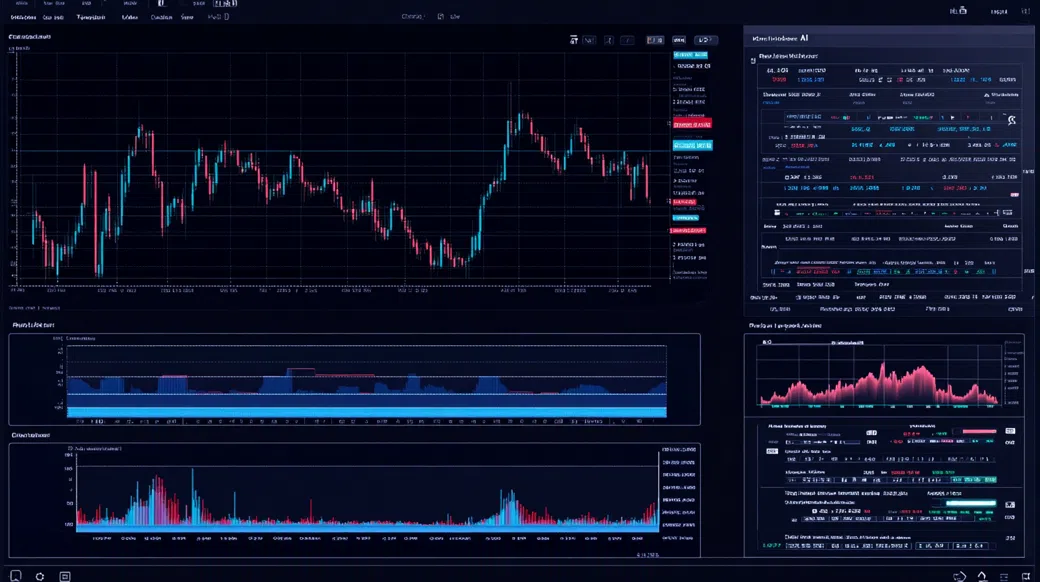
WebTrader is the operational center here, and my focus was execution behavior around the European morning rather than cosmetic features. Logging in stayed stable across sessions, and the terminal supported market/limit/stop orders with basic risk controls (SL/TP) attached at entry. Execution on a small EUR/USD test during the London open felt consistent—no repeated “price changed” loops—though the platform doesn’t replicate the plug-in universe traders associate with MT4/MT5, which matters if you rely on custom scripts or third-party automation.
Peña Inveranza App: Mobile Trading Experience
The Peña Inveranza app tracked the web layout closely, with real-time quotes, watchlists, and quick position management for one-tap partial/full closes. I used Peña Inveranza login via biometric unlock on Android, and the session handling was tidy—no frequent re-auth prompts mid-navigation. Deposits and withdrawals were reachable from the same menu tree, and push notifications for price alerts worked reliably; the main quirk was occasional chart redraw lag when switching timeframes on weaker connections.
Charting, Tools & Research
Charting covers the essentials: multiple timeframes, the standard indicator shelf (MA, RSI, MACD, Bollinger), and drawing tools for levels and trendlines. An economic calendar and integrated news feed are present, useful for situational awareness, but the research depth won’t replace a dedicated macro terminal or a full-featured MT5/cTrader environment. Alerts and watchlists are practical, and that’s often enough—risk control beats fancy dashboards.
Peña Inveranza Account Opening & Minimum Deposit
My onboarding started with a short form (email, phone, country, base currency) and then moved straight into AML checks—no endless questionnaires, but enough fields to build a compliance profile. Verification required a government photo ID plus a proof of address dated within three months; my documents were approved the same business day, and the client area unlocked deposits immediately after. The broker also prompted for a basic risk acknowledgement around leverage and margin, which I consider a positive friction point.
- Minimum Deposit: $200
- Funding Methods: Visa/Mastercard, bank wire, regional e-wallets, and crypto (BTC/USDT)
- Demo Account: $10,000 virtual balance for platform familiarization and order-ticket rehearsal
- Account Types: Standard (spread-only) and Raw/ECN-style (tighter spreads + commission)
On the cashflow side, the Peña Inveranza minimum deposit is pitched at $200, which is accessible but still meaningful enough to encourage discipline. I funded my test wallet by card and liked that the confirmation screen showed the credited amount before redirecting back to the terminal. If you want to explore without committing capital, begin with demo first and only then move to a small live deposit via Peña Inveranza.
Peña Inveranza Customer Support Review
Support quality shows up when you ask an unfashionable question, so I pressed them on swap/overnight fees for holding XAU/USD across rollover and how those charges appear in the statement. Live chat came back in roughly three minutes with a clear explanation of where the swap column sits and how triple-swap timing works midweek; the agent didn’t dodge the topic. I followed up by email to request a written note on withdrawal processing steps after KYC, and the ticket reply landed in about eight hours with a concise checklist.
Coverage is broadly 24/5, which fits the FX week, while weekend responsiveness is thinner—typical for this segment. Language support depends on staffing, with English solid and other languages rotating; phone contact wasn’t consistently pushed, so I treated chat/email as the primary rails. Compared with top-tier European houses, the support feels more “trading desk practical” than compliance-heavy, for better and worse.
Ready to Explore Peña Inveranza?
If you’re considering this broker, I’d start by checking today’s spreads on the instruments you actually trade and confirming your region’s eligibility before funding. Open a demo, test the order ticket, and only then move to a small live deposit to measure execution and withdrawals in real conditions.
Visit Peña InveranzaPeña Inveranza Review FAQ
Is Peña Inveranza good for beginners?
It can be, provided you keep leverage modest and use the demo first. The WebTrader and mobile app are not overloaded with pro-only features, and the $200 entry point is manageable. The bigger issue for beginners is risk: CFDs move fast, and offshore brokers typically offer fewer formal protections.
Can I trade crypto on Peña Inveranza?
Yes, crypto is offered as CFDs, including major coins like BTC and ETH. That means you’re trading price exposure, not withdrawing coins to a wallet. Weekend financing and wider spreads than FX are normal, so size positions accordingly.
Is Peña Inveranza a scam?
No, based on my hands-on checks it behaved like an operational broker: KYC was enforced, trading worked, and withdrawals followed the stated flow. Still, “not a scam” isn’t the same as “Tier-1 regulated,” and the offshore setup means you should be stricter with sizing and cash management.
Is Peña Inveranza available in the USA?
No, the platform restricts USA residents. In my checks, the signup flow and compliance prompts were aligned with typical non-US CFD brokerage policies. If you’re traveling, residency and document country still tend to be the deciding factors.
How long does a Peña Inveranza withdrawal take?
Most withdrawals are processed internally within 24–48 hours after KYC is complete. Receipt time then depends on the rail: cards typically take 2–5 business days, bank wires 3–7 business days, and crypto is often same-day. Plan for extra time around weekends and banking holidays.
What is the Peña Inveranza minimum deposit?
The Peña Inveranza minimum deposit is $200. That level is enough to test fills and funding/withdrawal mechanics without committing a large bankroll. If you’re new to CFDs, consider starting smaller in exposure even if the deposit is higher.
Does Peña Inveranza have a mobile app?
Yes, it provides iOS and Android apps alongside the WebTrader. In my use, the app covered core tasks—charts, order placement, alerts, and deposits/withdrawals—without forcing you back to desktop. As always, test stability on your own device before trading news events.
Final Verdict: Should You Use Peña Inveranza in 2026?
Overall Score: 4.0/5
What stood out most wasn’t a flashy feature—it was that the pricing and platform behavior stayed coherent when I stress-tested small positions around the London session and then walked a withdrawal through the back office. Peña Inveranza delivers a credible multi-asset CFD experience with a sensible Standard vs. Raw/ECN-style split, and the mobile stack is genuinely usable. The caution flag is jurisdictional: offshore registration means fewer formal protections, so your risk management has to do more of the heavy lifting. If you proceed, keep leverage low and treat the first weeks as a systems check with Peña Inveranza.
Best for: active CFD traders who value instrument variety and can self-police leverage and position sizing. Avoid if: you require Tier-1 regulation, local investor-compensation schemes, or deep institutional-grade research.