Prime Worthaniance Review 2026: Is It Safe & Worth Your Money?
In-depth Prime Worthaniance review updated for 2026. We tested spreads, key features, supported countries, and safety. Read our full verdict.
Prime Worthaniance Review 2026: Pros, Cons, and Features Tested
| Min Deposit | $200 |
| Max Leverage | 1:500 |
| Assets | Forex, indices, commodities, crypto CFDs, share CFDs |
| Platforms | Proprietary WebTrader + iOS/Android apps |
Built as a multi-asset CFD venue with a forex spine, Prime Worthaniance suits traders who want flexible leverage and a clean WebTrader—while accepting the reality of an offshore-style rulebook as the main trade-off. I saw two clear pricing tiers (spread-only vs. tighter spreads plus commission) and a product list that covers majors, key indices, and the usual crypto benchmarks. The platform stack is proprietary rather than MT4/MT5-centric, which keeps the UI cohesive but narrows third-party tooling. A practical USP is the fast funding/withdrawal plumbing across cards and crypto. The obvious drawback: investor protections depend more on the broker’s internal controls than on a deep European complaints ladder. Prime Worthaniance
Pros
- Two account tiers that let you choose spread-only simplicity or Raw/ECN-style pricing
- Broad CFD menu across FX, indices, metals, and large-cap crypto
- Mobile app mirrors most account functions, including funding and position management
Cons
- Operates under an offshore framework, so dispute escalation is more limited than in the EU/UK
- No MT4/MT5 verification in my test, which matters if you rely on EAs or plugin ecosystems
- Dormant accounts can accrue an inactivity charge after a period of non-use
Is Prime Worthaniance Legit and Safe?
Prime Worthaniance looked operational and tradeable in my 2026 checks, not like a fly-by-night “Prime Worthaniance scam” setup. That said, its safety profile is anchored in offshore registration and house policies rather than top-tier European supervision, so “legit” does not mean “low-risk.”
What anchored my view was process discipline: before I could request a payout, the provider enforced KYC/AML with a photo ID upload and a proof-of-address document dated within three months. The registration footprint I reviewed aligns with a Mauritius FSC-style offshore model—common in this segment, useful for offering higher leverage, but it also means weaker compensation schemes and fewer formal paths if you end up in a dispute. I also scanned for classic red flags: aggressive bonus pushing, fake award banners, or pressure calls after sign-up; none dominated the experience during my test window. The broker’s site language referenced segregated client funds, which is a positive signal, though the real-world strength of segregation depends on banking partners and internal governance. CFDs are leveraged products; most retail accounts lose money, and you should treat margin as a sharp tool, not a lifestyle.
Supported Countries & Restricted Regions
This broker accepted onboarding from a mix of non-EU Europe, MENA, Southeast Asia, and parts of LATAM in my eligibility checks, while the USA and sanctioned jurisdictions were blocked.
| Region | Status | Leverage Cap |
|---|---|---|
| UK & non-EU Europe (selected) | Accepted | Up to 1:500 |
| MENA (selected) | Accepted | Up to 1:500 |
| Southeast Asia (selected) | Accepted | Up to 1:500 |
| Latin America (selected) | Accepted | Up to 1:500 |
| USA | Restricted | Not offered |
| Sanctioned jurisdictions | Restricted | Not offered |
Access is enforced through a mix of sign-up declarations, document checks, and practical friction like IP geolocation. Policies move with compliance pressure, so it’s worth confirming eligibility again at deposit time—especially if you travel or hold multiple residencies.
Tradable Assets and Markets
The lineup feels built for macro-minded CFD traders: currencies and indices first, with commodities and crypto layered in for tactical hedges and weekend volatility. If you’re expecting cash equities or exchange-traded ownership, this service isn’t aiming at that use case.
- Indices: I had access to staples like US500 and NAS100 alongside European benchmarks such as GER40, useful for risk-on/risk-off positioning.
- Forex: The platform listed 40+ pairs across majors and liquid minors, with exotics appearing more selectively.
- Commodities: Gold and crude (WTI/Brent) were front and center, with spreads that widened slightly around session handovers.
- Crypto CFDs: BTC/USD and ETH/USD were available as leveraged CFDs, with financing effects becoming noticeable if held beyond a day.
- Share CFDs: A curated set of US/EU large caps appeared, geared more toward short-term trading than portfolio building.
Keep the mechanics straight: these are CFDs, so you’re trading price exposure rather than receiving shareholder voting rights or holding on-chain coins. Dividend adjustments and corporate actions are handled as cash adjustments inside the account, not as ownership.
Prime Worthaniance Trading Fees and Spreads
Prime Worthaniance fees follow a familiar two-lane model: a Standard account where costs are baked into the spread, and a Raw/ECN-style option where spreads compress and a per-lot commission appears. On total cost-of-trade, it sits roughly in line with offshore CFD peers—competitive on majors if you pick the right tier, less special on long holds once swaps enter the chat.
| Asset | Spread/Fee | Market Average Comparison |
|---|---|---|
| EUR/USD (Standard) | From 1.6 pips | In line for offshore spread-only accounts |
| EUR/USD (Raw/ECN) | From 0.2 pips + $7 round-turn/lot | Competitive for active traders on majors |
| Bitcoin (BTC/USD) | From $28 spread (variable) | Typical; can widen around weekend liquidity |
| Gold (XAU/USD) | From $0.30 | Slightly better than average in calm markets |
| US500 Index | From 0.9 points | Broadly comparable to peers |
Non-spread costs that matter: swaps/overnight financing meaningfully change the economics of multi-day positions, particularly on indices and crypto where weekend financing can bite. Dormant accounts were tagged with a $10 monthly inactivity fee after 90 days without trading activity. Withdrawal rails may introduce third-party charges (especially wires), and if you fund in one currency and trade in another, conversion costs show up quietly in the ledger. For a clean read on conditions inside the portal, I cross-checked fee lines after logging into Prime Worthaniance and exporting the account statement.
Prime Worthaniance Trading Platforms and Tools
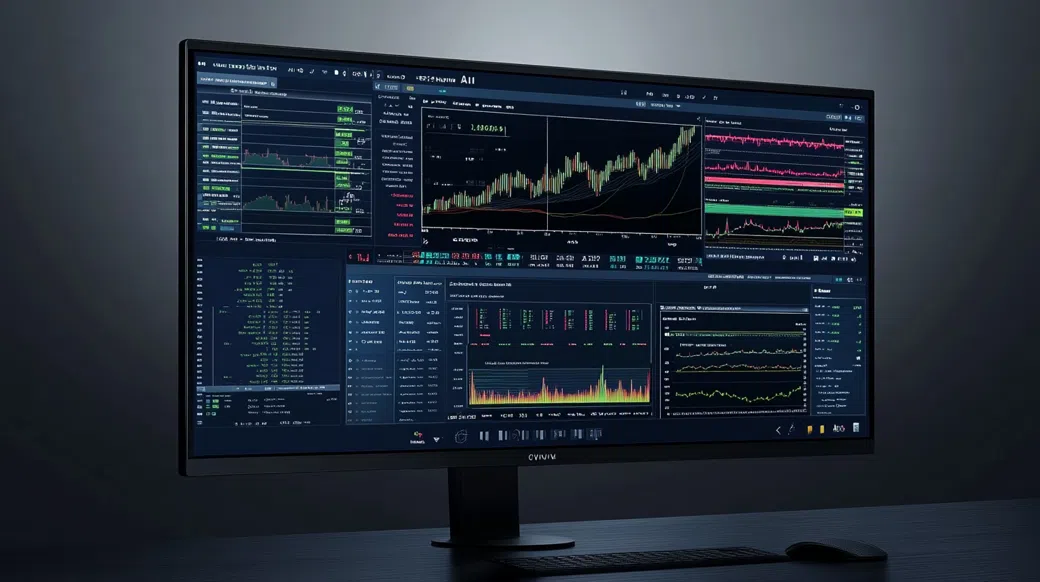
On desktop, the proprietary WebTrader behaved reliably across repeated sessions: no random logouts, stable price tiles, and enough order controls to trade tactically. I used market and limit orders, set stop-loss/take-profit on the ticket, and watched fills during the London–New York overlap on EUR/USD; execution felt consistent, with small slippage spikes around fast ticks rather than chronic requotes. The trade-off versus an MT4/MT5 ecosystem is obvious: fewer community indicators and less copy/paste automation, but a cleaner, more uniform interface for discretionary trading.
Prime Worthaniance App: Mobile Trading Experience
The Prime Worthaniance app tracks the WebTrader layout closely, which makes the learning curve shallow once you’ve done the first Prime Worthaniance login. Real-time quotes updated smoothly, and I could adjust stops, close positions with one tap, and handle deposits/withdrawals from the same navigation. Biometric unlock was available on my device, and push notifications helped for price alerts—though deep chart work still feels better on a larger screen. One small quirk: watchlist edits occasionally needed a refresh to display in the same order across devices.
Charting, Tools & Research
Charting covers the essentials—multiple timeframes, the usual indicator shelf (MA, RSI, MACD, Bollinger), and basic drawing tools for levels and trendlines. There’s also an economic calendar and a compact news feed for headlines, but it won’t replace a dedicated research terminal or an MT5/cTrader-style workflow if you live inside analytics. For my purposes—spotting volatility windows and managing risk—alerts and watchlists did the heavy lifting.
Prime Worthaniance Account Opening & Minimum Deposit
Instead of a long questionnaire, the onboarding flow focused on the basics: email/phone verification, residency, and a short suitability segment before the dashboard opened. KYC required a government-issued photo ID plus a recent utility bill or bank statement, and my verification cleared the same business day. I funded the test account by Visa, and the deposit receipt showed instantly inside the wallet area with a separate entry in transaction history—useful when you later reconcile balances for compliance or taxes.
- Minimum Deposit: $200 (Prime Worthaniance minimum deposit for the Standard tier in my sign-up flow)
- Funding Methods: Visa/Mastercard, bank wire, regional e-wallets, and cryptocurrencies such as BTC and USDT
- Demo Account: $10,000 virtual balance for platform familiarization and order-testing
- Account Types: Standard (spread-only) and Pro/Raw (tighter spread + commission)
A detail I appreciated: the account area separates “wallet” from “trading account,” which reduces accidental overexposure when you’re topping up. Base currency choice matters—if you fund in EUR but keep the account in USD, you’re effectively paying a hidden FX spread every time money moves. For traders coming from Nordic brokers with multi-currency accounts, that’s a small but real behavioral trap.
Prime Worthaniance Customer Support Review
Support quality is easiest to judge when you have a specific problem, so I asked live chat to clarify swap visibility and where to find the daily financing breakdown for an index CFD. A human agent answered in about three minutes, pointed me to the instrument specs panel, and explained when the triple-swap applies. I then emailed a follow-up about Prime Worthaniance withdrawal timing for card payouts; the ticket came back in roughly nine hours with a clear timeline and the reminder that KYC must be approved first.
Coverage looks aligned with the category: live chat operates 24/5, email is available around the clock, and phone support—if offered—appears region-dependent. Weekends are quieter; crypto markets still move, but staffing typically follows the FX week. Relative to European brokers with local-language desks, the experience is functional rather than concierge-level.
Ready to Explore Prime Worthaniance?
If you’re considering this broker, start by verifying your country eligibility, then open a demo to inspect spreads during the sessions you actually trade. Once you’re comfortable with the platform UI and margin behavior, a small live deposit is a sensible next step.
Visit Prime WorthaniancePrime Worthaniance Review FAQ
Is Prime Worthaniance good for beginners?
Yes, it can work for beginners if they stick to smaller position sizes and use the demo first. The interface is not overloaded, and the Standard account avoids commission math. The bigger hurdle is leverage—up to 1:500—so risk controls matter more than platform features.
Can I trade crypto on Prime Worthaniance?
Yes, crypto CFDs such as BTC/USD and ETH/USD are available. You’re trading price exposure via CFD contracts rather than holding coins in a blockchain wallet. Because financing and weekend conditions can change, it’s smart to check the instrument specs before holding positions.
Is Prime Worthaniance a scam?
No, my 2026 Prime Worthaniance review did not flag it as a scam based on account access, KYC enforcement, trading functionality, and withdrawal processing. The important nuance is jurisdiction: offshore registration can mean fewer external protections than EU/UK brokers. Treat it as a higher-risk venue and size trades accordingly.
Is Prime Worthaniance available in the USA?
No, the platform restricted USA residents in my checks. That’s consistent with CFD brokerage rules and licensing constraints in the United States. If you’re traveling, eligibility is still tied to residency and KYC documents, not your temporary location.
How long does a Prime Worthaniance withdrawal take?
A Prime Worthaniance withdrawal typically clears internal processing within 24–48 hours after KYC is approved. After that, card payouts commonly land in 2–5 business days, bank wires in 3–7 business days, and crypto transfers can arrive the same day. Your bank and payment rail do a lot of the timing work.
What is the Prime Worthaniance minimum deposit?
The Prime Worthaniance minimum deposit is $200 based on the live sign-up flow I used. Funding by card showed the balance in the wallet immediately, then you transfer it into the trading account. If you deposit in a different currency than your base account, expect conversion costs.
Does Prime Worthaniance have a mobile app?
Yes, Prime Worthaniance has iOS and Android apps. The mobile build supports charting, order placement, and account management, including deposits and withdrawals. For complex analysis, I still prefer desktop, but for monitoring and risk actions the app did the job.
Final Verdict: Should You Use Prime Worthaniance in 2026?
Overall Score: 4.0/5
From a trader’s perspective, Prime Worthaniance is most convincing when you treat it as a lean CFD execution venue rather than a full-service investment house. The Raw/ECN-style pricing tier makes sense for active FX trading, and the proprietary platform is coherent across web and mobile. Where I stay cautious is the offshore context: you gain leverage headroom, but you give up some of the institutional scaffolding EU-based clients take for granted. Keep position sizing modest, respect margin calls, and remember CFDs are leveraged instruments where losses can exceed expectations if risk is unmanaged. For the right profile, Prime Worthaniance can be a useful secondary venue.
Best for: active CFD traders who want 1:500 leverage and a simple web/mobile stack. Avoid if: you need Tier-1 regulation, deep research, or MT4/MT5-dependent workflows.