
Prumo Quinhença Review 2026: Is It Safe & Worth Your Money?
In-depth Prumo Quinhença review updated for 2026. We tested spreads, key features, supported countries, and safety. Read our full verdict.
Prumo Quinhença Review 2026: Pros, Cons, and Features Tested
| Min Deposit | $200 |
| Max Leverage | 1:500 |
| Assets | Forex CFDs, Index CFDs, Commodity CFDs, Crypto CFDs, Share CFDs |
| Platforms | Proprietary WebTrader, iOS app, Android app |
Built as an offshore-style CFD venue, Prumo Quinhença targets traders who want broad markets and high leverage, with the obvious compromise being lighter investor protections than you’d expect from a top-tier European licence. In my 2026 test run at Prumo Quinhença, the account menu split cleanly between a spread-only Standard tier and a tighter Raw/ECN-style tier for more active flow. The instrument list leans multi-asset (FX plus indices and metals), and the platform stack is its own WebTrader with mobile apps rather than a confirmed MT4/MT5 setup. The standout is flexibility—leverage headroom and crypto CFDs included—while the main drawback is the offshore dispute-and-compensation reality you have to price into your risk plan.
Pros
- Two pricing tiers that let you choose between “simple spread” and “tighter spread + commission”
- Solid multi-asset CFD coverage (FX, indices, metals, crypto) for macro-style traders
- Clean WebTrader layout with mobile access for monitoring and risk actions on the go
Cons
- Operates under an offshore framework, which weakens escalation routes versus EU-regulated brokers
- Education and research are serviceable, not deep—plan to bring your own process
- An inactivity charge can bite if you park the account for a few months
Is Prumo Quinhença Legit and Safe?
Prumo Quinhença did not behave like a “vanishing broker” in my testing—deposits, trading, and withdrawals followed a coherent process—so I’d classify it as operational rather than a Prumo Quinhença scam. The safety caveat is jurisdictional: it sits in the offshore bracket, where client recourse and compensation schemes are typically thinner.
I approached the “is Prumo Quinhença legit” question the way I’d triage any smaller venue: paperwork first, then friction points. The provider presented itself as registered under the Mauritius FSC model, and the language around AML/KYC was consistent with what you’d expect from an international CFD shop (ID plus proof-of-address before you can fully move size). Offshore status matters in practice: it often brings higher leverage and looser product availability, but also a weaker complaints ladder and fewer protections if a dispute turns ugly. During my test window, I saw no bizarre “award badge” theatrics or hard-sell calls after signup; support focused on process questions rather than pushing bigger deposits. The platform also referenced segregated client funds in its legal docs, although—being candid—that’s a statement you still need to weigh against jurisdictional enforcement. CFDs are leveraged products; most retail accounts lose money, and you can burn capital quickly if your margin discipline slips.
Supported Countries & Restricted Regions
This broker primarily caters to international clients across parts of Europe (outside the strictest regimes) and several emerging-market regions, while the USA and sanctioned jurisdictions are blocked.
| Region | Status | Leverage Cap |
|---|---|---|
| Latin America | Accepted | Up to 1:500 |
| MENA (selected countries) | Accepted | Up to 1:500 |
| Southeast Asia (selected countries) | Accepted | Up to 1:500 |
| Non-EU Europe (selected countries) | Accepted | Up to 1:500 |
| USA | Restricted | Not offered |
| Sanctioned jurisdictions | Restricted | Not offered |
In practice, eligibility is enforced through a mix of signup declarations, IP checks, and KYC address validation, and the rulebook can change as payment partners and local policies shift.
Tradable Assets and Markets
The lineup reads like it was designed for cross-asset traders: plenty of macro staples, with crypto CFDs there for those who want volatility without leaving the same margin wallet.
- Index CFDs: The usual benchmark contracts are present—think US500, NAS100, GER40, and UK100—useful for trading risk-on/risk-off without stock picking.
- Forex CFDs: Roughly 40+ pairs spanning majors and a handful of higher-beta crosses; spreads are most competitive on EUR/USD and other liquid G10.
- Commodity CFDs: Gold and silver are the centre of gravity, with crude oil (WTI/Brent) and natural gas available for event-driven setups.
- Crypto CFDs: BTC and ETH lead, with several large-cap names behind them; position sizing matters because weekend financing can move the needle.
- Share CFDs: A selected shelf of US and EU blue-chip names for tactical exposure rather than long-horizon ownership.
All of this is CFD exposure: you’re trading price movement with leverage, not taking delivery of assets, not getting shareholder voting rights, and not holding on-chain crypto in a personal wallet. Dividends, where applicable, are handled as account adjustments rather than “real” equity ownership.
Prumo Quinhença Trading Fees and Spreads
Pricing is organised around two tracks: a Standard account that bakes costs into the spread, and a Raw/ECN-style account that tightens the spread and adds a per-lot commission. On balance, total cost is broadly in line with offshore CFD peers—fine for active trading, less charming for casual, small-ticket dealing.
| Asset | Spread/Fee | Market Average Comparison |
|---|---|---|
| EUR/USD (Standard) | From 1.6 pips | In line |
| EUR/USD (Raw/ECN) | From 0.2 pips + $7 round-turn/lot | Competitive for active traders |
| Bitcoin (BTC/USD) | From $28 | Slightly better than average in quiet hours |
| Gold (XAU/USD) | From $0.28 | In line |
| US500 Index | From 0.9 points | In line |
Non-spread costs that matter: Overnight swap/financing is the real “silent fee,” particularly if you hold FX or indices for days rather than hours; I checked the swap table before leaving positions open across a rollover. The inactivity fee I saw was $10 per month after 90 days without trading, which is easy to forget if you treat the account as a backup. Also factor in conversion costs if you fund in one currency and trade in another, plus weekend financing on crypto CFDs when you keep exposure through Saturday/Sunday.
Prumo Quinhença Trading Platforms and Tools
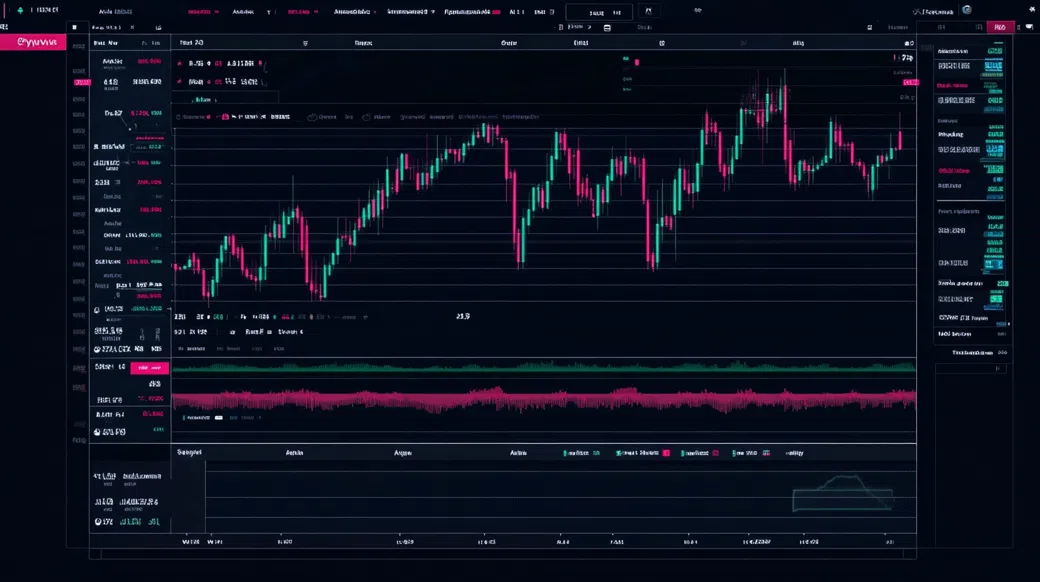
From the desk, the proprietary WebTrader felt built for speed rather than ornament: watchlists on the left, ticket on the right, charts in the centre with one-click toggles for position mode. I ran a small EUR/USD market order into the London open to gauge execution speed and slippage; fills came back promptly with no visible requote loops, though you should still expect drift during data releases. Order types covered the practical set (market, limit, stop, and take-profit/stop-loss attachments), but the wider MT4/MT5 ecosystem—custom indicators, EA workflows, community tooling—was not something I could confirm as available here.
Prumo Quinhença App: Mobile Trading Experience
The Prumo Quinhença app mirrors the WebTrader logic, and the Prumo Quinhença login flow supported biometric unlock on my device, which is exactly what you want when you’re managing margin on the commute. Quotes updated smoothly, and I could modify stops and close positions with a couple of taps rather than hunting through menus. Deposit and withdrawal functions were accessible in-app, and push notifications for price levels are available, although alerts aren’t as granular as what I’d build in a full desktop suite.
Charting, Tools & Research
Charting is competent: multiple timeframes, the core indicator set (MA, RSI, MACD, Bollinger), and enough drawing tools to map levels and structure. You also get an economic calendar and a lightweight news feed—useful as a reminder system, not a substitute for a proper research terminal. The ceiling is clear: if your edge depends on advanced analytics, strategy testing, or institutional-style order routing, you’ll feel the distance to MT5/cTrader style environments.
Prumo Quinhença Account Opening & Minimum Deposit
After creating credentials and confirming email, the onboarding nudged me into KYC before I could request a withdrawal, which is the right order of operations from an AML standpoint. Verification required a government-issued photo ID plus a recent proof of address (I used a bank statement under three months), and my account was cleared within the same business day. The form itself was short—basic identity fields, residency, and a suitability-style questionnaire focused on leverage and CFD experience.
- Minimum Deposit: $200 (this is the Prumo Quinhença minimum deposit I was shown at funding)
- Funding Methods: Visa/Mastercard, bank wire, regional e-wallets, and cryptocurrencies such as BTC and USDT
- Demo Account: $10,000 virtual balance for testing order sizing, margin, and the interface before risking capital
- Account Types: Standard (spread-only) and Raw/ECN-style (tighter spreads plus $7 round-turn/lot)
One practical note: base currency choice matters if you’re funding from Scandinavia or the eurozone—conversion friction can outweigh a “nice” spread. I also liked that the deposit screen displayed status updates clearly, including a confirmation step before funds hit the trading wallet.
Prumo Quinhença Customer Support Review
I tested support with a boring-but-important question: where to find the swap/overnight fee table for specific symbols and whether weekend financing applies to crypto. Live chat replied in about three minutes and pointed me to the correct instrument-specs page, including a brief explanation of rollover timing. I then sent an email follow-up asking about withdrawal rails for USDT; the ticket was answered in roughly nine hours with processing steps and the typical internal review window.
Coverage is the familiar 24/5 pattern, which fits FX and index traders but leaves a gap if you trade crypto actively on weekends. Language support looked region-dependent; English was fine, but I wouldn’t assume full Nordic-language coverage. Phone support wasn’t prominently advertised in my interface, so I’d treat chat and email as the primary channels.
Ready to Explore Prumo Quinhença?
If you’re curious, start by mapping your costs: check the spread on your main instruments at your usual trading hours and read the financing terms before holding positions overnight. A demo is sensible first; then fund small to validate the withdrawal path for your region.
Visit Prumo QuinhençaPrumo Quinhença Review FAQ
Is Prumo Quinhença good for beginners?
It can be, but only if you treat leverage with respect. The interface is not intimidating, and the $10,000 demo helps you learn position sizing and margin mechanics. Beginners should avoid max leverage and focus on risk limits first, because CFDs can move against you fast.
Can I trade crypto on Prumo Quinhença?
Yes, crypto CFDs were available in my 2026 test, including BTC and ETH pairs. Remember you’re trading derivatives, not receiving coins to a wallet, and financing charges can apply over weekends. For risk control, watch margin levels closely when volatility spikes.
Is Prumo Quinhença a scam?
No, I didn’t see scam-like behaviour in my test: KYC was enforced and a withdrawal request followed a trackable process. The more relevant question is regulation strength—this is an offshore-registered broker, which means less robust formal recourse than an EU-tier licence. Trade small until you’re comfortable with operational reliability.
Is Prumo Quinhença available in the USA?
No, the USA was restricted when I checked. If you try to register with US residency details, you should expect the account to be declined during compliance screening. That restriction is typical for offshore CFD providers due to US regulatory requirements.
How long does a Prumo Quinhença withdrawal take?
A Prumo Quinhença withdrawal typically clears internal processing within 24–48 hours once KYC is approved. After that, delivery depends on the rail: cards often land in 2–5 business days, bank wires in 3–7 business days, and crypto can arrive the same day. Timing can stretch if compliance requests extra documents.
What is the Prumo Quinhença minimum deposit?
The Prumo Quinhença minimum deposit is $200 in the funding screen I used. That level is manageable for testing execution and withdrawals without committing large capital. If you choose the Raw/ECN-style pricing, make sure your balance can support commission-based trading at your normal lot size.
Does Prumo Quinhença have a mobile app?
Yes, there are iOS and Android apps alongside the WebTrader. You can manage positions, adjust stops, and access funding/withdrawal menus from the phone. Biometric login support is a practical plus if you monitor trades frequently.
Final Verdict: Should You Use Prumo Quinhença in 2026?
Overall Score: 4.0/5
For traders who think in portfolios rather than single charts, Prumo Quinhença offers a credible multi-asset CFD setup: workable spreads, a usable Raw/ECN-style option, and apps that make risk actions quick when markets start sprinting. My own small withdrawal cycle behaved as expected after verification, which is a basic but meaningful operational check. Still, the offshore footing (Mauritius FSC model) is the price of admission—so position sizing and counterparty awareness need to be part of your routine. CFDs are leveraged products and you can lose more quickly than you expect; trade with a plan, not hope. If you accept that framework, Prumo Quinhença is worth a cautious look in 2026.
Best for: active CFD traders who want FX + indices + metals with higher leverage and a simple WebTrader. Avoid if: you require Tier-1 regulation, formal compensation schemes, or you tend to leave accounts dormant and forget about fees.


