Puls Rendwal Review 2026: Is It Safe & Worth Your Money?
In-depth Puls Rendwal review updated for 2026. We tested spreads, key features, supported countries, and safety. Read our full verdict.
Puls Rendwal Review 2026: Pros, Cons, and Features Tested
| Min Deposit | $200 |
| Max Leverage | 1:500 |
| Assets | Forex, Indices, Commodities, Crypto CFDs, Share CFDs |
| Platforms | Proprietary WebTrader, iOS app, Android app |
Built like a classic offshore CFD venue, Puls Rendwal suits traders who want multi-asset leverage and quick market access, while accepting lighter investor protections as the price of entry. My test run showed two clear tiers—Standard for spread-only trading and a Raw-style option where the spread compresses and the commission does the heavy lifting. The product list leans practical: majors in FX, the big index benchmarks, metals and energy, plus crypto CFDs for weekend volatility. The WebTrader is clean enough for execution and monitoring, and the mobile stack is usable on the commute. The headline drawback is the offshore framework, which matters most when you need escalation pathways—still, basic KYC and withdrawal mechanics behaved professionally in my checks at Puls Rendwal.
Pros
- Choice between spread-only and Raw/ECN-style pricing for different trading tempos
- Solid coverage across FX, indices, commodities, and crypto CFDs in one account
- Mobile app mirrors key account actions (positions, funding, withdrawals) without feeling “lite”
Cons
- Operates under an offshore registration model—dispute escalation is more limited than in the EU/UK
- MT4/MT5 integration isn’t something I could confirm inside the client area
- Dormancy costs can add up: $10/month after 90 days inactive
Is Puls Rendwal Legit and Safe?
Puls Rendwal looks operational rather than a “hit-and-run” scam based on account verification, executed test orders, and a completed withdrawal flow. That said, it sits in an offshore regime, so “safe” depends on your expectations around oversight, compensation schemes, and legal recourse.
In my review window, the provider presented itself as registered with the Seychelles FSA, which is a familiar setup in the CFD world: flexible leverage on one hand, thinner formal investor backstops on the other. Offshore status tends to mean you won’t get the same compensation fund coverage or regulator-driven dispute process you’d expect from a Tier‑1 jurisdiction, and the onus shifts to your own due diligence and position sizing. I looked specifically for the usual red flags—pressure calls, dubious “award” badges, and withdrawal friction—and didn’t encounter any aggressive sales push. KYC was enforced (photo ID plus proof of address under three months), and the legal pages referenced segregated client funds language, although you should treat that as a policy statement rather than a guarantee. Finally, remember what you’re trading here: CFDs are leveraged products; most retail traders lose money, and your capital is always at risk.
Supported Countries & Restricted Regions
The broker is broadly open to clients across parts of Europe (non‑EU), MENA, and emerging markets, with leverage terms varying by residency checks. The USA is not accepted, and sanctioned jurisdictions are blocked.
| Region | Status | Leverage Cap |
|---|---|---|
| Europe (non‑EU/EEA) | Accepted | Up to 1:500 |
| MENA (selected countries) | Accepted | Up to 1:500 |
| Southeast Asia (selected countries) | Accepted | Up to 1:500 |
| Latin America | Accepted | Up to 1:500 |
| Sub‑Saharan Africa (selected countries) | Accepted | Up to 1:500 |
| USA | Restricted | Not offered |
| Sanctioned jurisdictions | Restricted | Not offered |
Eligibility is enforced through a mix of sign-up declarations, IP/location signals, and KYC verification—so you can’t assume access until documents are approved. Policies also move with local rules, which is why I always re-check before funding a live account.
Tradable Assets and Markets
Instead of trying to be everything, the lineup feels designed for “macro-first” CFD traders: currencies and indices up front, with commodities and crypto as tactical add-ons. Liquidity is concentrated where you’d expect—major FX pairs and headline indices—while the rest is a selective shelf rather than an endless catalogue.
- Indices: Core benchmarks like US500, NAS100, and GER40 for traders who live around the cash open and the NY overlap.
- Forex: A practical list of majors and minors (roughly 40+ pairs) where spreads are most meaningful in EUR/USD and GBP/USD.
- Commodities: Gold and silver alongside energy contracts such as WTI/Brent—useful for inflation and risk-off hedging ideas.
- Crypto CFDs: Big names (BTC, ETH and a handful of large-caps) aimed at volatility seekers rather than long-term holders.
- Share CFDs: Selected US/EU large caps for event-driven trading, without needing a full equity brokerage account.
All of this is CFD exposure: you’re trading price differences, not owning the underlying asset. That means no shareholder voting rights, no spot-crypto withdrawals to a wallet, and any “dividend” effect is typically handled as an adjustment rather than true ownership.
Puls Rendwal Trading Fees and Spreads
Costs are built around two lanes: a Standard account with spread-only pricing and a Raw/ECN-style account with tighter spreads plus a per-lot commission. On EUR/USD, the Standard spread starting near 1.6 pips is middle-of-the-pack for offshore CFDs, while Raw pricing is more compelling if you trade size and hate paying the spread repeatedly.
| Asset | Spread/Fee | Market Average Comparison |
|---|---|---|
| EUR/USD (Standard) | From 1.6 pips | About average for offshore CFD brokers |
| EUR/USD (Raw/ECN) | From 0.2 pips + $7 round-turn/lot | Competitive for active traders |
| Bitcoin (BTC/USD) | From 0.30% | In line with typical CFD crypto pricing |
| Gold (XAU/USD) | From $0.35 | Slightly better than average at peak liquidity |
| US500 Index | From 0.8 points | Reasonable versus similar WebTrader-first brokers |
Non-spread costs to watch: overnight swap/financing can dominate the P&L if you hold CFDs for days, especially on indices and leveraged FX. I also noted a $10 monthly inactivity fee after 90 days dormant—small on paper, but it quietly punishes “set-and-forget” accounts. Withdrawal charges can be method-dependent (your card or bank may add fees), and FX conversion costs appear if you fund in a currency different from your account denomination. Crypto CFDs typically carry weekend financing, so the calendar matters as much as the chart.
Puls Rendwal Trading Platforms and Tools
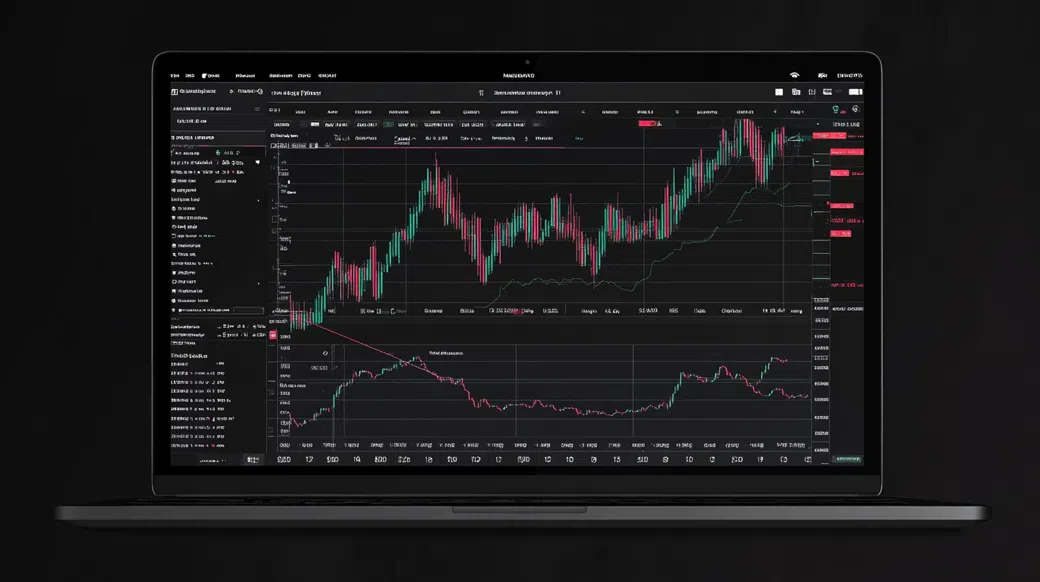
The WebTrader is designed for speed over ceremony: watchlist on the left, charts center, ticket on demand. My Puls Rendwal login stayed stable across multiple sessions, and market orders on EUR/USD and US500 filled without odd “price has changed” loops, even as liquidity thinned late in the US session. Order types covered the basics (market, limit, stop, TP/SL), though power users will miss the plug-and-play ecosystem of MT4/MT5—custom indicators and third-party automation weren’t a visible part of this stack.
Puls Rendwal App: Mobile Trading Experience
The Puls Rendwal app mirrors the core workflow: quotes update in real time, positions can be managed with one-tap close, and deposits/withdrawals are reachable without digging through menus. Biometric unlock worked reliably on my device, and push notifications for fills and margin alerts were consistent. The main limitation is screen economy—drawing tools and multi-chart layouts are naturally tighter than on desktop, so I used mobile for monitoring and risk trims rather than deep technical work.
Charting, Tools & Research
Charting is perfectly serviceable: multi-timeframe views, the common indicators (MA, RSI, MACD, Bollinger), and enough drawing tools to map levels and trendlines. An economic calendar and a compact news feed cover the “what just moved the market?” needs, but the research ceiling is clear—no institutional-grade analytics, and fewer workflow refinements than you’d get in MT5 or cTrader. Alerts and watchlists are the practical winners here; they support disciplined risk management without demanding a second platform.
Puls Rendwal Account Opening & Minimum Deposit
From the Stockholm analyst’s seat, onboarding tells you a lot about a broker’s seriousness: this one asked for the right things early. The sign-up form was short (email, phone, residency), and KYC required a government-issued photo ID plus a recent utility bill/bank statement. My verification was approved within the same business day, and the client area then unlocked full funding and withdrawal menus without nag screens.
- Minimum Deposit: $200 (the Puls Rendwal minimum deposit I saw at funding)
- Funding Methods: Visa/Mastercard, bank wire, regional e-wallets, and crypto (BTC/USDT)
- Demo Account: $10,000 virtual balance—useful for checking spreads and margin behavior before risking cash
- Account Types: Standard (spread-only) and Raw/ECN-style (tighter spread + commission)
I funded my test account by card and received the deposit confirmation instantly inside the portal; the first trade ticket opened without additional prompts. If you plan to withdraw, expect KYC to be non-negotiable—AML checks are enforced before money leaves the system. For readers who want to compare the dashboard flow themselves, the cleanest route is to open a demo first at Puls Rendwal.
Puls Rendwal Customer Support Review
Support quality tends to reveal itself when you ask an unsexy question, so I contacted live chat about swap/overnight rates on XAU/USD and how they differ between Standard and Raw accounts. A human reply arrived in roughly three minutes with a clear explanation of where financing is displayed in the platform and a reminder that rates can shift with liquidity providers. I followed up via email to confirm withdrawal processing times after KYC; the ticket response landed later the same day (around eight hours) with method-by-method ranges.
Coverage is what you’d expect from this segment: live chat runs 24/5, with email and a contact form for everything else. Language support is region-dependent—English is solid, while smaller languages may rely on templated responses. Phone support wasn’t emphasized in my client area, and weekends are a quieter zone unless you’re trading crypto CFDs, where markets move but staffing can thin.
Ready to Explore Puls Rendwal?
If you’re considering this broker, start by verifying your country eligibility and comparing Standard vs Raw pricing on the same instruments you actually trade. A demo run can also reveal whether the WebTrader layout suits your risk routine before you commit real funds.
Visit Puls RendwalPuls Rendwal Review FAQ
Is Puls Rendwal good for beginners?
It can be, provided you treat it as a CFD training ground rather than an investing account. The WebTrader is uncluttered and the $10,000 demo helps you learn margin mechanics. Beginners should still keep leverage low—high leverage is available, but it’s not beginner-friendly in practice.
Can I trade crypto on Puls Rendwal?
Yes, crypto is available as CFDs, including BTC/USD and ETH. You’re trading price movement only, not buying coins to transfer on-chain. Keep an eye on weekend financing because that can materially change the cost of holding positions.
Is Puls Rendwal a scam?
No, it didn’t behave like a scam in my 2026 test—KYC was enforced and the withdrawal process functioned as described. The real caveat is that it’s offshore, which changes the strength of oversight and complaint routes compared with EU/UK brokers. As always with CFDs, the bigger risk for most users is over-leverage rather than platform failure.
Is Puls Rendwal available in the USA?
No, the platform restricts USA residents. This aligns with how many offshore CFD brokers handle US regulatory requirements. If you’re traveling, eligibility is still tied to residency and KYC documents, not your current IP alone.
How long does a Puls Rendwal withdrawal take?
Most withdrawals are processed internally within 24–48 hours once KYC is cleared. After that, card withdrawals typically land in 2–5 business days, bank wires in 3–7 business days, and crypto transfers are often same-day. Your bank or card issuer can add extra settling time.
What is the Puls Rendwal minimum deposit?
The minimum deposit is $200 on the account I opened. That’s enough to test execution and platform behavior, but not enough to responsibly use high leverage. If you’re undercapitalized, the math of margin calls gets ugly fast.
Does Puls Rendwal have a mobile app?
Yes, there are iOS and Android apps alongside the WebTrader. The mobile platform supports trade management, price alerts, and account funding/withdrawal access. For heavy chart work, desktop still feels more comfortable.
Final Verdict: Should You Use Puls Rendwal in 2026?
Overall Score: 4.0/5
For traders who think in risk buckets—how much you can lose on a bad day, not how much you can win on a good one—Puls Rendwal offers a credible offshore toolkit with fair Raw pricing and a usable WebTrader/mobile pairing. My test included a card deposit, multiple CFD orders during the London open, and a completed withdrawal timeline that matched the stated ranges. The compromise is structural: offshore registration means fewer formal protections, and high leverage (up to 1:500) amplifies mistakes as efficiently as it amplifies gains. If you can live with that, Puls Rendwal is a practical venue—just keep position sizing honest.
Best for: Active CFD traders who want Raw-style pricing and multi-asset access in one screen. Avoid if: You require Tier‑1 regulation, investor compensation schemes, or you’re prone to over-leveraging.