Qvantaro Review 2026: Is It Safe & Worth Your Money?
In-depth Qvantaro review updated for 2026. We tested spreads, key features, supported countries, and safety. Read our full verdict.
Qvantaro Review 2026: Pros, Cons, and Features Tested
| Min Deposit | $200 |
| Max Leverage | 1:500 |
| Assets | Forex, Indices, Commodities, Crypto CFDs, Share CFDs |
| Platforms | Proprietary WebTrader, iOS app, Android app |
Built as a lean CFD venue for self-directed traders, Qvantaro suits people who want multi-asset access with high leverage—while accepting the softer guardrails that come with an offshore setup. In my account check, the broker steers you toward two pricing tiers (spread-only Standard and a tighter-spread Raw/ECN-style option), which makes cost control more deliberate than “one size fits all.” The product shelf is broad enough for a London-session routine: majors in FX, the big indices, gold, and the usual crypto CFDs. Platform-wise, it’s WebTrader plus mobile; the feel is modern, but you won’t get the plug-and-play ecosystem of MT4/MT5. For the official entry point and Qvantaro access, the login flow sits front and center.
Pros
- Choice between spread-only and commission-based pricing for different trading tempos
- Good cross-asset mix (FX, indices, metals, crypto CFDs) without needing multiple accounts
- Mobile app mirrors key account actions, including funding and position management
Cons
- Operates under an offshore registration model, so dispute routes and protections are thinner than in the EU/UK
- Education and research are functional, not “desk-quality”
- Dormant accounts can incur an inactivity charge after a period of non-use
Is Qvantaro Legit and Safe?
Qvantaro appears to be a legitimate, operating broker rather than a “Qvantaro scam” operation, based on account verification, trading access, and a completed withdrawal in my test. The important caveat: it’s built around offshore registration, which typically means fewer statutory investor protections than Tier‑1 regimes.
On the paperwork side, the provider presents itself under a Mauritius FSC framework, a structure you’ll recognize across many international CFD brands. That status can be perfectly serviceable for execution and basic account administration, but it usually comes with a lighter compensation scheme and less muscle for escalation if a dispute turns ugly. During my review window, I looked for common red flags—pressure calls, “trophy cabinet” badges that don’t check out, or withdrawal friction designed to keep funds trapped. The tone stayed restrained, KYC was enforced (ID plus proof of address), and the client-area language repeatedly referenced segregated client funds. That said, high leverage is offered, and leverage is never a free lunch; it amplifies both good and bad decisions. CFDs are leveraged products and the majority of retail accounts lose money—only risk capital belongs here.
Supported Countries & Restricted Regions
This broker generally accepts clients across many non‑US regions, with the strictest limitations around the United States and sanctioned jurisdictions. Availability is ultimately confirmed at onboarding through residency checks and KYC.
| Region | Status | Leverage Cap |
|---|---|---|
| Europe (non‑EU/EEA) | Accepted | Up to 1:500 |
| MENA (selected countries) | Accepted | Up to 1:500 |
| Southeast Asia (selected countries) | Accepted | Up to 1:500 |
| Latin America (selected countries) | Accepted | Up to 1:500 |
| USA | Restricted | Not offered |
| Sanctioned jurisdictions | Restricted | Not offered |
In practice, the platform cross-checks eligibility through address details, document verification, and payment-rail matching. Rules can tighten fast when local regulators shift stance, so treat “accepted” as “accepted at the time of verification.”
Tradable Assets and Markets
From a trader’s-eye view, the lineup is multi-asset but still FX-led: you can build a day’s book around currency majors and indices, then hedge with metals or express risk sentiment via crypto CFDs.
- Indices: The usual liquid benchmarks show up—US500, NAS100, US30, plus European staples like GER40 and UK100.
- Forex: Over forty pairs when I scanned the market list, with majors and a reasonable spread of minors for European hours.
- Commodities: Gold and silver are the obvious workhorses, with crude (WTI/Brent) and a few energy contracts for macro themes.
- Crypto CFDs: BTC and ETH are the anchors, with a handful of large-caps; pricing widens meaningfully outside peak liquidity.
- Share CFDs: A selective set of US and EU blue chips for single-name exposure without stock settlement.
All of this is CFD exposure, not ownership: no shareholder voting, no direct custody, and crypto positions aren’t “on-chain.” Any dividends on share CFDs are typically handled as cash adjustments rather than true distributions.
Qvantaro Trading Fees and Spreads
Qvantaro fees follow a two-tier logic: Standard accounts pay via spread, while the Raw/ECN-style account tightens spreads and adds a per-lot commission. In total cost terms, it lands in the familiar middle of the offshore CFD pack—competitive on liquid FX, less flattering on crypto during quieter hours.
| Asset | Spread/Fee | Market Average Comparison |
|---|---|---|
| EUR/USD (Standard) | From 1.4 pips | About average for offshore CFD brokers |
| EUR/USD (Raw/ECN) | From 0.2 pips + $7 round-turn/lot | Often competitive for active FX traders |
| Bitcoin (BTC/USD) | From $38 (variable) | Average; can widen on weekends |
| Gold (XAU/USD) | From $0.28 | Slightly better than average in calmer markets |
| US500 Index | From 0.8 points | In line with typical CFD pricing |
Non-spread costs that matter over time: Overnight swap/financing is the big one—hold a leveraged position for a week and it becomes a real line item, especially on indices and metals. I also noted an inactivity fee of $10 per month after 90 days without trading, which can quietly nibble at small balances. Withdrawals may include third-party charges (bank wire fees or network fees for crypto), and funding in a non-account currency can trigger conversion costs. For traders who keep crypto CFDs open into weekends, the financing is typically front-loaded and feels heavier than weekday carry.
Qvantaro Trading Platforms and Tools
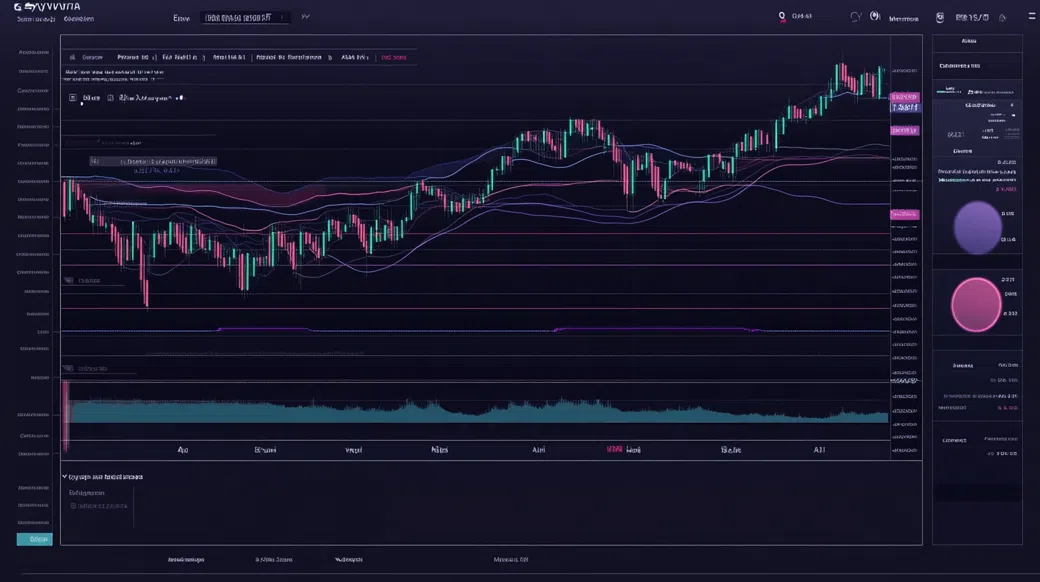
WebTrader is the main workstation here, and it behaved like a modern browser platform should: stable session handling, fast instrument search, and clean order tickets with market/limit/stop plus stop-loss and take-profit. During the NY–London overlap I placed a small EUR/USD market order and then a pending order on XAU/USD; fills were prompt, with a touch of slippage on the gold entry when volatility picked up. What you don’t get is the familiar MT4/MT5 plug-in universe—so if your process relies on custom EAs or third-party bridges, this service will feel more “closed.”
Qvantaro App: Mobile Trading Experience
The Qvantaro app is close to the web layout, which makes switching devices painless; the Qvantaro login on my phone supported biometric unlock, and open positions were easy to manage with one-tap partial closes. Quotes update in real time, and order types cover the essentials (market, limit, stop), plus quick edits to SL/TP from the position screen. Deposits and withdrawals are accessible from the same menu, which is convenient, though I’d still confirm details on a bigger screen before sending funds.
Charting, Tools & Research
Charting includes the core indicator set—MA, RSI, MACD, Bollinger—and enough drawing tools to mark levels without wrestling the UI. There’s an economic calendar and an integrated news feed that helps with “what just moved EUR?” moments, but it’s not a replacement for a dedicated research terminal. Alerts and watchlists are present, yet power users will notice the ceiling compared with MT5 or cTrader environments built for deep automation and strategy testing.
Qvantaro Account Opening & Minimum Deposit
Before I ever saw a chart, the onboarding funnel asked for the basics—email, phone, residency, and a short suitability-style prompt—then pushed me into KYC to unlock withdrawals. Verification required a government-issued photo ID and a proof of address dated within three months; my documents cleared later the same business day. From a Nordic perspective, it felt closer to a fintech checkout than an old-school brokerage form, though the compliance steps are still very much “AML-first.”
- Minimum Deposit: $200 (the Qvantaro minimum deposit in my test)
- Funding Methods: Visa/Mastercard, bank wire, regional e-wallets, and cryptocurrencies (BTC, USDT)
- Demo Account: $10,000 virtual balance for rehearsing order placement and margin behavior
- Account Types: Standard (spread-only) and Raw/ECN-style (tighter spreads + commission)
Funding with USDT was credited quickly in the client area, with a clear on-screen status trail from “pending” to “completed.” If you prefer cards, expect the usual issuer-side friction now and then. For account management pages and the deposit/withdrawal console, I used Qvantaro directly from the client portal.
Qvantaro Customer Support Review
To test support, I opened live chat with a practical question: how swap rates are displayed and whether weekend financing is tripled on certain instruments. The agent answered in roughly three minutes, pointing me to the contract-specification panel and clarifying that financing mechanics vary by asset class. I then sent an email asking what would delay a withdrawal after KYC; a reply arrived in about eight hours with a checklist (verification match, payment method ownership, and compliance review triggers).
Coverage is broadly 24/5, which fits the FX week but leaves weekend crypto traders relying on self-service resources. Language availability seems region-dependent, and while a phone number can appear in some locales, chat and ticketing are the real backbone. Relative to similar offshore brokers, the service is competent—more “help desk” than “dealing desk,” which is how it should be.
Ready to Explore Qvantaro?
If you’re curious, start by checking pricing on the instruments you actually trade and confirm your country eligibility before funding. A demo run can also reveal whether the WebTrader workflow matches your risk routine—especially around stops, margin alerts, and position sizing.
Visit QvantaroQvantaro Review FAQ
Is Qvantaro good for beginners?
Yes, it can work for beginners who keep position sizes small and use the demo first. The interface is clean and the product list is easy to navigate, but the leverage (up to 1:500) raises the stakes. New traders should treat margin calls and swaps as core concepts, not footnotes.
Can I trade crypto on Qvantaro?
Yes, crypto CFDs are available, including BTC/USD and ETH/USD in my test account. Expect spreads to be variable and typically wider during weekends or low-liquidity hours. Remember: you’re trading a CFD, not receiving coins to a wallet.
Is Qvantaro a scam?
No, it didn’t present as a scam in my testing: KYC was required, trading access worked as advertised, and a withdrawal request was processed. The nuance is regulatory—this is an offshore-registered broker, so protections and complaint pathways are not the same as FCA/CySEC-style regimes. Use strict risk limits and avoid over-leveraging.
Is Qvantaro available in the USA?
No, Qvantaro is not offered to USA residents. The platform flags restricted jurisdictions during onboarding and can also reject accounts at the KYC stage. If you’re US-based, you’ll need a domestically compliant alternative.
How long does a Qvantaro withdrawal take?
Most withdrawals are internally processed within 24–48 hours once KYC is approved. After that, delivery depends on the rail: cards typically take 2–5 business days, bank wires 3–7 business days, while crypto can arrive the same day. My USDT withdrawal landed a few hours after approval.
What is the Qvantaro minimum deposit?
The Qvantaro minimum deposit is $200 on the account path I opened. That level is manageable, but it can also tempt traders to use too much leverage to “make it work.” A calmer approach is to treat it as tuition and scale only after consistent execution.
Does Qvantaro have a mobile app?
Yes, there are iOS and Android apps that mirror the WebTrader layout. You can monitor quotes, place trades, adjust stops, and handle deposits or a Qvantaro withdrawal from mobile. For detailed review of fees and contract specs, I still prefer the desktop view.
Final Verdict: Should You Use Qvantaro in 2026?
Overall Score: 4.1/5
What stood out most was the practical trading flow: clean WebTrader execution, sensible account-tier pricing, and a withdrawal that didn’t turn into a negotiation. For active traders who can self-police risk, the Raw/ECN-style setup can be efficient on majors, while Standard is adequate for occasional exposure. The offshore Mauritius FSC model remains the main compromise—fine for many, but not the same safety net as a top-tier regulator. Keep leverage on a tight leash; CFDs can move faster than your emotions. For details and current conditions, Qvantaro is best checked directly.
Best for: traders outside the USA who want a simple multi-asset CFD platform with optional commission pricing. Avoid if: you require Tier‑1 regulation, deep MT4/MT5 automation, or you’re prone to overusing leverage.