Rand Wealthgrove Review 2026: Is It Safe & Worth Your Money?
In-depth Rand Wealthgrove review updated for 2026. We tested spreads, key features, supported countries, and safety. Read our full verdict.
Rand Wealthgrove Review 2026: Pros, Cons, and Features Tested
| Min Deposit | $200 |
| Max Leverage | 1:500 |
| Assets | Forex CFDs, Indices CFDs, Commodities CFDs, Crypto CFDs, Share CFDs |
| Platforms | Proprietary WebTrader + iOS/Android mobile apps |
Built for traders who want multi-asset CFDs with high leverage in a lean setup, Rand Wealthgrove suits the “I manage my own risk” crowd—but you accept an offshore framework as the price of that flexibility. In my 2026 check, the account tiers split cleanly into a spread-only Standard and a tighter Raw/ECN-style option, which matters if you scalp around the London open. Markets lean practical rather than exotic: majors, the big indices, metals, and the headline crypto pairs. The proprietary WebTrader is the centre of gravity, with mobile acting as a competent companion. The upside is speed and breadth; the main drawback is that dispute resolution and protections aren’t on the same footing as top-tier European licences. I detail the full Rand Wealthgrove experience below.
Pros
- Two pricing styles (spread-only vs. Raw/ECN) make costs easier to match to your trading tempo
- Solid multi-asset CFD menu covering FX, indices, metals, and major crypto without feeling bloated
- WebTrader and mobile app are usable for active monitoring, including quick position management
Cons
- Offshore registration means fewer formal investor-compensation pathways than EU/UK brokers
- Education and research tools are functional, not deep—advanced traders may want external tooling
- Dormant accounts can pick up an inactivity charge if you “park” the account too long
Is Rand Wealthgrove Legit and Safe?
Rand Wealthgrove looked operational and trade-capable in my 2026 test, not like a “vanish-with-your-deposit” setup. That said, it runs under an offshore registration model, so the safety net is thinner than with FCA/ASIC-style oversight.
From the paperwork side, the provider presented itself as registered with the Mauritius FSC, which typically allows higher leverage and broader product menus than the EU’s retail regime. The practical consequence is simple: you may get 1:500 leverage and fast onboarding, but you usually give up strong compensation schemes and a clear escalation path if a dispute turns ugly. I scanned for the usual red flags—pressure calls, trophy-style “awards” that don’t link anywhere, and withdrawal friction—and didn’t hit anything glaring during my window. KYC was enforced (ID + proof of address), and the legal pages referenced segregated client funds language, which is a positive signal even if enforcement differs by jurisdiction. Keep your head on straight: CFDs are leveraged products, margin calls happen quickly, and most retail accounts lose money when risk controls are loose.
Supported Countries & Restricted Regions
This broker is generally open to clients across parts of Europe (outside the strictest regimes), MENA, and several emerging-market regions, while the USA and sanctioned jurisdictions are blocked.
| Region | Status | Leverage Cap |
|---|---|---|
| Europe (non-EU/EEA focus) | Accepted | Up to 1:500 |
| MENA (select countries) | Accepted | Up to 1:500 |
| Southeast Asia (select countries) | Accepted | Up to 1:500 |
| Latin America | Accepted | Up to 1:500 |
| USA | Restricted | Not offered |
| Sanctioned jurisdictions | Restricted | Not offered |
Eligibility isn’t just a dropdown choice—IP location, residency documents, and AML checks can override what you select at signup. Policies also shift with payment-provider rules, so it’s worth re-checking access if you relocate.
Tradable Assets and Markets
What stood out is a classic CFD mix that prioritises liquidity: the platform feels designed for traders who live in FX and indices, with crypto and shares there as satellite instruments. You can build a coherent watchlist without wading through hundreds of micro-tickers.
- Indices: The usual heavyweights (US500, NAS100, GER40, UK100) with intraday-friendly pricing and clear margin display.
- Forex: Roughly 40+ pairs in my view, led by majors like EUR/USD and GBP/USD, plus a handful of higher-spread exotics.
- Commodities: Gold and silver are front and centre, with crude benchmarks (WTI/Brent) for macro-driven traders.
- Crypto CFDs: BTC and ETH are the main acts, with a limited bench of large-caps—good for directional trades, not “alt hunting”.
- Share CFDs: A curated list of US/EU blue chips, suitable for short-term exposure around earnings rather than long-term investing.
All of this is CFD exposure: you’re trading price movement with leverage, not taking delivery of assets. That means no shareholder voting rights, and crypto positions aren’t on-chain holdings in a wallet.
Rand Wealthgrove Trading Fees and Spreads
Costs at Rand Wealthgrove depend on which account tier you choose: Standard pricing is spread-only, while the Raw/ECN-style tier compresses spreads and adds a per-lot commission. On balance, the headline numbers are broadly in line with offshore CFD peers, with the Raw option making more sense for frequent traders.
| Asset | Spread/Fee | Market Average Comparison |
|---|---|---|
| EUR/USD (Standard) | From 1.6 pips | Near typical for non-EU CFD brokers |
| EUR/USD (Raw/ECN) | From 0.2 pips + $7 round-turn/lot | Competitive if you trade size or frequency |
| Bitcoin (BTC/USD) | From $35 spread equivalent | In the usual range; can widen on weekends |
| Gold (XAU/USD) | From $0.35 | Generally close to segment norms |
| US500 Index | From 0.9 points | Middle of the pack |
Non-spread costs that matter: Overnight swap/financing is the silent line-item—holding leveraged FX or indices for days will often cost more than your entry spread. Crypto positions typically carry weekend financing, so a Friday hold can bite. I also noted an inactivity fee of $10 per month after 90 days with no trading activity, which changes the economics for “set-and-forget” accounts. Funding in one currency and trading in another can create conversion costs, and some withdrawal rails may pass along third-party banking charges depending on the method.
Rand Wealthgrove Trading Platforms and Tools
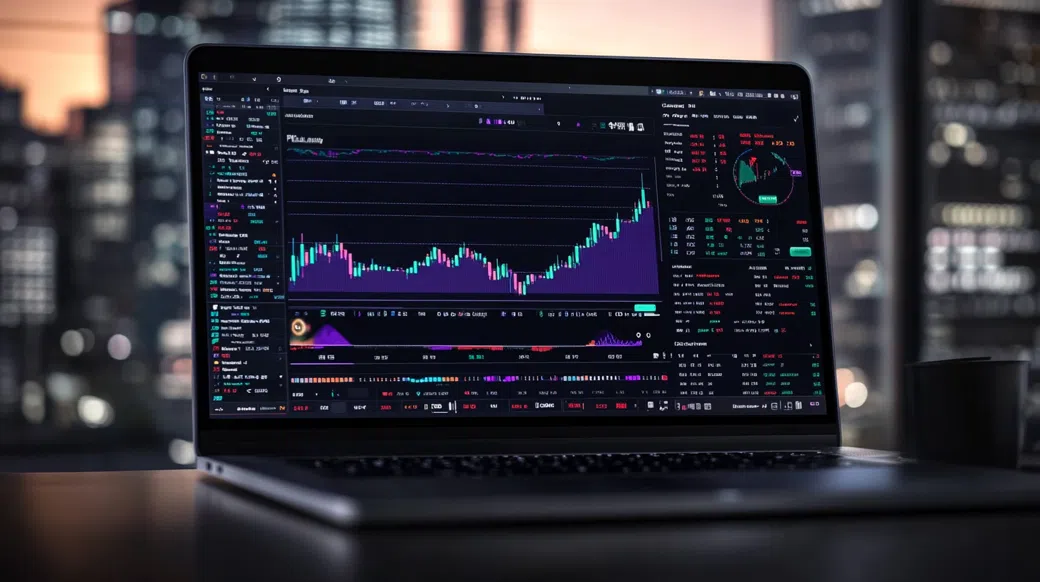
The WebTrader is a clean, browser-first environment that felt stable during repeated logins and session changes. I ran a small test sequence around the New York/London overlap—market orders, then a stop on EUR/USD—and execution landed without drama, though you should still expect slippage when liquidity thins or headlines hit. Order types covered the essentials (market, limit, stop), and the interface is designed for traders who want to see margin impact immediately. If you’re coming from MT4/MT5 ecosystems with armies of indicators and EAs, the gap is less about “can it trade?” and more about automation and third-party tooling.
Rand Wealthgrove App: Mobile Trading Experience
On mobile, the Rand Wealthgrove app mirrors the web layout well enough that you don’t feel lost mid-position. Quotes updated smoothly, and I could add/trim exposure, set stops, and close positions without hunting through menus. The Rand Wealthgrove login supported biometric unlock on my device, which is the kind of small friction-reducer active traders appreciate. Deposits and withdrawals were accessible in-app, and push notifications for price alerts worked reliably, although chart space is naturally tighter and indicator tweaking is a bit fiddly on a small screen.
Charting, Tools & Research
Charting covered the staples—multi-timeframe views, drawing tools, and common indicators like RSI, MACD, and moving averages. A built-in economic calendar and a news feed helped for macro context, but don’t expect institutional-grade research or deep sentiment analytics. For Nordic traders used to richer brokerage portals, this is more “enough to execute” than “enough to replace your process.”
Rand Wealthgrove Account Opening & Minimum Deposit
First impressions matter, and the onboarding flow here prioritised clarity over ceremony: email/phone verification, basic personal details, then a compliance segment for tax residency and source-of-funds style prompts. KYC required a government-issued photo ID and a proof of address (I used a bank statement dated within three months). Verification cleared within the same business day, and the dashboard then opened deposit and trading permissions without extra back-and-forth. For anyone searching “Rand Wealthgrove minimum deposit” before committing, the threshold sits in the realistic range for this segment.
- Minimum Deposit: $200
- Funding Methods: Visa/Mastercard, bank wire, regional e-wallets, and crypto (BTC/USDT)
- Demo Account: $10,000 virtual balance for testing spreads, margin behaviour, and order handling
- Account Types: Standard (spread-only) and Raw/ECN-style (tighter pricing + commission)
One practical note from my deposit test: I funded via card and the balance updated quickly with an on-screen confirmation and email receipt. Before you scale up, consider denominating in a base currency you actually use to reduce conversion leakage—small costs compound, especially when leverage is involved.
Rand Wealthgrove Customer Support Review
I contacted support twice with a trader’s question, not a marketing one: first via live chat asking where swap/overnight rates are displayed for FX pairs, then via email to confirm withdrawal processing once KYC is complete. Chat connected in roughly 3 minutes and the agent pointed me to the contract-specs panel and where to see daily financing on open positions. The email reply landed later the same day—about 9 hours—confirming the internal review window and method-dependent delivery times. For reference, I kept notes for this Rand Wealthgrove review because small operational details tend to reveal the true quality of a broker.
Support hours were aligned with the trading week (24/5 coverage), which is the baseline you want for CFD markets. Language coverage seemed region-dependent, and I wouldn’t treat phone support as guaranteed—this provider leans on chat and tickets. Weekend help is limited, so crypto traders holding positions through Saturday should plan ahead rather than expect instant hand-holding.
Ready to Explore Rand Wealthgrove?
If you’re considering this service, start by checking your region, then compare Standard versus Raw pricing on the instruments you actually trade. A demo run can tell you more than a brochure—watch margin usage, slippage around session transitions, and how clean the interface feels under pressure.
Visit Rand WealthgroveRand Wealthgrove Review FAQ
Is Rand Wealthgrove good for beginners?
Yes, it can work for beginners who keep position sizing conservative and use the demo first. The interface is not overly technical, and the Standard account avoids commission math. The offshore setup and 1:500 leverage mean you must self-police risk—new traders should treat leverage as a tool, not a temptation.
Can I trade crypto on Rand Wealthgrove?
Yes, crypto trading is available via CFDs, including BTC/USD and ETH/USD. Pricing can widen during weekends and fast markets, so limit orders and smaller size help. Remember you’re not buying coins on-chain; you’re trading a leveraged contract.
Is Rand Wealthgrove a scam?
No, I didn’t see behaviour that fits the usual “Rand Wealthgrove scam” pattern during my 2026 checks: KYC was enforced, trading access was consistent, and the withdrawal workflow functioned. The more relevant question is “is Rand Wealthgrove legit under strict Tier-1 rules?”—it operates offshore, so protections and escalation routes aren’t the same as FCA/CySEC brokers. Approach it like any leveraged CFD venue: use risk limits and withdraw profits periodically.
Is Rand Wealthgrove available in the USA?
No, Rand Wealthgrove is not available to US residents. The USA is typically restricted due to local regulatory requirements for CFD/derivatives distribution. If you’re relocating, expect residency checks during KYC.
How long does a Rand Wealthgrove withdrawal take?
A Rand Wealthgrove withdrawal is usually processed internally within 24–48 hours after KYC is approved. Receipt time then depends on the rail: cards often take 2–5 business days, bank wires around 3–7 business days, and crypto can land the same day. In my test, the timeline matched what support described, with the card payout arriving inside the expected window.
What is the Rand Wealthgrove minimum deposit?
The Rand Wealthgrove minimum deposit is $200. That level is enough to test real spreads and margin behaviour without overcommitting. If you plan to trade indices or gold with tight stops, budgeting above the minimum gives you more breathing room against volatility.
Does Rand Wealthgrove have a mobile app?
Yes, there’s a Rand Wealthgrove app for iOS and Android alongside the WebTrader. You can monitor quotes, manage orders, and handle deposits/withdrawals from the handset. Mobile is best for execution and supervision; heavy chart work is still more comfortable on a larger screen.
Final Verdict: Should You Use Rand Wealthgrove in 2026?
Overall Score: 4.0/5
For traders who value flexibility and are comfortable operating without a Tier-1 regulator hovering overhead, Rand Wealthgrove delivers a credible trading experience: usable WebTrader, a practical CFD lineup, and pricing that makes sense once you choose the right account tier. My operational checks—KYC, funding, trading, and a small withdrawal—behaved as expected for this segment. Still, offshore registration changes the risk calculus, so I’d keep position sizes modest and treat withdrawals as part of routine risk management. CFDs are leveraged instruments; capital is at risk. Full details are on Rand Wealthgrove.
Best for: self-directed CFD traders prioritising FX/indices with the option of Raw-style pricing. Avoid if: you require EU/UK-style investor protections, deep research, or automated MT4/MT5 workflows.