Ren Vekstnor Review 2026: Is It Safe & Worth Your Money?
In-depth Ren Vekstnor review updated for 2026. We tested spreads, key features, supported countries, and safety. Read our full verdict.
Ren Vekstnor Review 2026: Pros, Cons, and Features Tested
| Min Deposit | $200 |
| Max Leverage | 1:500 |
| Assets | Forex, Indices, Commodities, Crypto CFDs, Share CFDs |
| Platforms | WebTrader, iOS app, Android app |
Built for traders who want CFD access with flexible leverage, Ren Vekstnor suits active speculators more than cautious long-term investors—its big draw is breadth and its headline compromise is an offshore framework. In my own account, I saw two clear pricing lanes (spread-only vs. tighter spreads with commission) that cater to different tempos. The instrument list leans practical—FX majors, index CFDs, gold, and the usual large-cap crypto. Platform-wise it’s a browser-based terminal plus mobile, with enough charting to manage risk on the fly. The drawback is predictable: fewer formal investor-protection backstops than a top-tier European venue. Start by mapping your position sizing and margin rules before you click into Ren Vekstnor.
Pros
- Two account tiers let you choose between simplicity (spread-only) and lower raw spreads with commission
- WebTrader and mobile apps cover the core workflow: charts, orders, funding, and withdrawals
- Good cross-asset mix for macro-style trading (FX, indices, metals, and crypto CFDs)
Cons
- Offshore registration means dispute resolution and compensation schemes are not on the EU “comfort blanket” level
- Education and research feel lightweight versus bigger Nordic and EU brokers
- Non-trading charges (like inactivity) can matter if you trade sporadically
Is Ren Vekstnor Legit and Safe?
Ren Vekstnor looked operational and tradeable in my test, with working deposits, execution, and a completed withdrawal—so it didn’t present like an outright “Ren Vekstnor scam.” The caveat is that it operates under an offshore registration model, which changes the safety net around your account.
The paperwork and disclosures I reviewed point to oversight under the Mauritius FSC, a jurisdiction you’ll often see attached to internationally marketed CFD brokers. In practice, that typically means higher available leverage (here up to 1:500) and fewer statutory investor-compensation mechanisms than you’d get with a strict European regulator. My red-flag scan focused on the usual trouble spots: aggressive “account manager” pressure, odd award badges, and, most importantly, withdrawal friction. I didn’t get pushed into add-on deposits, and the platform enforced KYC before letting me finalize a cash-out. The broker also describes segregated client funds in its legal language—useful, but not the same as a guarantee. Finally, remember what you’re trading: CFDs are leveraged products; margin calls arrive fast, and many retail accounts lose money when risk is sized too large.
Supported Countries & Restricted Regions
This broker accepts clients across many international markets, particularly parts of Europe (outside tightly restricted regimes), MENA, and Southeast Asia, while the USA and sanctioned jurisdictions are not onboarded.
| Region | Status | Leverage Cap |
|---|---|---|
| Europe (non-EU/EEA pockets) | Accepted | Up to 1:500 |
| Southeast Asia | Accepted | Up to 1:500 |
| MENA | Accepted | Up to 1:500 |
| Latin America | Accepted | Up to 1:500 |
| USA | Restricted | Not offered |
| Sanctioned jurisdictions | Restricted | Not offered |
Eligibility is enforced through a mix of onboarding checks—residency prompts, document verification, and payment-rail screening—so you can’t rely on “it worked for my friend” logic. Policies also drift with regulation and banking partners, so it’s worth re-checking before you fund.
Tradable Assets and Markets
The lineup is built for multi-asset CFD traders: enough FX depth to trade sessions, plus indices and metals for macro hedges, with crypto there for volatility when you want it.
- Indices: Major equity benchmarks like US500, NAS100, UK100, and GER40 for directional trading around risk-on/risk-off flows.
- Forex: A broad set of majors and minors, with a handful of higher-volatility crosses suited to event-driven setups.
- Commodities: Gold and silver alongside energy contracts such as WTI/Brent, useful for inflation and geopolitics narratives.
- Crypto CFDs: Large-cap coins like BTC and ETH, typically with wider weekend financing and sharper gaps.
- Share CFDs: A curated list of US/EU blue chips for tactical earnings-season trades rather than portfolio ownership.
All of this is CFD exposure: you’re trading price movement, not taking shareholder rights in stocks or holding on-chain crypto. Dividends, where applicable, are reflected as adjustments rather than ownership payouts.
Ren Vekstnor Trading Fees and Spreads
Costs hinge on which lane you pick: the Standard account wraps pricing into the spread, while the Raw/ECN-style option compresses spreads and adds a per-lot commission. On balance, Ren Vekstnor fees land in the middle of the offshore CFD pack—competitive on raw pricing, merely average on the entry tier.
| Asset | Spread/Fee | Market Average Comparison |
|---|---|---|
| EUR/USD (Standard) | From 1.6 pips | About average for offshore CFD brokers |
| EUR/USD (Raw/ECN) | From 0.2 pips + $7 round-turn/lot | Competitive for active FX traders |
| Bitcoin (BTC/USD) | From $35 | In line with typical CFD crypto pricing |
| Gold (XAU/USD) | From $0.35 | Slightly better than average at liquid hours |
| US500 Index | From 0.8 points | Roughly market standard |
Non-spread costs to watch: Overnight swap can quietly dominate your P&L if you hold CFDs for weeks, especially on indices and riskier FX crosses. I also noted an inactivity charge of $10 per month after 90 days without trading, which punishes “set-and-forget” accounts. Withdrawals may carry third-party fees depending on method, and conversion costs can bite if you deposit in one currency and your account runs in another. For crypto CFDs, weekend financing is a real line item—plan for it rather than discovering it Monday morning.
Ren Vekstnor Trading Platforms and Tools
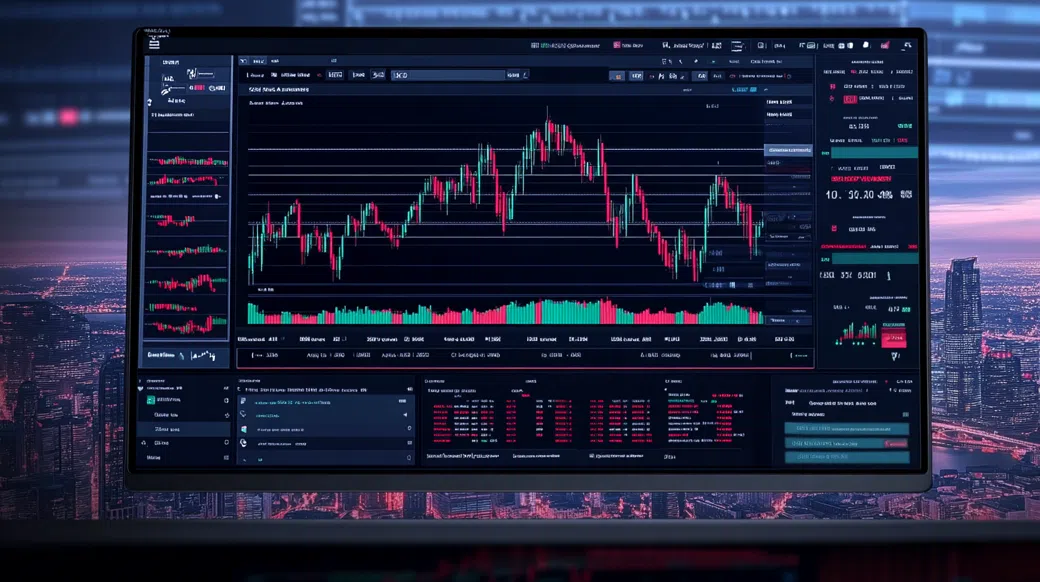
The WebTrader is clearly designed for speed over ornament: stable session handling, clean watchlists, and charts that don’t choke when you stack indicators. I placed a small EUR/USD market order around the London open and watched fills land without theatrics; the trade ticket showed margin impact before confirmation, which I like from a risk-control standpoint. Order types covered the essentials (market, limit, stop, and take-profit/stop-loss attachments), though power users will still miss the plug-in ecosystem and automation culture you get in MT4/MT5 communities.
Ren Vekstnor App: Mobile Trading Experience
On the phone, the Ren Vekstnor app felt built for monitoring and quick intervention: real-time quotes, one-tap position close, and push notifications for price alerts. The Ren Vekstnor login process supported biometrics on my device, and deposits/withdrawals were accessible without hunting through menus. The compromise is screen real estate—drawing tools are present, but precise multi-timeframe planning is still easier on desktop when markets get jumpy.
Charting, Tools & Research
Research is functional rather than academic: an economic calendar, a compact news feed, and a familiar indicator set (MA, RSI, MACD, Bollinger) plus basic drawing. Alerts and watchlists do the job for routine risk management. Still, if you live off depth-of-market views, advanced strategy testing, or heavy quant workflows, you’ll likely treat this platform as execution-first and bring your analysis from elsewhere.
Ren Vekstnor Account Opening & Minimum Deposit
After entering email, password, and a short residency/profile questionnaire, the provider moved me straight into identity checks—very much an AML/KYC flow rather than a “try now, verify later” vibe. Verification required a government photo ID and a proof of address dated within three months; my documents cleared the same business day. One practical note: the client area nudged me to complete KYC before initiating withdrawals, which reduces surprises when you actually want your money back.
- Minimum Deposit: $200 (this is the Ren Vekstnor minimum deposit I used for my test)
- Funding Methods: Visa/Mastercard, bank wire, regional e-wallets, and crypto transfers (BTC/USDT)
- Demo Account: $10,000 virtual balance for practicing order placement and margin behavior
- Account Types: Standard (spread-only) and Raw/ECN-style (tighter spreads + $7 round-turn commission)
Funding by card posted to the balance quickly, with a clear confirmation screen and transaction reference inside the portal. If you prefer clean bookkeeping, consider matching your deposit currency to your account base currency to reduce conversion leakage over time.
Ren Vekstnor Customer Support Review
I tested support with a concrete trader question: where to find swap/overnight rates for index CFDs and whether triple-swap timing applied mid-week. Live chat replied in roughly three minutes with a pointer to the instrument-spec panel and a short explanation of financing timing; it was competent, not salesy. I followed up by email asking about withdrawal routing for card vs. crypto, and the ticket came back in about nine hours with method-specific timelines and minimums.
Coverage is broadly 24/5, which matches the FX week rather than the crypto week. Language availability depends on staffing—English was fine in my test, while local-language nuance may vary. Phone support wasn’t prominently pushed in the interface, and weekends felt quieter, so if you trade Saturday/Sunday crypto volatility, plan as if you’re largely self-served.
Ready to Explore Ren Vekstnor?
If you’re considering an account, start by checking live spreads during your usual trading hours and confirming your region’s onboarding rules. A demo run is also a sensible way to see how margin, stops, and charts behave before committing real capital.
Visit Ren VekstnorRen Vekstnor Review FAQ
Is Ren Vekstnor good for beginners?
It can be, but only if you treat leverage with respect and keep position sizes small. The interface is not overly complex, and the demo account helps. Beginners may still want stronger educational depth than what’s provided here.
Can I trade crypto on Ren Vekstnor?
Yes, crypto is available as CFDs, typically including BTC and ETH. You’re trading price exposure rather than owning coins in a wallet. Expect wider spreads and financing effects, especially over weekends.
Is Ren Vekstnor a scam?
No—the service functioned in my checks, including KYC, trading, and a processed withdrawal. That said, it’s offshore-registered, so protections differ from EU/UK regulated brokers. Always evaluate counterparty risk and don’t deposit money you can’t afford to lose.
Is Ren Vekstnor available in the USA?
No, the broker does not accept U.S. residents. The signup flow and compliance checks are designed to block restricted jurisdictions. If you’re in the USA, you’ll need a CFTC/NFA-compliant alternative.
How long does a Ren Vekstnor withdrawal take?
A Ren Vekstnor withdrawal is typically approved internally within 24–48 hours after KYC is complete. From there, card payouts often land in 2–5 business days, bank wires in 3–7 business days, and crypto transfers can arrive the same day. Timing still depends on your bank, network congestion, and compliance checks.
What is the Ren Vekstnor minimum deposit?
The Ren Vekstnor minimum deposit is $200. That’s enough to test execution and platform features, but it’s not enough to “safely” use high leverage. Match your deposit to a realistic risk-per-trade plan.
Does Ren Vekstnor have a mobile app?
Yes, there are iOS and Android apps alongside the browser platform. Mobile covers the essentials: quotes, charting, order management, and account actions like deposits and withdrawals. For deeper analysis, the larger desktop view remains more comfortable.
Final Verdict: Should You Use Ren Vekstnor in 2026?
Overall Score: 4.0/5
For traders who think in scenarios—rates up, oil spikes, equities wobble—this broker offers a tidy way to express those views across CFDs without juggling multiple accounts. My test run covered card funding, a small FX trade during the London session, and a clean withdrawal path once KYC was in place. The pricing split between Standard and Raw/ECN is sensible, and the WebTrader is stable enough for routine execution. Still, offshore status means you must supply your own discipline: smaller size, stricter stops, and a clear plan for margin. If you want to continue your due diligence, start at Ren Vekstnor.
Best for: active CFD traders who value multi-asset access and can manage leverage responsibly. Avoid if: you require Tier-1 regulation, deep research/education, or you’re prone to overtrading.