Royal Kapithorne Trading Platform Alternatives 2026
Compare Royal Kapithorne alternatives for 2026: regulated brokers, platform stacks, spreads, execution quality, and a safer migration checklist for US/EU traders.
Royal Kapithorne Trading Platform Alternatives 2026: Reliable Options for Online Traders
Leverage has a way of making everything feel urgent: the opportunity, the drawdown, the urge to “just find a better platform.” Royal Kapithorne sits in that part of the brokerage map where speed and simplicity are marketed loudly, while the plumbing—regulatory oversight, investor protections, and execution transparency—often feels quieter than it should. From what’s typically observable for offshore CFD-first providers, the offer tends to center on forex and CFDs (often with crypto CFDs in the menu), a proprietary WebTrader, and a mobile app aimed at quick placement rather than deep workflow.
For many readers, the search for Royal Kapithorne alternatives isn’t about novelty—it’s about getting closer to a structure you can lean on when markets are ugly. That means verifiable supervision (FCA, ASIC, CySEC, NFA), client-fund segregation rules that are more than a footer, and a platform stack that matches your method: MT4/MT5 for EAs, cTrader for depth-of-market, or a proper multi-asset workstation if you trade beyond CFDs. If you’re currently evaluating Royal Kapithorne, treat the decision like a credit review: assess counterparty risk first, features second.
Disclaimer: This article is for informational purposes only and does not constitute investment advice. CFDs and other leveraged products carry a high risk of loss and may not be suitable for all investors.
Key Takeaways (TL;DR)
- Offshore CFD venues often advertise high leverage (commonly around 1:500); regulated substitutes typically cap leverage but offer stronger oversight and clearer dispute paths.
- Cost comparisons should use “round-turn” trading cost (spread + commission + slippage), not just headline spreads.
- If you switch, open and KYC-verify the new account first—then withdraw using the same funding rail to avoid AML-related delays.
What Is Royal Kapithorne and How Does Its Trading Platform Work?
From a trader’s-seat perspective, Royal Kapithorne appears positioned as an offshore, CFD-oriented broker offering access mainly to forex pairs and index/commodity CFDs, with crypto CFDs commonly included. In this segment, the broker typically acts as a market maker (or operates with limited transparency around routing), which matters because your fill quality can depend as much on internal execution rules as on market volatility. The usual target audience is retail traders attracted by a low barrier to entry—often a minimum deposit around $250—and by high maximum leverage that can reach roughly 1:500. For anyone comparing brokers similar to Royal Kapithorne, that mix is familiar: easy onboarding, broad marketing, and a product shelf dominated by leveraged derivatives.
Royal Kapithorne Web Trading Platform: Core Features and Tools
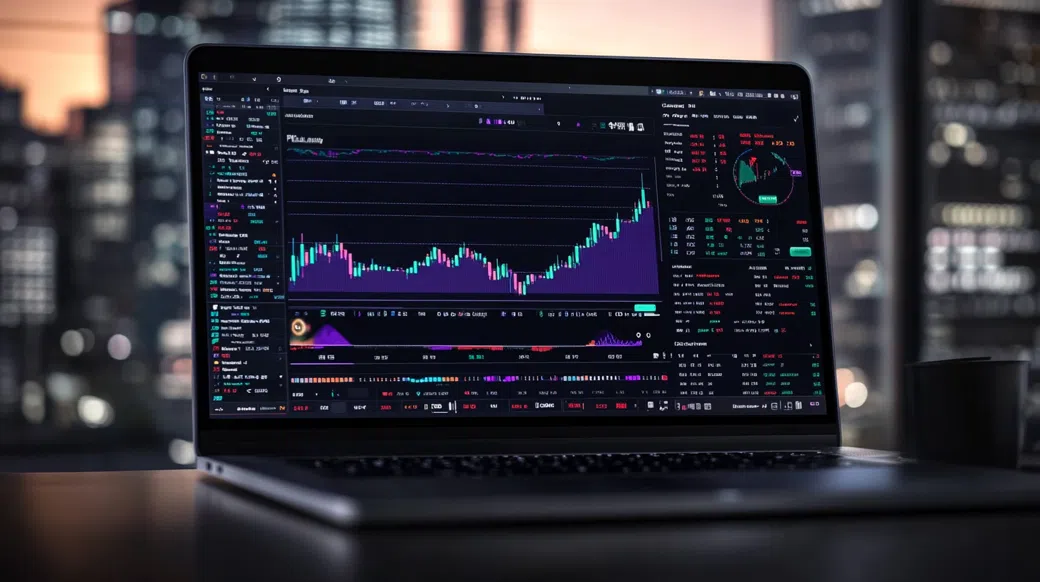
The platform stack is typically a proprietary WebTrader with an accompanying iOS/Android app. Expect functional charting—enough indicators and drawing tools for basic discretionary trading—but not the kind of multi-window workflow that systematic traders build around. Order entry is usually straightforward (market and pending orders), and account dashboards tend to emphasize margin, equity, and open P/L. Where these platforms can fall short is depth: limited customization, fewer advanced order types, and an execution “feel” that’s hard to audit when slippage reporting is thin. Mobile parity is commonly decent for monitoring and placing trades, yet serious journaling and rule-based execution often push traders toward platforms like MT4/MT5 or cTrader at regulated venues.
Trading Fees, Spreads, and Account Types at Royal Kapithorne
Costs at offshore CFD brokers are often presented as simple spreads, sometimes with tiered accounts. A reasonable expectation for a standard-style account is a EUR/USD spread around 2.0 pips, with wider pricing during news or thin liquidity. Some firms in this category also advertise “raw” pricing with near-zero spreads plus commission (commonly a few dollars per side), but the real cost should be judged net of slippage and execution rejects. Overnight financing (swap) is usually the hidden line item for swing traders; it can dominate results in range markets. If you’re weighing competitors to Royal Kapithorne, scan for inactivity charges and withdrawal fees as well—small administrative costs have a way of becoming big when you’re trying to move capital quickly.
When Do Traders Start Looking for Royal Kapithorne Alternatives?
Sometimes the catalyst is subtle: a few odd fills, a withdrawal that takes longer than expected, or support that becomes vague precisely when you need specificity. More often it’s a strategic mismatch—your approach evolves, and the broker doesn’t. Traders who search for Royal Kapithorne alternatives are frequently trying to replace a high-leverage, offshore setup with a framework that’s easier to verify: clearer rules on negative balance protection, stronger segregation standards, and a regulator with a public register you can actually check. In my experience, the real driver is confidence—because confidence is what lets you size correctly when volatility spikes.
- You want MT4/MT5 or cTrader for EAs, DOM, or custom indicators, and the current WebTrader can’t support that workflow.
- Your strategy depends on tight execution (news trading or scalping) and you’re seeing more slippage or re-quotes than your risk plan tolerates.
- You need access to real stocks/ETFs (not just CFDs) for longer-horizon exposure or tax-efficient positioning.
- Withdrawals feel inconsistent, or the broker requests additional documentation mid-withdrawal beyond routine KYC/AML.
How to Choose a Reliable Alternative to the Royal Kapithorne Trading Platform
Pick the broker the way you’d pick a bridge to drive a truck over: start with the load rating, then worry about the paint. For alternatives to the Royal Kapithorne trading platform, that “load rating” is regulation, custody protections, and how the broker handles margin stress. Once safety is credible, match the venue to your instruments, platform needs, and cost-of-trade—measured over the volume you actually trade, not the volume you fantasize about.
Regulation, Safety, and Investor Protection
Regulation is not a badge; it’s a rulebook with enforcement. In the UK, FCA oversight can connect to the FSCS investor compensation scheme (up to £85,000 in certain cases). In the EU, CySEC supervision can link to the ICF (up to €20,000, eligibility varies). In the US, NFA/CFTC frameworks tend to be strict on leverage and reporting. Look for segregated client funds and clear legal entity disclosure—then verify the firm on the regulator’s public register rather than trusting screenshots.
Available Markets and Instruments
Write down what you truly trade: FX for macro weeks, index CFDs for tactical risk, or equities/ETFs for long-run exposure. Many brokers similar to Royal Kapithorne focus on CFDs, which can be fine for short-term trading but do not confer shareholder rights when “trading stocks.” If you need options or futures, or if you want to hold bonds and cash across currencies, a multi-asset broker with exchange access is usually the cleaner solution.
Trading Costs: Spreads, Commissions, and Other Fees
Spreads are only the visible part. Commission, swap/overnight financing, and platform-related fees (inactivity, data, withdrawals) can dominate depending on holding period. A practical comparison uses round-turn cost: the spread paid to enter and exit plus commission, adjusted for typical slippage during your trading hours. If you trade 200 lots a month, half a pip is not a detail—it’s your edge.
Platforms, Tools, and Execution Quality
Platform choice is strategy choice. MT4/MT5 ecosystems support automation and a deep indicator library; cTrader often appeals to traders who care about order management and transparency; proprietary platforms range from excellent to toy-like. Execution model matters too: market maker versus STP/ECN/DMA affects how orders are internalized or routed. If you’re still assessing Royal Kapithorne, ask what happens in fast markets—how slippage is handled, whether stop-losses can gap, and what protections exist against negative balances.
Support, Education, and Overall User Experience
Good support is measurable: response times, competent answers, and clear escalation paths. Consider language coverage (especially for EU clients), hours aligned to your sessions, and whether the broker provides serious education on margin calls, product risks, and order types. Mobile apps should be more than “buy/sell buttons”; risk controls, alerts, and account reporting need to be usable on a small screen when you’re away from the desk.
Royal Kapithorne and Different Asset Classes: When Alternatives May Be Better
Royal Kapithorne Forex and CFD Trading
Royal Kapithorne’s likely sweet spot is the familiar retail set: ~30–50 FX pairs plus a handful of index and commodity CFDs, wrapped in high leverage (often around 1:500). That can feel powerful, but leverage is a volume knob on risk, not a free lunch. The more meaningful comparison is execution and total trading cost: a typical ~2.0 pip EUR/USD spread can be expensive for active traders, especially once slippage is included around data releases. Regulated FX/CFD specialists such as Pepperstone or OANDA generally offer tighter pricing structures and clearer disclosure, plus platform choice (MT4/MT5/cTrader or robust proprietary tools). If your style depends on precise entries, the difference between “quoted” and “filled” price is where the real performance lives.
Royal Kapithorne Stock and ETF Trading
This is where many offshore CFD venues show their limits. If “stocks” are offered at all, they’re frequently stock CFDs—synthetic exposure with financing costs and no shareholder rights. That’s workable for short-term directional bets, but it’s not the same as owning ETFs for a multi-year plan or using options for defined-risk hedges. Brokers with genuine exchange access, such as Interactive Brokers or Saxo Bank, can provide real stocks and ETFs, plus broader tools (portfolio margining for eligible clients, multi-currency cash management, and access to bonds/futures depending on region). For a global audience comparing top substitutes for Royal Kapithorne, the dividing line is simple: do you want a derivative ticket, or do you want the underlying asset?
Royal Kapithorne Crypto Trading
Crypto at CFD-first brokers is typically CFD exposure: you’re trading price moves, not withdrawing coins to a wallet, and you’re subject to overnight financing and broker-specific trading conditions. That can suit short-term traders who want to express risk-on/risk-off views without handling custody, but it’s a different product than spot crypto ownership. Regulated CFD firms such as IG (jurisdiction-dependent) may offer crypto CFDs with stronger oversight and clearer risk disclosures, while other regulated brokers may restrict crypto entirely for retail clients. If crypto is central to your plan, treat it as a product-structure decision first: CFD leverage magnifies volatility, and weekend gaps can hit stops harder than most newcomers expect.
Best Royal Kapithorne Alternatives for 2026: Comparison of Top Trading Platforms
Saxo Bank: Key Facts and How It Compares to Royal Kapithorne
Regulation: FCA, MAS, DFSA (entity and client jurisdiction dependent)
Markets: Stocks, ETFs, bonds, FX, CFDs, options, futures
Fees: FX spreads typically from ~0.6–1.2 pips (pair and account dependent); commissions on exchange-traded products vary by market
Platform: SaxoTraderGO, SaxoTraderPRO
Best For: Multi-asset portfolio traders who want one serious workstation
Interactive Brokers (IBKR): Key Facts and How It Compares to Royal Kapithorne
Regulation: SEC/FINRA, FCA, IIROC (by entity/region)
Markets: Stocks, ETFs, options, futures, FX, bonds
Fees: Tiered/fixed commissions on equities and derivatives; FX pricing typically very tight with commission-based models
Platform: Trader Workstation (TWS), IBKR Desktop, mobile app, APIs
Best For: Advanced traders needing global market access and APIs
Pepperstone: Key Facts and How It Compares to Royal Kapithorne
Regulation: FCA, ASIC, CySEC, DFSA (by entity)
Markets: FX, CFDs (indices, commodities, some shares as CFDs)
Fees: Raw-style accounts often show EUR/USD from ~0.0–0.3 pips + commission (commonly ~$6–$8 round-turn); Standard accounts typically from ~1.0+ pip
Platform: MT4, MT5, cTrader
Best For: Execution-focused FX traders running MT4/MT5 or cTrader
OANDA: Key Facts and How It Compares to Royal Kapithorne
Regulation: CFTC/NFA, FCA, ASIC, IIROC (by region)
Markets: FX, CFDs (availability varies by jurisdiction)
Fees: Spreads commonly from ~0.6–1.6 pips depending on pair and market conditions; financing costs apply for overnight holds
Platform: OANDA Trade (proprietary), MT4 (availability varies)
Best For: Risk-first FX traders who value transparent policies
IG: Key Facts and How It Compares to Royal Kapithorne
Regulation: FCA, ASIC, MAS (by entity)
Markets: CFDs (indices, FX, commodities, shares as CFDs), spread betting (UK), some regions offer broader investment products
Fees: Major FX spreads often from ~0.6–1.2 pips; CFD financing and other charges apply depending on product
Platform: IG Trading Platform, MT4 (in many regions)
Best For: Active CFD hedgers who want a large product catalog
CMC Markets: Key Facts and How It Compares to Royal Kapithorne
Regulation: FCA, ASIC, BaFin (by entity)
Markets: CFDs (FX, indices, commodities, shares as CFDs)
Fees: FX pricing often from ~0.7–1.3 pips on majors; overnight financing and product-specific charges apply
Platform: Next Generation platform, MT4 (in many regions)
Best For: Chart-driven discretionary traders who want rich analytics
Comparison Summary
| Platform | Regulation | Main Markets | Typical Costs | Best For |
|---|---|---|---|---|
| Saxo Bank | FCA, MAS, DFSA | Stocks/ETFs/bonds + FX/CFDs + options/futures | FX ~0.6–1.2 pips; exchange commissions vary | Multi-asset portfolio traders who want one serious workstation |
| Interactive Brokers (IBKR) | SEC/FINRA, FCA, IIROC | Global stocks/ETFs/options/futures + FX + bonds | Commission schedules; FX typically tight with commissions | Advanced traders needing global market access and APIs |
| Pepperstone | FCA, ASIC, CySEC, DFSA | FX + CFDs (indices/commodities; shares as CFDs) | Raw ~0.0–0.3 pips + ~$6–$8 round-turn; Standard ~1.0+ pip | Execution-focused FX traders running MT4/MT5 or cTrader |
| OANDA | CFTC/NFA, FCA, ASIC, IIROC | FX (plus CFDs where available) | Spreads often ~0.6–1.6 pips; financing for holds | Risk-first FX traders who value transparent policies |
| IG | FCA, ASIC, MAS | CFDs across FX/indices/commodities/shares; spread betting (UK) | Majors often ~0.6–1.2 pips; CFD financing varies | Active CFD hedgers who want a large product catalog |
| CMC Markets | FCA, ASIC, BaFin | CFDs: FX/indices/commodities/shares | FX often ~0.7–1.3 pips; overnight fees apply | Chart-driven discretionary traders who want rich analytics |
How to Safely Move from Royal Kapithorne to Another Broker
Switching brokers is less like changing an app and more like rolling risk from one counterparty to another. Treat the sequence as a controlled operation: confirm the destination first, then unwind exposure, then move cash. Most mistakes happen when traders rush withdrawals while still running leverage—exactly when volatility can turn a small problem into a margin call. If you’re moving away from offshore setups toward regulated options vs Royal Kapithorne, patience is part of the edge.
- Check the new broker’s legal entity on the relevant register (FCA Register, ASIC Connect, CySEC listings, or NFA BASIC) and save screenshots/PDFs for your records.
- Open the new account and complete KYC (ID + proof of address) before you touch the old account balance; this reduces the “money in transit” window.
- Flatten positions at Royal Kapithorne rather than assuming transfers are possible; re-enter trades at the new venue if you still want the exposure.
- Withdraw using the same payment method you used to deposit whenever possible—many brokers enforce this for AML, and mismatches can slow processing.
- Export trade history, statements, and funding records for tax and dispute documentation; don’t rely on dashboards staying accessible later.
Ready to Explore Royal Kapithorne?
If you’re still evaluating the platform before committing—or you want to compare the onboarding flow against the best Royal Kapithorne alternatives 2026—review the product list, fee schedule, and regional eligibility carefully. Make sure you understand how leverage and margin calls work on your chosen instruments before funding any live account.
Visit Royal KapithorneFAQ: Royal Kapithorne Alternatives and Trading Platforms
What is the best alternative to Royal Kapithorne in 2026?
The best choice depends on whether you need true multi-asset access or primarily FX/CFDs. For broad markets (real stocks/ETFs, options, futures), Interactive Brokers or Saxo Bank are strong picks; for FX execution and platform choice, Pepperstone is a common short-list candidate. If you’re building a shortlist of Royal Kapithorne alternatives, match the broker to your instruments, platform needs, and the regulator in your jurisdiction.
Is Royal Kapithorne a safe broker/platform?
Royal Kapithorne appears to operate in an offshore/unregulated framework consistent with providers registered in jurisdictions such as the Seychelles FSA, which generally offers fewer investor protections than FCA/ASIC/CySEC/NFA regimes. That doesn’t automatically mean malpractice, but it does mean you typically have less recourse and weaker compensation backstops if something goes wrong. Traders comparing platforms like Royal Kapithorne should prioritize verifiable regulation, segregated client funds, and clear withdrawal policies.
Can I trade stocks, futures, or crypto with Royal Kapithorne?
With Royal Kapithorne, the typical product mix in this category is forex and CFDs, sometimes including crypto CFDs; real stocks/ETFs and listed futures are often not the core offering. If “stocks” are available, they’re commonly CFDs rather than exchange-traded ownership. For real stocks/ETFs and futures access, alternatives to the Royal Kapithorne trading platform such as Interactive Brokers or Saxo Bank are usually better aligned.
What should I check before switching from Royal Kapithorne to another platform?
Before switching, verify the new broker’s regulator and legal entity on the official register, then confirm the exact product you’ll trade (CFD vs underlying asset), leverage limits, and negative balance protection terms. Next, compare total cost (spread + commission + swap) in the session you trade, and test execution with small size. Finally, download statements from Royal Kapithorne and plan the withdrawal path to satisfy AML requirements.
About the Author: Erik Lindström is a Stockholm-based former fixed-income analyst who writes about the European brokerage ecosystem and Nordic fintech innovation. He approaches trading platforms like counterparty exposures—useful tools, but never beyond scrutiny. For Erik, risk management is an art built from structure, not slogans.