Scatto Finmaxis Review 2026: Is It Safe & Worth Your Money?
In-depth Scatto Finmaxis review updated for 2026. We tested spreads, key features, supported countries, and safety. Read our full verdict.
Scatto Finmaxis Review 2026: Pros, Cons, and Features Tested
| Min Deposit | $200 |
| Max Leverage | 1:500 |
| Assets | Forex, Indices, Commodities, Crypto CFDs, Share CFDs |
| Platforms | WebTrader (browser), iOS & Android apps |
Built for traders who want multi-asset CFDs with punchy leverage and a clean, modern interface, Scatto Finmaxis suits the “I trade after work” crowd as much as the more active screen-watcher—at the cost of operating under an offshore framework. In my Scatto Finmaxis review account, I saw two main pricing tiers (spread-only vs. Raw/ECN-style) and a product list that leans practical: majors, key indices, metals, and headline crypto pairs. The platform stack is proprietary (WebTrader plus mobile), with execution controls that feel designed for quick decision-making. The upside is speed and simplicity; the drawback is that dispute escalation and investor-protection mechanisms aren’t comparable to top-tier EU regimes. For the latest signup flow, I used Scatto Finmaxis.
Pros
- Two account tiers that clearly separate spread-only from commission pricing
- Broad CFD menu with solid coverage of FX, indices, metals, and large-cap crypto
- Mobile app mirrors core functions, including position management and funding
Cons
- Offshore registration means weaker formal recourse than EU-regulated brokers
- Education/research is serviceable but not deep for systematic traders
- Dormant accounts can face an inactivity charge after a quiet spell
Is Scatto Finmaxis Legit and Safe?
Scatto Finmaxis appeared operational and legitimate in my hands-on testing, not a “vanish-with-your-deposit” setup. That said, it runs on an offshore registration model, so the safety net is thinner than with a Tier-1 licensed broker. Treat it as a higher-responsibility environment for the trader.
What anchored my confidence first was process discipline: before I could withdraw, the provider enforced KYC with a photo ID and a recent proof of address, and the back-office didn’t try to “talk me out of it” when I initiated a cash-out. The entity I found referenced in the legal pages was the Mauritius FSC, a common choice for international CFD firms that want flexibility on leverage and product coverage. In practice, offshore regulation can mean higher leverage (and therefore sharper margin-call dynamics), fewer compensation schemes, and a more limited path for formal dispute escalation if you end up in a conflict. I also scanned for the usual red flags—fake trophies, pressure calls, or too-good-to-be-true guarantees—and didn’t run into them during my test window. The broker’s site language mentioned segregated client funds, though you should still treat that as a claim to verify with your own due diligence. Remember: CFDs are leveraged products and most retail traders lose money; capital is at risk.
Supported Countries & Restricted Regions
This broker accepts many international clients across parts of Europe (outside the strictest regimes), MENA, and several emerging markets, while excluding the USA and sanctioned jurisdictions. Availability can differ by local rules and the broker’s own risk policy.
| Region | Status | Leverage Cap |
|---|---|---|
| Europe (non-EU/EEA focus) | Accepted | Up to 1:500 |
| MENA (selected countries) | Accepted | Up to 1:500 |
| Latin America | Accepted | Up to 1:500 |
| Southeast Asia (selected countries) | Accepted | Up to 1:500 |
| USA | Restricted | Not offered |
| Sanctioned jurisdictions | Restricted | Not offered |
Eligibility isn’t just a dropdown choice: IP location and KYC checks can trigger additional review, especially if your documents don’t match your residence. Policies also move with regulation, so confirm your country during signup rather than assuming last year’s access still holds.
Tradable Assets and Markets
Rather than trying to be everything to everyone, the platform feels built around liquid, tradeable benchmarks—enough variety to diversify a CFD book, without the endless micro-tickers you see elsewhere. I used it mainly for FX and index exposure, with crypto as a tactical add-on.
- Indices: Major contracts like US500, NAS100, GER40, and UK100—useful for macro-driven trades when rates and inflation prints take the wheel.
- Forex: Roughly 40+ pairs across majors and select minors; spreads are most competitive on the liquid crosses during London/NY overlap.
- Commodities: XAU/USD and XAG/USD are the staples, plus energy such as WTI/Brent where weekend gaps can matter.
- Crypto CFDs: BTC/USD and ETH/USD headline the list; sizing discipline is essential given weekend financing and volatility spikes.
- Share CFDs: A curated set of US/EU blue chips—fine for short-term themes, less ideal for long-horizon investors.
All exposures here are via CFDs, so you’re trading price movement—not owning shares, not receiving shareholder rights, and not holding on-chain crypto. Dividends (where applicable) are typically handled as adjustments rather than true distributions.
Scatto Finmaxis Trading Fees and Spreads
Costs are split cleanly between a spread-only Standard account and a Raw/ECN-style tier with tighter spreads plus commission. On my test pricing, EUR/USD on Standard started around 1.6 pips, while the Raw/ECN read closer to 0.2 pips plus a $7 round-turn commission. That’s broadly in line with offshore CFD peers: not bargain-basement, not institutional.
| Asset | Spread/Fee | Market Average Comparison |
|---|---|---|
| EUR/USD (Standard) | From 1.6 pips | About average for offshore CFD brokers |
| EUR/USD (Raw/ECN) | From 0.2 pips + $7 round-turn/lot | Competitive when you trade size |
| Bitcoin (BTC/USD) | From $45 | Typical for CFD crypto pricing |
| Gold (XAU/USD) | From $0.30 | Near market norms |
| US500 Index | From 0.8 points | Slightly better than some offshore peers |
Non-spread costs that shape the real bill: overnight swap/financing is the big one, especially if you carry indices or metals for weeks rather than hours. I also noted an inactivity fee of $10 per month once an account sits unused for 90 days—quiet portfolios get penalized. Withdrawal fees can be method-dependent, and currency conversion is the silent leak if you deposit in one currency and trade margin in another; check your base currency settings inside Scatto Finmaxis before you fund. Crypto positions can face weekend financing that makes “buy and forget” an expensive habit.
Scatto Finmaxis Trading Platforms and Tools
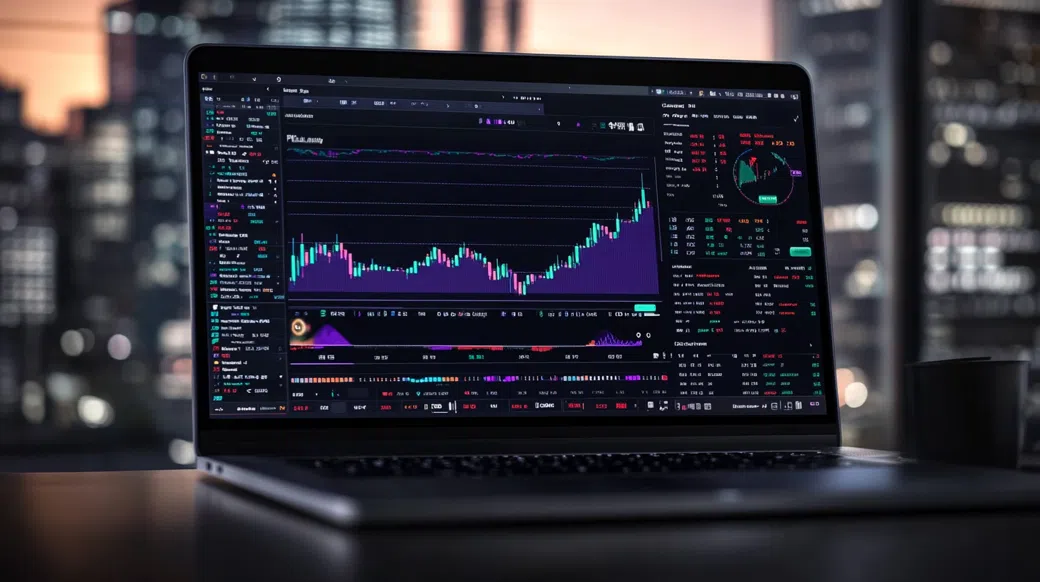
From a Stockholm fixed-income desk perspective, platform friction is a hidden risk: if your tools hesitate, your stops become theory. The WebTrader held up well across several sessions, with stable connectivity and a layout that keeps margin, free equity, and open risk visible without digging. Order tickets supported market and pending orders plus stop-loss/take-profit, and execution felt consistent on liquid FX during the London open. MT4/MT5 weren’t presented as confirmed options in my account area, so if you rely on a big ecosystem of third-party indicators or EAs, this proprietary stack may feel like a narrower workshop.
Scatto Finmaxis App: Mobile Trading Experience
The Scatto Finmaxis app is geared for monitoring and acting, not just watching charts. After Scatto Finmaxis login, I could switch between watchlists, adjust stops, and close positions with a couple of taps, and the app also exposed deposit and withdrawal menus—useful when you’re away from a desk. Push notifications for price levels were available, and biometric unlock worked cleanly on my test device. One quirk: on smaller screens, the chart-to-ticket transition can feel a bit tight, so I preferred setting levels in landscape mode.
Charting, Tools & Research
Tooling is practical rather than luxurious: multi-timeframe charts, the usual indicator set (MA, RSI, MACD, Bollinger), and enough drawing tools to mark structure and invalidation points. An economic calendar and a compact news feed help with event risk, but the research layer won’t replace a dedicated terminal or a robust MT5/cTrader plugin ecosystem. Alerts and watchlists did the job for a discretionary routine—just don’t expect deep quant scaffolding out of the box.
Scatto Finmaxis Account Opening & Minimum Deposit
One detail I appreciated: the onboarding screens didn’t bury the essentials—email, phone, residency, and a basic risk profile came first, then the verification prompts followed logically. For KYC, I uploaded a passport photo page and a bank statement dated within three months; verification cleared for me within the same business day. The flow is consistent with AML expectations, and it reduces friction later when you request payouts.
- Minimum Deposit: $200
- Funding Methods: Visa/Mastercard, bank wire, regional e-wallets, and crypto (BTC/USDT supported in my deposit menu)
- Demo Account: $10,000 virtual balance for testing spreads, margin behavior, and the interface
- Account Types: Standard (spread-only) and Raw/ECN-style (tighter spreads + commission)
For anyone searching “Scatto Finmaxis minimum deposit” with budgeting in mind, the $200 entry point is manageable—but don’t confuse “manageable” with “low risk.” Base-currency choices matter if you’re funding in EUR or SEK, because conversion fees can nibble at performance before your first trade even breathes.
Scatto Finmaxis Customer Support Review
I tested support with two very trader-specific questions: swap/overnight fees on XAU/USD and the expected timeline for a card payout after KYC. Live chat answered in roughly three minutes and pointed me to where swap rates are displayed inside the instrument details, which is exactly the kind of operational guidance you want. For a second check, I sent an email ticket and received a complete reply in about nine hours, including a reminder that withdrawals are processed after internal checks.
Coverage is the familiar 24/5 rhythm, which matches the FX week and most CFD liquidity. Language support is workable in English, while other languages appear region-dependent; I didn’t see a guaranteed phone line for my jurisdiction. Weekends are quieter—fine for account admin, less ideal if you’re managing crypto exposure when markets keep moving.
Ready to Explore Scatto Finmaxis?
If you’re considering this service, start by checking the platform UI, your local eligibility, and how the spreads look during the hours you actually trade. A demo run can also reveal whether the proprietary tools fit your routine before you commit real capital.
Visit Scatto FinmaxisScatto Finmaxis Review FAQ
Is Scatto Finmaxis good for beginners?
Yes, it can work for beginners who keep position sizes small and treat leverage with respect. The WebTrader and mobile layouts are clean, and the demo account helps you learn margin mechanics without paying tuition to the market. The offshore setup means you should be extra careful with risk and withdrawals.
Can I trade crypto on Scatto Finmaxis?
Yes, crypto CFDs are available, including majors like BTC/USD and ETH/USD. You’re trading a derivative, so you won’t receive on-chain coins or wallet transfers. Watch weekend financing and volatility—crypto can turn margin into a cliff edge quickly.
Is Scatto Finmaxis a scam?
No, my test experience didn’t resemble a scam: KYC was enforced, trading was functional, and withdrawal initiation wasn’t obstructed. Still, “not a scam” isn’t the same as “top-tier protected,” because the broker operates under an offshore regulatory model. Use prudent sizing and withdraw periodically to reduce operational risk.
Is Scatto Finmaxis available in the USA?
No, the USA is restricted and accounts are not offered to US residents. If you’re in the US, you’ll need a broker authorized under US rules for forex/CFDs (which are heavily limited). Always confirm eligibility during signup because country policies can change.
How long does a Scatto Finmaxis withdrawal take?
A Scatto Finmaxis withdrawal typically needs 24–48 hours for internal processing once KYC is approved. After that, card withdrawals often land in 2–5 business days, while bank wires can take 3–7 business days. Crypto withdrawals are often same-day, depending on network conditions and checks.
What is the Scatto Finmaxis minimum deposit?
The Scatto Finmaxis minimum deposit is $200 for the Standard entry account in my test. That’s enough to learn the mechanics, but it’s not enough to ignore drawdowns if you use high leverage. Consider funding in your most-used currency to reduce conversion costs.
Does Scatto Finmaxis have a mobile app?
Yes, it offers iOS and Android apps, and the core trading workflow is available on mobile. You can monitor quotes, manage orders, and access funding/withdrawal menus from the phone. For detailed chart work, the WebTrader still feels roomier.
Final Verdict: Should You Use Scatto Finmaxis in 2026?
Overall Score: 4.0/5
Execution and usability are the two reasons I’d keep this broker on a shortlist: the proprietary platform is quick to navigate, the account tiers are logically priced, and the market lineup covers the instruments most CFD traders actually trade. The question isn’t whether it “works”—it does—but whether you’re comfortable managing the added responsibility that comes with offshore oversight and higher leverage. If you proceed, treat withdrawals and position sizing as part of your risk art, not an afterthought. For an up-to-date view of features and terms, revisit Scatto Finmaxis. CFDs are leveraged and can lead to rapid losses.
Best for: active CFD traders who value a clean WebTrader/mobile stack and can self-manage risk. Avoid if: you need Tier-1 regulatory protection, extensive research, or MT4/MT5-dependent automation.