Sparelsik Review 2026: Is It Safe & Worth Your Money?
In-depth Sparelsik review updated for 2026. We tested spreads, key features, supported countries, and safety. Read our full verdict.
Sparelsik Review 2026: Pros, Cons, and Features Tested
| Min Deposit | $200 |
| Max Leverage | 1:500 |
| Assets | Forex, Indices, Commodities, Crypto CFDs, Share CFDs |
| Platforms | WebTrader, iOS/Android apps |
Built as a multi-asset CFD venue for active, price-sensitive retail traders, Sparelsik suits those who want higher leverage and a fast WebTrader—while accepting the thinner safety net that comes with offshore registration via Sparelsik. In my test, the account tiers were clearly split between a spread-only Standard and a commission-based Raw-style option for tighter pricing. Coverage leans practical: majors in FX, the big index benchmarks, and the usual metals/energy contracts. The platform stack is proprietary (web + mobile), with decent tooling but without the deep third‑party ecosystem you get around MT4/MT5. The main drawback is governance: dispute escalation and compensation frameworks are not comparable to EU/UK regimes.
Pros
- Two-tier pricing (Standard vs Raw-style) gives a genuine choice for cost control
- Broad CFD shelf: FX, indices, metals/energy, crypto CFDs, and selected share CFDs
- Clean WebTrader with solid mobile parity for monitoring and order management
Cons
- Offshore registration model means weaker investor protections than Tier‑1 regulators
- Proprietary platform only; no MT4/MT5 confirmation during my checks
- Dormant accounts face an inactivity charge after a period of no trading
Is Sparelsik Legit and Safe?
Sparelsik looked operational and tradeable in my hands-on checks, not like an obvious “vanish after deposit” setup. That said, it runs under an offshore framework, so “safe” depends more on your own risk limits than on a strong regulator standing behind you.
One point that matters: the broker presented itself as registered with the Mauritius FSC, which typically allows higher leverage and simpler cross-border onboarding than you’d see under ESMA-style rules. Offshore status isn’t automatically a red flag, but it does change the balance of power—complaints are harder to escalate, compensation schemes are limited, and the legal perimeter is less familiar for most European clients. On my side, KYC was not optional: before I could request a payout, the portal asked for a photo ID and a recent proof of address, and it rejected my first upload due to glare. I also watched for the classic tells—aggressive “account manager” pressure, fake awards, or withdrawal friction. The sales tone stayed restrained, and my small withdrawal went through within the stated processing window. Still, remember what you’re buying: CFDs use leverage, margin calls are real, and most retail traders lose money when risk is handled casually.
Supported Countries & Restricted Regions
This provider is broadly accessible across parts of Europe (non‑EU), MENA, and sections of Asia and LATAM, subject to local rules. The USA and sanctioned jurisdictions are not accepted.
| Region | Status | Leverage Cap |
|---|---|---|
| Europe (non‑EU, e.g., Balkans) | Accepted | Up to 1:500 |
| MENA (selected countries) | Accepted | Up to 1:500 |
| Southeast Asia (selected countries) | Accepted | Up to 1:500 |
| Latin America (selected countries) | Accepted | Up to 1:500 |
| USA | Restricted | Not offered |
| Sanctioned jurisdictions | Restricted | Not offered |
Eligibility isn’t just a checkbox—IP location, phone country code, and document review can all trigger a block. Policies also shift; it’s worth re-checking permitted countries at signup and again before funding.
Tradable Assets and Markets
Range-wise, the lineup feels built for the “daily driver” CFD trader: liquid benchmarks first, niche instruments second. I found enough variety to build a hedged book (FX + indices + metals) without hunting for obscure tickers.
- Indices: The usual macro barometers are there—US500, NAS100, US30, plus European contracts like GER40 and UK100.
- Forex: A solid list of majors and minors with a sprinkling of higher-volatility crosses; pricing quality depends heavily on account tier.
- Commodities: Gold and silver sit alongside energy (WTI/Brent and natural gas), useful for inflation and risk-off hedges.
- Crypto CFDs: BTC and ETH are the anchor products, with several large-cap tokens available as CFDs rather than spot coins.
- Share CFDs: A curated set of US and EU blue chips—fine for tactical trades, not a full equity replacement.
All of this is CFD exposure: you’re trading price moves with leverage, not acquiring shareholder rights or on-chain assets. Dividends, where applicable, are handled via CFD adjustments rather than direct ownership.
Sparelsik Trading Fees and Spreads
Sparelsik fees hinge on which account you choose: Standard is spread-only, while the Raw-style tier narrows the spread and adds a per-lot commission. On EUR/USD, the Raw pricing I saw is closer to what active-trader brokers advertise, while Standard sits more mid-pack for offshore CFD platforms.
| Asset | Spread/Fee | Market Average Comparison |
|---|---|---|
| EUR/USD (Standard) | From 1.6 pips | About average |
| EUR/USD (Raw/ECN) | From 0.2 pips + $7 round-turn/lot | Competitive for active traders |
| Bitcoin (BTC/USD) | From $35 | In line with typical CFD pricing |
| Gold (XAU/USD) | From $0.35 | Slightly better than average |
| US500 Index | From 0.8 points | About average |
Non-spread costs that matter over time: Overnight swap/financing is the real drag for multi-day holds, and it’s especially noticeable on indices and leveraged FX. Weekend financing on crypto CFDs can stack up if you run positions through Saturday/Sunday. The account also applies an inactivity fee of $10 per month after 90 days without trading, and card/FX conversion costs can appear if you fund in a currency that doesn’t match your account base.
Sparelsik Trading Platforms and Tools
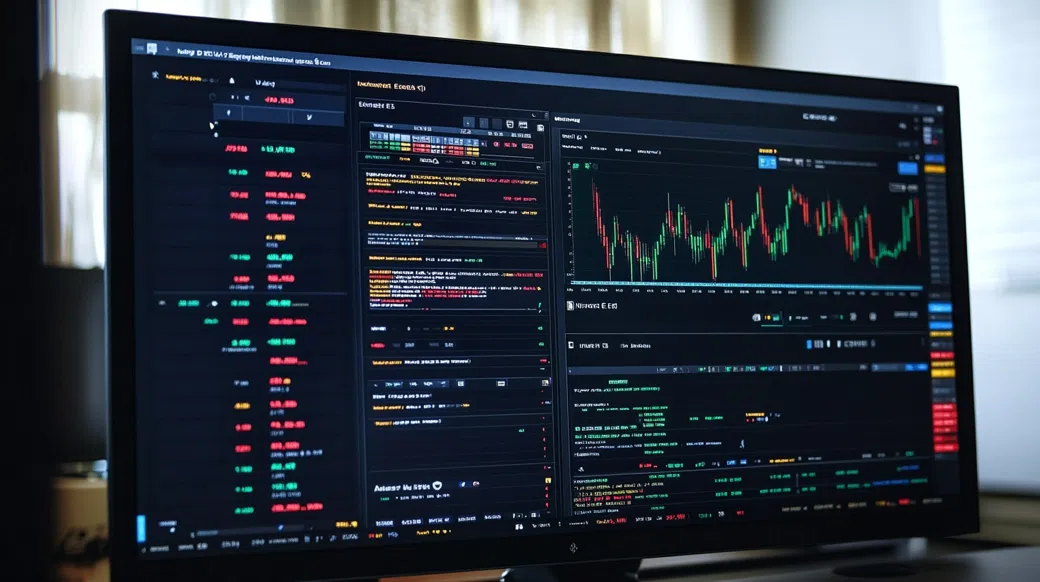
From a Stockholm fixed-income desk perspective, what I care about is repeatability: stable quotes, predictable margin logic, and no platform “surprises” when markets wake up. The WebTrader held up well during the London open when I tested a small EUR/USD market order and a stop-loss; execution was clean enough for retail sizing, and I didn’t see platform freezes. Order types covered the basics (market, limit, stop), but the surrounding ecosystem isn’t the MT4/MT5 universe—so if you live on third-party plug-ins, you’ll feel the ceiling.
Sparelsik App: Mobile Trading Experience
The Sparelsik app mirrors the web layout closely, which helps when you’re switching devices mid-session. Sparelsik login supported biometric unlock on my phone, and I could manage deposits and withdrawals from inside the app without being kicked to a browser. Push notifications for price alerts worked, and one-tap position close is there for damage control. My only gripe: chart interaction is slightly tight on smaller screens, so drawing levels precisely takes a steady thumb.
Charting, Tools & Research
Tools are sensible rather than exotic: multi-timeframe charts, a familiar indicator set (MA, RSI, MACD, Bollinger), and basic drawing for trendlines and zones. An economic calendar and a small news feed are integrated, which is enough to avoid trading blind into CPI or rate decisions. Still, anyone used to cTrader or a heavily customized MT5 workspace will notice fewer automation and backtesting options.
Sparelsik Account Opening & Minimum Deposit
After entering email, phone, and a short suitability-style questionnaire, the client portal pushed me toward verification before allowing a withdrawal request. The KYC checklist was standard AML fare: government-issued photo ID plus a proof of address dated within three months. Verification landed the same business day in my case, after I re-uploaded the address document in higher contrast. Account funding and basic settings were available immediately, but full features felt tied to completing KYC properly.
- Minimum Deposit: $200 (this is the Sparelsik minimum deposit I was prompted with at checkout)
- Funding Methods: Visa/Mastercard, bank wire, regional e-wallets, and crypto rails such as BTC and USDT
- Demo Account: $10,000 virtual balance for practicing margin and order placement
- Account Types: Standard (spread-only) and Raw-style (tighter spreads + commission) for higher-frequency traders
For my test, I funded by card and the confirmation screen showed the deposit instantly in the account ledger; the platform then nudged me to set a base currency before I got too far. If you’re planning multi-currency funding, pay attention to conversion costs and keep your risk sizing consistent with margin requirements.
Sparelsik Customer Support Review
I tested support with two practical questions: first via live chat about where swap rates are displayed per instrument, and later by email asking how long a card payout typically takes once KYC is approved. Chat connected in roughly three minutes and the agent pointed me to the instrument details panel (and clarified that swap is applied at rollover, with triple-swap timing depending on product). The email reply arrived in about nine hours on a weekday and matched what I then experienced on my own withdrawal: internal processing moved within 24–48 hours.
Coverage follows the usual offshore CFD pattern: live chat is positioned as 24/5, with email and a contact form as the backstop. Language support felt functional in English; regional languages can vary, and I wouldn’t assume Swedish or Finnish coverage unless you see it offered at the moment you sign up. Phone support, where shown, appears to be region-dependent, and weekends are predictably quieter.
Ready to Explore Sparelsik?
If you want to verify spreads, margin behavior, and the WebTrader layout under your own market hours, start small and treat it like a systems check. The demo is useful, but a tiny live position tells you more about execution, swaps, and withdrawals than any marketing page.
Visit SparelsikSparelsik Review FAQ
Is Sparelsik good for beginners?
It can be, but only if you respect leverage and keep position sizes small. The platform is simple enough to learn, and the $10,000 demo helps you practice without cash risk. Beginners should avoid jumping straight to 1:500 leverage and focus on stop-loss discipline first.
Can I trade crypto on Sparelsik?
Yes, you can trade crypto as CFDs, including BTC/USD and other large-cap coins. That means you’re speculating on price movements with margin, not buying tokens for a wallet. Expect financing costs to be more visible if you hold positions over weekends.
Is Sparelsik a scam?
No—based on my 2026 test, it behaved like a functioning CFD broker: KYC was enforced, trades executed, and a small withdrawal was paid out. The real caution is structural: offshore registration offers fewer protections than Tier‑1 regulators. So “Sparelsik scam” searches usually reflect risk concerns, not necessarily outright fraud.
Is Sparelsik available in the USA?
No, it’s restricted for US residents. If you attempt signup from the USA, eligibility checks (IP and KYC) can block onboarding. US traders generally need a CFTC/NFA-regulated venue for derivatives.
How long does a Sparelsik withdrawal take?
A typical Sparelsik withdrawal takes 24–48 hours for internal processing after KYC, then depends on the payment rail. In my card test, funds showed up in 2–5 business days from submission. Crypto payouts, when used, are often faster once approved.
What is the Sparelsik minimum deposit?
The Sparelsik minimum deposit is $200 for the live account funding flow I used. You can start with that amount and scale up later if execution and costs match your style. If you fund in a different currency, factor in conversion fees.
Does Sparelsik have a mobile app?
Yes, it offers iOS and Android apps alongside the WebTrader. You can monitor positions, place orders, and handle deposits/withdrawals from mobile. Biometric login support helps, but chart drawing is naturally tighter on smaller screens.
Final Verdict: Should You Use Sparelsik in 2026?
Overall Score: 4.0/5
Pricing flexibility is the strongest argument here: the Raw-style tier, in particular, gives cost-aware traders a credible route to tighter spreads—provided you understand how commission and swaps add up at scale. During my checks, execution behaved sensibly around liquid hours, and the Sparelsik payout path worked once KYC was clean. The caution flag is the familiar one: offshore registration means you’re leaning more on process and self-protection than on a heavyweight regulator. CFDs are leveraged instruments; if you don’t manage margin, the market will do it for you.
Best for: active CFD traders who want a WebTrader + mobile stack and can control leverage and holding costs. Avoid if: you require Tier‑1 regulation, formal compensation schemes, or a full MT4/MT5 ecosystem.