Stark Ertragstein Review 2026: Is It Safe & Worth Your Money?
In-depth Stark Ertragstein review updated for 2026. We tested spreads, key features, supported countries, and safety. Read our full verdict.
Stark Ertragstein Review 2026: Pros, Cons, and Features Tested
| Min Deposit | $200 |
| Max Leverage | 1:500 |
| Assets | Forex, indices, commodities, crypto CFDs, share CFDs |
| Platforms | Proprietary WebTrader + iOS/Android apps |
A multi-asset CFD venue with an offshore profile, Stark Ertragstein suits self-directed traders who want flexible leverage and a clean web/mobile stack—at the cost of lighter investor protections than you’d expect in the EU. Across Standard and Raw-style pricing tiers, the account logic felt coherent, not gimmicky, and the watchlist is broad enough for macro-driven portfolios (FX, indices, metals, crypto). The trading surface is proprietary rather than MT4/MT5-centric, which keeps the workflow simple but limits third‑party tooling. My headline takeaway: decent execution for the segment, but you must be comfortable managing risk without a Tier‑1 safety net. More details in this Stark Ertragstein overview.
Pros
- Two pricing tracks (spread-only vs. tight spread + commission) that map well to different trading styles
- WebTrader and mobile apps cover the essentials: charts, alerts, deposits, and withdrawals in one place
- Good mix of macro instruments—indices and gold alongside a solid FX list
Cons
- Offshore registration means weaker dispute escalation and no EU-style compensation scheme
- Education content is serviceable, not deep—active traders will outgrow it quickly
- Dormant accounts can incur a monthly inactivity charge
Is Stark Ertragstein Legit and Safe?
Stark Ertragstein appears operational and legitimate in the narrow sense that it opens accounts, enforces KYC, executes trades, and processes withdrawals. It is not, however, a Tier‑1 regulated EU/UK broker, so “safe” depends on how you weigh offshore oversight and your own risk controls.
Under the hood, the provider presented itself as registered with the Seychelles FSA, which is a familiar setup in the international CFD ecosystem: more flexibility on leverage, fewer formal guardrails for retail clients. That trade—freedom versus protection—matters if you ever need to escalate a complaint, rely on compensation schemes, or argue a pricing dispute. In my checks, I looked for the usual bright-red flags: aggressive sales calls, “instant guaranteed profits” language, and shiny award badges that don’t trace back to credible outlets. I didn’t run into that sort of theatre. What I did see was routine AML friction: ID plus proof of address were required before withdrawals, and the site copy referenced segregated client funds, albeit in broad terms. None of this removes market risk. CFDs are leveraged products; a large share of retail accounts lose money, and capital is always at risk.
Supported Countries & Restricted Regions
The broker primarily targets clients in international markets across parts of Europe (non‑EU), MENA, and select emerging regions, while excluding tightly regulated jurisdictions. The USA is blocked, and sanctioned countries are typically refused at onboarding.
| Region | Status | Leverage Cap |
|---|---|---|
| Europe (non‑EU/EEA, e.g., Switzerland, Balkans) | Accepted | Up to 1:500 |
| MENA (select countries) | Accepted | Up to 1:500 |
| Sub‑Saharan Africa (select countries) | Accepted | Up to 1:500 |
| Southeast Asia (select countries) | Accepted | Up to 1:500 |
| USA | Restricted | Not offered |
| Sanctioned jurisdictions | Restricted | Not offered |
Eligibility isn’t just a checkbox: IP checks, phone/country codes, and KYC documents tend to be cross-referenced, and policies can shift with local rules or payment-rail constraints. If you’re traveling, expect occasional “location mismatch” prompts during sign-in.
Tradable Assets and Markets
The lineup leans macro-first: currencies and indices are the spine, with commodities and crypto CFDs rounding out the risk-on/risk-off toolkit. For a Nordic trader used to liquid benchmarks, the instrument list felt practical rather than bloated.
- Indices: Major CFDs like US500, NAS100, US30, GER40, and UK100 for session-driven strategies and hedging.
- Forex: Roughly 40+ pairs across majors and minors, plus a sprinkling of higher-volatility crosses.
- Commodities: XAU/USD and XAG/USD sit alongside energy contracts such as WTI/Brent—useful for inflation narratives.
- Crypto CFDs: BTC and ETH were prominent, with several large-cap tokens; trading is price exposure, not coin custody.
- Share CFDs: A curated set of US/EU blue chips for tactical trades around earnings and headlines.
These are CFDs, so you’re trading leveraged price moves rather than owning the underlying shares or holding crypto on-chain. Dividends and corporate actions, when applicable, are typically handled as adjustments rather than shareholder entitlements.
Stark Ertragstein Trading Fees and Spreads
Costs on this broker are organized sensibly: Standard accounts bake fees into the spread, while Raw/ECN-style pricing tightens spreads and adds a per-lot commission. On EUR/USD, the Raw setup is competitive for the offshore bracket; the Standard tier sits closer to the middle of the pack.
| Asset | Spread/Fee | Market Average Comparison |
|---|---|---|
| EUR/USD (Standard) | From 1.6 pips | Around average for offshore CFD brokers |
| EUR/USD (Raw/ECN) | From 0.2 pips + $7 round-turn/lot | Often cheaper for active traders vs. spread-only accounts |
| Bitcoin (BTC/USD) | From $35 | Competitive when volatility is normal; widens in fast markets |
| Gold (XAU/USD) | From $0.35 | In line with typical CFD pricing |
| US500 Index | From 0.8 points | Slightly better than average during liquid hours |
Non-spread costs that matter: Overnight swap is the quiet budget-killer if you hold CFD positions for weeks; the rates I saw in the contract specs were directionally consistent with prevailing funding conditions. After 90 days of inactivity, the account applied a $10 monthly dormancy fee, which can surprise “set-and-forget” users. Withdrawals themselves were not presented with a fixed platform fee, but your bank, card issuer, or crypto network can still clip you via processing or blockchain charges; add conversion costs if you deposit in one currency and trade in another.
Stark Ertragstein Trading Platforms and Tools
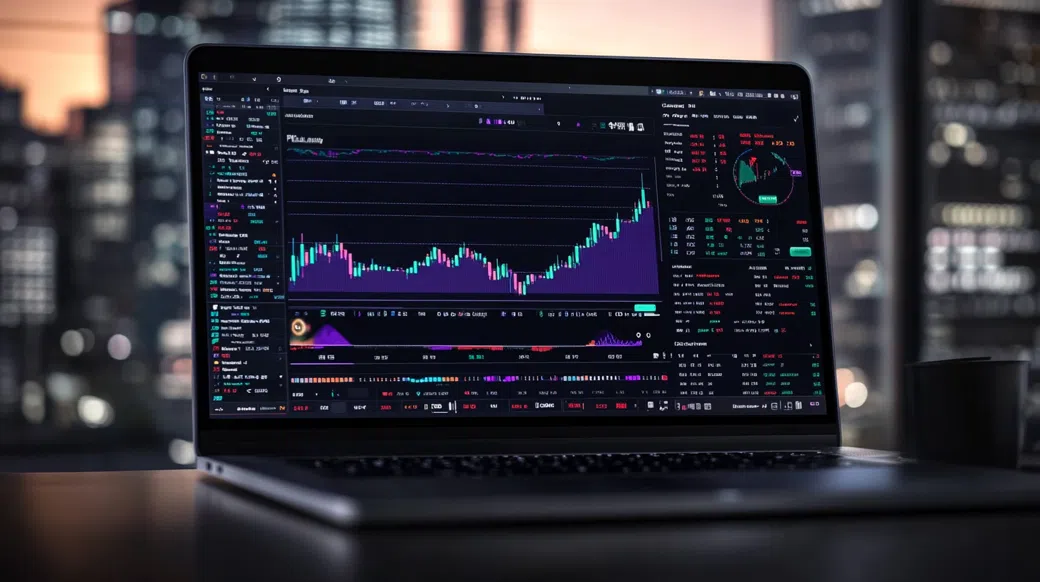
From the desktop side, the proprietary WebTrader behaved like a modern brokerage front end: stable sessions, fast instrument search, and multi-timeframe charts that didn’t lag when I cycled through FX and index watchlists. Order tickets supported market and pending orders with SL/TP, and I could see margin impact before sending. If you live inside the MT4/MT5 plug-in universe (EAs, custom indicators, trade copiers), you’ll feel the ceiling—this platform is designed to be self-contained rather than an open ecosystem.
Stark Ertragstein App: Mobile Trading Experience
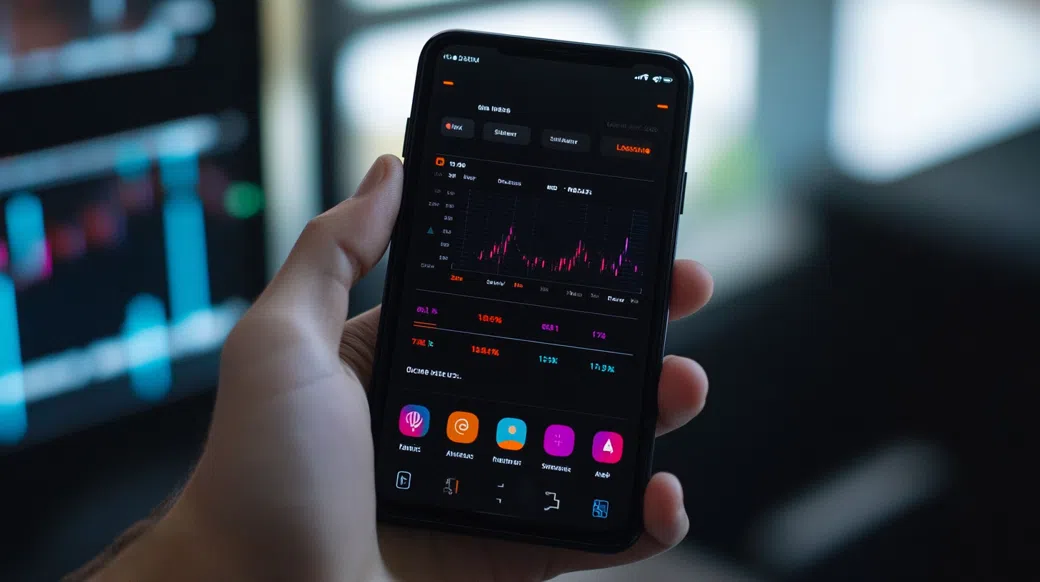
The Stark Ertragstein app mirrored the web layout closely, which kept the learning curve low on my commute between screens. Quotes updated smoothly, one-tap position management was available, and push notifications worked for order fills and price alerts. Biometric unlock was offered on my device, and deposits/withdrawals were accessible without hunting through menus. For anyone searching “Stark Ertragstein login” issues: my only hiccup was a short re-auth prompt after switching networks, more annoyance than dealbreaker.
Charting, Tools & Research
Tooling is adequate for discretionary trading: a built-in economic calendar, an integrated news feed, alerts, and the usual indicator set (MA, RSI, MACD, Bollinger) with basic drawing tools. Watchlists and price alerts did the job. Still, the research layer won’t replace specialist terminals, and heavy quant workflows will miss exportability and advanced strategy testing found in platforms like MT5 or cTrader.
Stark Ertragstein Account Opening & Minimum Deposit
Instead of burying you in forms, the signup flow asked for the essentials—email, phone, residency, and a short suitability-style set of questions—before steering me to identity checks. KYC required a government-issued photo ID plus proof of address dated within three months, and my verification cleared within the same business day. The onboarding screens were clean, with the compliance steps explained in plain language rather than legal fog.
- Minimum Deposit: $200
- Funding Methods: Visa/Mastercard, bank wire, regional e-wallets, and crypto deposits (BTC, USDT)
- Demo Account: $10,000 virtual balance for practice on spreads, margin, and order handling
- Account Types: Standard (spread-only) and Raw/ECN-style (tighter spreads + commission)
On the money side, the Stark Ertragstein minimum deposit is pitched at $200, which is reasonable if you treat it as tuition rather than “trading capital.” Base currency choice matters; if your bank account is SEK or EUR, keep an eye on FX conversion when funding. I also noticed KYC becomes non-negotiable before a first payout—plan to upload documents early to avoid delays.
Stark Ertragstein Customer Support Review
I tested support with a practical question: how swap/overnight fees are displayed per instrument and whether weekend financing is applied on crypto. Live chat connected in roughly three minutes and pointed me to the instrument-spec panel plus a short written explanation of triple-swap timing. I followed up by email asking about card vs. crypto withdrawal sequencing after verification; the ticket reply landed in about eight hours with a clear checklist and no pushy upsell. The tone was functional—more helpdesk than “sales desk.”
Coverage is broadly what you’d expect from an international CFD provider: 24/5 live chat with email and contact forms as the backstop, while weekends feel quieter. Language options depend on staffing, so don’t assume Scandinavian support even if the interface reads well in English. Phone support wasn’t prominently promoted in my region; if that channel matters to you, confirm availability before funding.
Ready to Explore Stark Ertragstein?
If you’re considering this broker, start by checking whether your country is eligible and compare spreads during the sessions you actually trade (London open is a different world than late Asia). A demo first can tell you more than marketing pages ever will.
Visit Stark ErtragsteinStark Ertragstein Review FAQ
Is Stark Ertragstein good for beginners?
Yes, it can be beginner-friendly if you stick to small size and use the demo first. The WebTrader layout is intuitive, but the offshore leverage (up to 1:500) can punish mistakes quickly. New traders should focus on risk limits, not maximum exposure.
Can I trade crypto on Stark Ertragstein?
Yes, crypto CFDs are available, including BTC and ETH pairs. You’re trading price movements via CFD contracts, so you won’t receive coins to a wallet or use them on-chain. Expect wider spreads when volatility spikes or during weekend liquidity gaps.
Is Stark Ertragstein a scam?
No, my experience didn’t match the typical “Stark Ertragstein scam” pattern—accounts functioned, KYC was enforced, and withdrawals were processed. The more relevant question is oversight: it operates under an offshore framework (Seychelles FSA), which offers fewer protections than EU/UK regulation. Treat it as a higher-responsibility environment for the trader.
Is Stark Ertragstein available in the USA?
No, Stark Ertragstein is not available in the USA. The platform blocks US residents at signup and typically reinforces this through KYC checks. If you’re a US person, look for a domestically regulated broker instead.
How long does a Stark Ertragstein withdrawal take?
Most withdrawals are queued internally within 24–48 hours after your account is verified. In my test, card payouts can take 2–5 business days to land, while crypto withdrawals are often same-day once approved. Bank wires tend to be slower, commonly 3–7 business days depending on correspondent banks.
What is the Stark Ertragstein minimum deposit?
The Stark Ertragstein minimum deposit is $200. That amount is enough to test execution and margin mechanics, but it’s not a buffer against volatility if you overuse leverage. Consider it a starting point, not a target position size.
Does Stark Ertragstein have a mobile app?
Yes, there are iOS and Android apps alongside the browser-based WebTrader. The mobile build supports charting, order placement, alerts, and account funding/withdrawal access. For most discretionary traders, the app is sufficient; power users may still prefer desktop screens for multi-chart work.
Final Verdict: Should You Use Stark Ertragstein in 2026?
Overall Score: 3.9/5
What I liked most was the coherence: pricing tiers make sense, the platform doesn’t fight you, and withdrawals followed the stated steps once verification was done. That said, “is Stark Ertragstein legit” isn’t the whole story—the offshore setup changes the safety calculus, especially if you’re used to EU dispute frameworks and stricter leverage caps. Use it only if you can treat risk management like craft: position sizing, hard stops, and a refusal to chase. CFDs are leveraged instruments and losses can exceed expectations quickly. For the full breakdown, revisit Stark Ertragstein and compare it against your local alternatives.
Best for: self-directed CFD traders who value flexible leverage and a clean WebTrader/mobile workflow. Avoid if: you require Tier‑1 regulation, guaranteed compensation schemes, or MT4/MT5-dependent tooling.