
Sterk Rendhof Review 2026: Is It Safe & Worth Your Money?
In-depth Sterk Rendhof review updated for 2026. We tested spreads, key features, supported countries, and safety. Read our full verdict.
Sterk Rendhof Review 2026: Pros, Cons, and Features Tested
| Min Deposit | $200 |
| Max Leverage | 1:500 |
| Assets | Forex, Indices, Commodities, Crypto CFDs, Share CFDs |
| Platforms | Proprietary WebTrader, iOS app, Android app |
Built as a multi-asset CFD venue with offshore styling, Sterk Rendhof fits traders who want leverage and broad market access, but it asks you to accept lighter legal backstops than you’d get in the EU. On my test account I saw two clear pricing lanes—spread-only Standard and a tighter Raw-style tier aimed at frequent traders. The product shelf leans practical: majors in FX, core indices, and the “trader’s commodities” (gold and crude) plus crypto CFDs for out-of-hours volatility. The proprietary WebTrader is the center of gravity, with mobile apps that mirror most of the workflow. The main drawback is structural: dispute escalation and compensation schemes are thinner in offshore setups, even when day-to-day operations look orderly. If you want a quick check of the interface, start at Sterk Rendhof.
Pros
- Two account tiers that separate casual spread trading from commission-based tighter pricing
- Solid coverage of FX, indices, metals and crypto CFDs for multi-session trading
- WebTrader plus mobile apps keep the workflow consistent across devices
Cons
- Offshore registration means weaker investor protections than Tier-1 jurisdictions
- Education is functional but not deep enough for true beginners
- Inactivity costs can bite if you park the account for months
Is Sterk Rendhof Legit and Safe?
Sterk Rendhof looked operational and tradeable in my 2026 check—orders filled, KYC was enforced, and withdrawals followed the stated workflow. That said, it runs under an offshore registration model, so “safe” depends as much on your own risk limits as on any regulator’s safety net.
The trust signal that mattered most in my test wasn’t marketing—it was process. The provider asked for a government photo ID plus proof of address before I could move meaningful money out, which is what you want to see from an AML/KYC standpoint. The entity I saw referenced in the legal footer pointed to Mauritius FSC oversight, a common jurisdiction in this segment: workable for running a brokerage, but typically lighter on compensation schemes and formal dispute channels than, say, Sweden’s Finansinspektionen or other EU frameworks. I also scanned for the usual red flags—pressure calls, “trophy cabinet” badges that don’t link anywhere, or obstructive withdrawal steps—and didn’t encounter those during my window. There is language around segregated client funds, yet offshore setups can make enforcement harder if things go wrong. Finally, remember the product risk: CFDs use leverage, margin calls happen fast, and most retail accounts lose money—only risk capital belongs here.
Supported Countries & Restricted Regions
This broker generally accepts clients across parts of Europe (outside the strictest regimes), MENA, Southeast Asia, and sections of Africa, subject to KYC review. The USA and sanctioned jurisdictions are blocked.
| Region | Status | Leverage Cap |
|---|---|---|
| Europe (non-EU/EEA residents) | Accepted | Up to 1:500 |
| MENA (selected countries) | Accepted | Up to 1:500 |
| Southeast Asia (selected countries) | Accepted | Up to 1:500 |
| Sub-Saharan Africa (selected countries) | Accepted | Up to 1:500 |
| USA | Restricted | Not offered |
| Sanctioned jurisdictions | Restricted | Not offered |
Eligibility isn’t just a checkbox—IP checks, residency fields, and document verification all play a role, and the policy can shift as local rules tighten. If you’re near a regulatory border, expect the platform to confirm status during onboarding or before your first withdrawal.
Tradable Assets and Markets
Rather than trying to be everything to everyone, the lineup feels built for CFD traders who rotate between FX, index beta, and headline-driven commodities—then add crypto when volatility returns.
- Indices: The usual liquid benchmarks showed up in my search—US500, NAS100, GER40 and UK100—useful for macro days and risk-on/risk-off hedging.
- Forex: Expect a broad set of majors and minors with a sprinkling of exotics; pricing focus is on the most traded pairs rather than obscure crosses.
- Commodities: Gold and crude (WTI/Brent) are the workhorses here, with spreads that widen when liquidity thins around session transitions.
- Crypto CFDs: BTC and ETH lead the pack, with a handful of large-cap coins; weekend trading is available but financing can be sharper.
- Share CFDs: A selective list of US and EU blue chips for short-term positioning—more “tactical exposure” than long-term investing.
All of this is CFD exposure: you’re trading price movements, not taking delivery of commodities, not holding on-chain crypto, and not receiving shareholder rights. Dividend adjustments can apply on share CFDs, but it’s accounting—not ownership.
Sterk Rendhof Trading Fees and Spreads
Sterk Rendhof fees are structured around two lanes: a spread-only Standard account and a Raw/ECN-style option where the spread compresses and a commission is charged per lot. On EUR/USD, my quotes sat around the expected offshore-CFD range—competitive enough for active traders, but not “institutional.” Net-net, the Raw tier is where costs make sense if you trade size and frequency.
| Asset | Spread/Fee | Market Average Comparison |
|---|---|---|
| EUR/USD (Standard) | From 1.6 pips | In line with offshore CFD peers |
| EUR/USD (Raw/ECN) | From 0.2 pips + $7 round-turn/lot | Often cheaper for high-frequency trading |
| Bitcoin (BTC/USD) | From $35 | Typical; can widen on weekends |
| Gold (XAU/USD) | From $0.35 | Reasonable for a CFD offering |
| US500 Index | From 0.8 points | Close to the segment average |
Non-spread costs that matter over time: Overnight swap/financing is the real P&L leak for swing traders—especially when you hold indices or gold through multiple sessions. I also noted an inactivity charge of $10 per month after 90 days without trading, which changes the math if you’re only “checking the platform” once a quarter. Withdrawals may come with method-side fees (card processors and banks take their cut), and funding in a non-base currency can trigger conversion costs. For crypto CFDs, weekend financing tends to be more punitive than weekday carry, so position sizing needs discipline.
Sterk Rendhof Trading Platforms and Tools
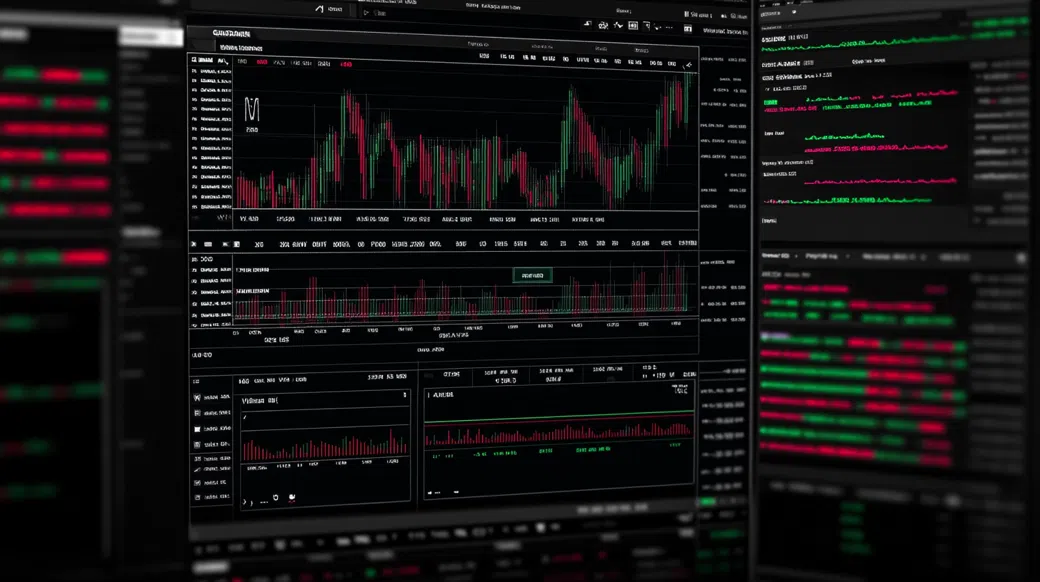
On desktop, the proprietary WebTrader behaved like a modern broker front-end rather than a thin wrapper: stable session handling, clean watchlists, and enough order controls for most discretionary traders. During the London–New York overlap I placed market and limit orders on EUR/USD and US500 and saw fills that tracked the tape, with the occasional fractional slippage when liquidity jumped. If you live inside the MT4/MT5 ecosystem—custom EAs, massive indicator libraries, third-party bridges—this platform will feel more self-contained, because that plug-in universe isn’t the default here.
Sterk Rendhof App: Mobile Trading Experience
The Sterk Rendhof app mirrors the web layout closely: real-time quotes, quick position management, and the ability to fund or request withdrawals without leaving the app. Sterk Rendhof login supported biometric unlock on my device, which is a small thing but helps if you’re managing risk on the move. Push notifications for price moves and order status were reliable, though the chart can feel tight on smaller screens when you stack indicators. One-tap close is there—use it carefully, because fat-finger mistakes happen when volatility spikes.
Charting, Tools & Research
Charting covers the essentials: multi-timeframe views, the standard indicator set (MA, RSI, MACD, Bollinger), and basic drawing tools for levels and trendlines. There’s an economic calendar and a news feed embedded, which is enough to stay aware of CPI/FOMC-type risk, but it won’t replace a dedicated research terminal. Alerts and watchlists are practical, yet advanced automation and strategy testing remain limited compared with MT5 or cTrader environments.
Sterk Rendhof Account Opening & Minimum Deposit
Before I could even think about sizing risk, the onboarding screens pushed me through the usual sequence: email, phone, residency, then a short suitability-style set of questions. Verification required a government-issued ID and a proof of address document dated within three months; my check cleared within the same business day. Funding came next, and the first deposit confirmation appeared instantly on the dashboard, with a clear “pending/complete” state rather than a vague spinner.
- Minimum Deposit: $200 (Sterk Rendhof minimum deposit for the Standard tier in my test).
- Funding Methods: Visa/Mastercard, bank wire, regional e-wallets, and cryptocurrencies such as BTC and USDT.
- Demo Account: $10,000 virtual balance—useful for learning margin behavior and order types without paying spreads.
- Account Types: Standard (spread-only) and Raw/ECN-style (tighter spreads plus $7 round-turn per lot commission).
Account base currency options were serviceable, but if you deposit in one currency and trade in another, the conversion spread becomes a “silent fee.” For readers comparing broker portals, I’d suggest opening a demo first, then checking the live funding rails on Sterk Rendhof once you’re comfortable with the risk profile.
Sterk Rendhof Customer Support Review
Support quality shows up when you ask a boring question. I used live chat to clarify swap/overnight charges on XAU/USD and whether rates change over weekends; the agent came back in roughly three minutes with a plain-language explanation and pointed me to where the live swap numbers sit in-platform. I followed up by email about withdrawal timing for card payouts after KYC, and the ticket reply landed later the same day—about eight hours in my case—with a step-by-step outline rather than a copy-paste paragraph.
Coverage is broadly what you’d expect from an international CFD shop: live chat runs 24/5, with weekend support thinner and more “triage” than troubleshooting. Language availability depends on staffing, and phone lines—if offered—tend to be region-specific rather than global. In short: good enough for operational issues, not a substitute for having your own risk plan.
Ready to Explore Sterk Rendhof?
If you’re considering this broker, verify your regional eligibility, read the fee schedule, and test execution on a small size before scaling. I’d also compare the Standard versus Raw pricing on the same instrument in real market conditions—your trading frequency will decide which one is cheaper.
Visit Sterk RendhofSterk Rendhof Review FAQ
Is Sterk Rendhof good for beginners?
It can be, but only if you treat it as a trading tool—not a classroom. The interface is approachable and the $10,000 demo helps, yet the education layer is fairly light. Beginners should keep leverage modest and learn how margin calls work before going live.
Can I trade crypto on Sterk Rendhof?
Yes, crypto is available via CFDs, with BTC and ETH among the core markets. You’re speculating on price rather than holding coins on-chain, so there’s no wallet withdrawal of crypto. Pay attention to weekend spreads and financing, which can be higher than weekday carry.
Is Sterk Rendhof a scam?
No—based on my 2026 test it behaved like a functioning offshore CFD broker, with KYC checks and a withdrawal flow that matched its stated timelines. The real caveat is jurisdictional: offshore registration (Mauritius FSC in the legal disclosures I reviewed) usually means fewer formal protections than EU/UK brokers. Trade only with risk capital and keep position sizing conservative.
Is Sterk Rendhof available in the USA?
No, the USA is restricted. That’s consistent with many CFD brokers due to local regulatory rules. If you’re a US resident, you’ll need a provider licensed for the US market instead.
How long does a Sterk Rendhof withdrawal take?
A Sterk Rendhof withdrawal typically leaves the broker within 24–48 hours after KYC, then the payment rail adds its own time. In my card test, receipt was within 2–5 business days once approved. Bank wires can take 3–7 business days, while crypto payouts are often same-day.
What is the Sterk Rendhof minimum deposit?
The minimum deposit is $200 on the Standard account in my review. That’s enough to test execution, but it’s not enough to responsibly use high leverage. Start small, and treat the first weeks as a systems test rather than a profit mission.
Does Sterk Rendhof have a mobile app?
Yes, it offers iOS and Android apps alongside the WebTrader. The mobile build supports charting, order placement, and account actions like deposits and withdrawals. If you trade actively, set alerts and use biometric login to reduce operational friction.
Final Verdict: Should You Use Sterk Rendhof in 2026?
Overall Score: 4.0/5
For traders who value flexibility over a long list of regulatory stamps, Sterk Rendhof delivers a coherent platform with sensible market coverage and a clear split between Standard and Raw-style pricing. My practical checks—KYC enforcement, execution around liquid hours, and a card withdrawal—came back without drama, which is what you want from an operational standpoint. The hesitation is the same one I have with many offshore setups: when something turns into a dispute, escalation options are narrower than in the Nordics or the broader EU. Keep leverage (up to 1:500) on a tight leash, because CFDs can move against you fast. For current conditions, see Sterk Rendhof.
Best for: Active CFD traders who want multi-asset access and can manage leverage risk. Avoid if: You require Tier-1 regulation, formal compensation schemes, or you’re building long-term investments rather than trading.


