Tęcza Fondvel Review 2026: Is It Safe & Worth Your Money?
In-depth Tęcza Fondvel review updated for 2026. We tested spreads, key features, supported countries, and safety. Read our full verdict.
Tęcza Fondvel Review 2026: Pros, Cons, and Features Tested
| Min Deposit | $200 |
| Max Leverage | 1:500 |
| Assets | Forex CFDs, Indices CFDs, Commodities CFDs, Crypto CFDs, Share CFDs |
| Platforms | WebTrader + iOS/Android mobile apps |
A multi-asset CFD venue built around a proprietary WebTrader, Tęcza Fondvel suits traders who want broad market access and flexible leverage, while accepting the thinner safety net that often comes with offshore-style registration; in other words, convenience and product range are the upside, formal investor protections are the compromise. In my test, the Standard tier leaned on spread-only pricing, while the tighter Raw/ECN-style tier targeted higher-frequency habits. The market list covers the usual macro playground—FX, indices, metals, and a crypto menu—without pretending to be an investing account. The Tęcza Fondvel stack feels designed for speed and simplicity, but education depth and third-party platform support aren’t its strongest cards.
Pros
- Two clear pricing tracks: spread-only Standard and commission-based Raw/ECN-style
- WebTrader is clean and usable, with mobile apps that mirror the core functions
- Good coverage of major CFD markets (FX, indices, metals, crypto) for tactical trading
Cons
- Operates under an offshore framework, which typically means fewer escalation paths in disputes
- Inactivity cost applies after dormancy, which can punish “set-and-forget” accounts
- No confirmed MT4/MT5 ecosystem, limiting automation and third-party tooling
Is Tęcza Fondvel Legit and Safe?
Tęcza Fondvel looked operational and tradeable in my hands-on checks, not like a disappearing “deposit trap.” That said, it runs under an offshore registration model (I saw Mauritius FSC referenced in the legal footer), so the safety profile is not the same as a top-tier European licence.
Regulation language matters most when something goes wrong, so I started there before placing meaningful risk. The provider presents Mauritius FSC oversight and standard compliance cues—KYC prompts, AML wording, and references to segregated client funds—yet offshore setups generally bring higher leverage and lighter compensation schemes than you’d expect in, say, Stockholm or Frankfurt. I also did a quick red-flag sweep: no pushy “account manager” calls during my test window, no cartoonish award badges plastered across the checkout, and the withdrawal screen was accessible without hoops. Still, dispute escalation is typically tougher outside Tier‑1 jurisdictions, and traders should treat margin rules as personal responsibility, not a regulator’s safety rail. CFDs are leveraged products; most retail accounts lose money, and you can lose more quickly than you expect when volatility spikes.
Supported Countries & Restricted Regions
This broker is generally open to clients across parts of Europe (outside tightly restricted regimes), MENA, LATAM, and segments of Asia, with the USA and sanctioned jurisdictions blocked.
| Region | Status | Leverage Cap |
|---|---|---|
| Europe (non-EU / selected) | Accepted | Up to 1:500 |
| Latin America | Accepted | Up to 1:500 |
| MENA (selected countries) | Accepted | Up to 1:500 |
| Southeast Asia | Accepted | Up to 1:500 |
| USA | Restricted | Not offered |
| Sanctioned jurisdictions | Restricted | Not offered |
Eligibility is checked through a mix of onboarding declarations, IP screening, and KYC verification—so you can’t assume access will stick if your residency documents don’t match. Policies also move with compliance and banking partners, so it’s worth re-checking availability before you fund.
Tradable Assets and Markets
The instrument list is built for “macro-first” trading: currencies and indices lead, then metals, energy, and a risk-on crypto shelf for shorter-term setups.
- Indices CFDs: The staples are here—US500, NAS100, US30, plus European benchmarks like GER40 and UK100 for session-based trading.
- Forex CFDs: Around 40+ pairs in my platform view, with majors and a decent set of minors; exotics exist but feel more tactical than core.
- Commodities CFDs: Gold and silver are the headline, with crude oil (WTI/Brent) and natural gas available when you want inflation or geopolitics exposure.
- Crypto CFDs: BTC and ETH anchor the range, supported by several large-caps—useful for volatility, but financing costs can bite on holds.
- Share CFDs: A selective list of US/EU blue chips for event-driven trades rather than long-term equity ownership.
All of this is CFD exposure: you’re trading price movement, not taking shareholder voting rights, not receiving “real” dividends in the traditional sense, and you’re not withdrawing on-chain crypto. Think trading account, not custody wallet.
Tęcza Fondvel Trading Fees and Spreads
Costs hinge on which account you pick: the Standard profile bundles pricing into the spread, while the Raw/ECN-style option tightens the spread and adds a per-lot commission. On balance, the totals are broadly in line with what you see from international CFD providers when you’re not in a strict EU leverage regime.
| Asset | Spread/Fee | Market Average Comparison |
|---|---|---|
| EUR/USD (Standard) | From 1.4 pips | Around average |
| EUR/USD (Raw/ECN) | From 0.2 pips + $7 round-turn/lot | Competitive for active traders |
| Bitcoin (BTC/USD) | From $35 spread | Average (varies with volatility) |
| Gold (XAU/USD) | From $0.30 | Slightly better than average |
| US500 Index | From 0.8 points | Competitive |
Beyond spreads/commission: Overnight swap is the quiet drain for swing trades, and the crypto book can carry heavier weekend financing—plan position size accordingly. I also noted an inactivity fee of $10 per month after 90 days without trading, which changes the maths for “parked” accounts. Withdrawal rails may add third-party charges (especially wire), and if you fund in one currency and trade in another, conversion costs can show up where you least want them: in the background.
Tęcza Fondvel Trading Platforms and Tools
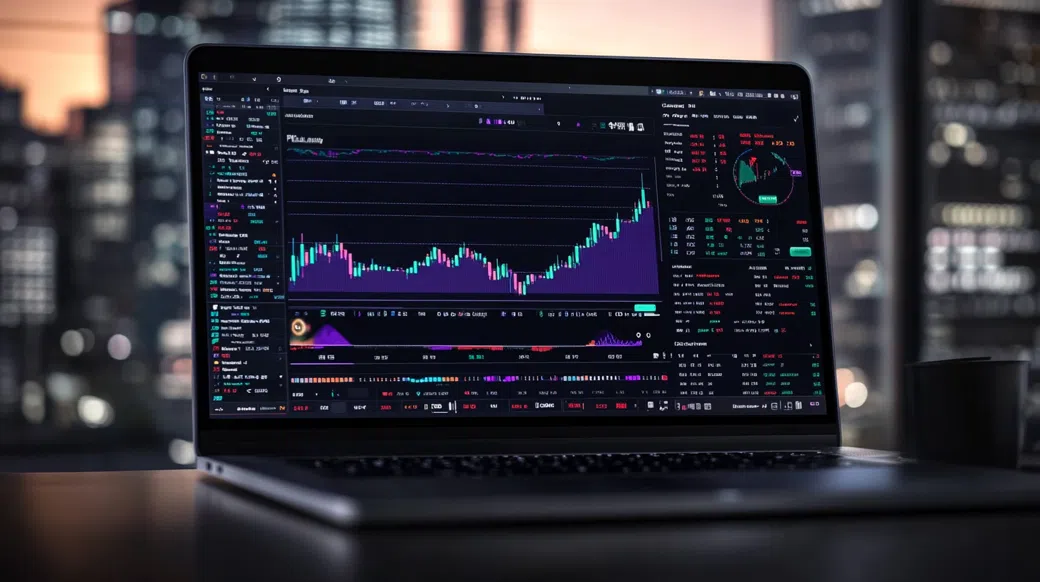
On desktop, the WebTrader felt more “Nordic fintech simple” than old-school terminal: watchlists on the left, clean ticket on the right, and charting that doesn’t fight you. I tested market and limit orders on EUR/USD around the London open; fills were consistent with fast market conditions, with a touch of slippage when liquidity thinned for a moment. The platform covers the essentials (including stop-loss/take-profit), but if your workflow depends on MT4/MT5 scripts and a deep indicator marketplace, you’ll notice the missing ecosystem.
Tęcza Fondvel App: Mobile Trading Experience
The Tęcza Fondvel app mirrors the WebTrader layout well: live quotes, quick position management, and an easy path to deposits and withdrawals from the same menu. Tęcza Fondvel login supported biometric unlock on my device, which matters when you’re managing risk on the commute rather than at a desk. Push notifications for order events were reliable, and one-tap close worked as advertised, though chart space is naturally tight on smaller screens.
Charting, Tools & Research
Charting includes the familiar toolkit—MA, RSI, MACD, Bollinger-style overlays—plus drawing tools for structure and quick levels. There’s an economic calendar and a compact news feed that’s “good enough” for staying aware of CPI/FOMC moments. The ceiling is real, though: power users who live in multi-chart layouts, advanced alerts, or cTrader/MT5 analytics may find the research layer a bit light.
Tęcza Fondvel Account Opening & Minimum Deposit
Before I could place meaningful size, the onboarding flow nudged me through a simple profile (email, phone, residence, experience checkboxes) and then straight into identity verification. KYC required a government-issued photo ID plus proof of address dated within three months; my upload went through without drama, and approval landed later the same business day. That sequencing—access to the dashboard early, trading permissions after verification—felt designed to keep momentum while still ticking AML boxes.
- Minimum Deposit: $200
- Funding Methods: Visa/Mastercard, bank wire, regional e-wallets, and crypto (BTC, USDT)
- Demo Account: $10,000 virtual balance for testing order flow and margin behaviour
- Account Types: Standard (spread-only) and Raw/ECN-style (tighter spreads + commission)
For traders comparing brokers, the Tęcza Fondvel minimum deposit sits in the accessible range without being “pocket change,” which I actually prefer—tiny deposits often lead to reckless leverage choices. Depositing by card posted instantly on my side, while account base currency selection is something to think through up front if you fund in SEK or EUR and trade USD-quoted instruments.
Tęcza Fondvel Customer Support Review
I tested live chat with a practical question: where to find the swap/overnight rates per instrument and whether they change around weekends. A human agent replied in roughly three minutes, pointed me to the contract-spec page, and clarified that crypto financing can be higher over weekends due to the 24/7 market. I then emailed support asking about card payout timing for a small withdrawal; the ticket came back in about eight hours with a method-by-method estimate and a reminder that KYC must be fully approved first.
Support coverage followed the familiar 24/5 pattern, which fits FX and index hours but leaves the weekend crypto crowd more self-served. Language availability looked region-dependent, and I didn’t see a prominently advertised phone line during my checks—common in this segment, but still a minus if you like voice escalation. Net-net, it’s functional support rather than concierge service.
Ready to Explore Tęcza Fondvel?
If you’re considering this platform, start by checking whether your country is accepted and run the demo through a few sessions to see how spreads behave around news. Only after that should you test a small live deposit and confirm the withdrawal route that fits you best.
Visit Tęcza FondvelTęcza Fondvel Review FAQ
Is Tęcza Fondvel good for beginners?
Yes, it can work for beginners who want a clean WebTrader and a demo account to rehearse risk control. The interface is not overloaded, but new traders still need to understand leverage and margin calls. If you’re learning, keep position sizes small and treat the demo as a habit-builder, not entertainment.
Can I trade crypto on Tęcza Fondvel?
Yes, crypto is offered as CFDs, with BTC and ETH among the core instruments. Because it’s CFD exposure, you’re not buying coins to withdraw on-chain. Pay attention to financing, especially if you hold positions through weekends.
Is Tęcza Fondvel a scam?
No, my account could be verified, funded, traded, and accessed without the “vanishing act” behaviour typical of outright scams. The more relevant question is protections: it operates under offshore-style oversight (Mauritius FSC referenced), which usually means fewer formal remedies than Tier‑1 regulators. Use disciplined risk limits and don’t confuse leverage availability with safety.
Is Tęcza Fondvel available in the USA?
No, the USA is restricted and the broker does not offer accounts there. If you’re a US resident, look for a domestically authorised venue instead. Trying to register with mismatched residency details typically fails at KYC.
How long does a Tęcza Fondvel withdrawal take?
A Tęcza Fondvel withdrawal is usually processed internally within 24–48 hours after KYC is complete. Receipt time depends on the rail: cards typically land in 2–5 business days, bank wires in 3–7 business days, and crypto can arrive the same day. In my test, the status moved to “processed” the next day, with the card payout settling a few days later.
What is the Tęcza Fondvel minimum deposit?
The Tęcza Fondvel minimum deposit is $200. That’s enough to trade small sizes, but not enough to “survive” poor risk control at 1:500 leverage. If you’re new, consider starting even smaller in exposure by lowering your lot size rather than chasing bigger trades.
Does Tęcza Fondvel have a mobile app?
Yes, there are iOS and Android apps that mirror the WebTrader’s core features. You can monitor positions, place orders, and manage funding from the phone. For serious analysis, I still prefer a larger screen, but execution and monitoring on mobile were solid.
Final Verdict: Should You Use Tęcza Fondvel in 2026?
Overall Score: 4.0/5
What stood out was the “get to the point” trading experience: a tidy WebTrader, workable pricing across two account styles, and a market list that covers most tactical needs without extra noise. My small withdrawal test also behaved like a real brokerage workflow—processed after verification, then delivered via the chosen rail. The flip side is structural: Tęcza Fondvel sits in an offshore regulatory context, so you should treat risk management as a craft—position sizing, stop placement, and leverage discipline—rather than assuming a regulator will catch you when you slip. CFDs are high-risk instruments; capital is at risk.
Best for: active CFD traders who want WebTrader simplicity, multi-asset access, and the choice of Standard vs Raw/ECN-style pricing. Avoid if: you require Tier‑1 regulation, guaranteed investor compensation schemes, or MT4/MT5-dependent automation.