
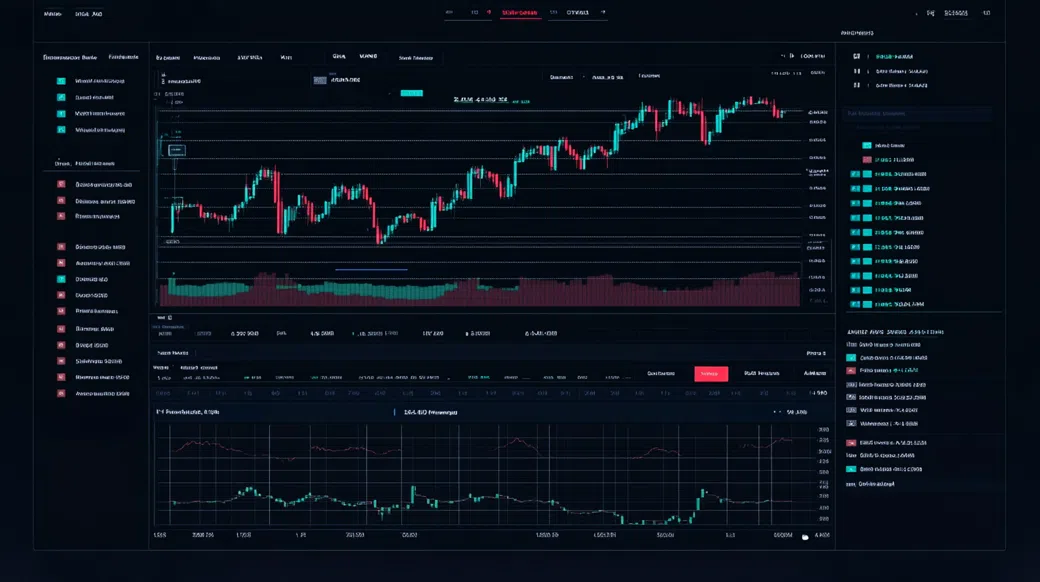
Trace Fondiv Trading Platform Alternatives 2026
Trace Fondiv alternatives for 2026: compare regulated brokers, platforms, costs, and safety steps for FX/CFDs, stocks/ETFs, and crypto exposure.
Trace Fondiv Trading Platform Alternatives 2026: Reliable Options for Online Traders
Some platforms sell speed and simplicity; others sell a feeling. For traders, the difference matters most when markets gap, spreads widen, and withdrawals suddenly become “a process.” Trace Fondiv sits in that familiar offshore CFD universe: typically positioned around forex and indices CFDs, with a proprietary WebTrader and a mobile app aimed at quick onboarding rather than institutional-grade tooling. From what’s commonly observed with brokers in this category, you’re looking at a minimum deposit around $250, leverage up to roughly 1:500, and EUR/USD spreads that often start near 2.0 pips on a standard-style account. That can work for casual speculation, but it’s a rough fit for anyone who measures execution and costs in pips, not slogans.
Because the USA is generally off-limits for these setups—and because investor-protection rules vary sharply by jurisdiction—many readers end up searching for Trace Fondiv alternatives that sit under recognisable regulators and offer clearer rules around segregated client funds, negative balance protection, and complaint handling. If you’re currently using Trace Fondiv, treat this guide as a risk-first map: which regulated brokers cover similar instruments, where the platform stacks differ (MT4/MT5/cTrader vs WebTrader), and what to check before moving money.
Disclaimer: This article is for informational purposes only and does not constitute investment advice. CFDs and other leveraged products can move against you quickly and may result in losses greater than your initial margin.
Key Takeaways (TL;DR)
- If you need real stocks/ETFs (not just stock CFDs), a multi-asset broker such as Interactive Brokers or Saxo is usually the cleanest upgrade path.
- For active FX/CFD trading, comparing “round-turn” costs (spread + commission) is more useful than focusing on headline leverage.
- Open and fully KYC-verify the new account before initiating withdrawals, because AML rules frequently require matching deposit/withdrawal rails.
What Is Trace Fondiv and How Does Its Trading Platform Work?
Across Europe’s brokerage ecosystem, Trace Fondiv reads like a CFD-first venue built for retail flow rather than long-horizon investing. It is typically presented as an offshore brokerage framework (often associated with jurisdictions such as the Seychelles), where the product shelf leans heavily on forex and CFDs—indices, a handful of commodities, and usually a menu of crypto CFDs. The target audience is the trader who wants fast account access and high leverage, not the one running a multi-asset book with bonds, options, and careful position financing. That distinction matters: the protections, reporting, and dispute mechanisms you get from a top-tier regulator are not a given with platforms like Trace Fondiv.
Trace Fondiv Web Trading Platform: Core Features and Tools
The platform stack is generally a proprietary WebTrader with basic-to-mid charting and a companion iOS/Android app. Expect the essentials—market/limit orders, stop-loss and take-profit, watchlists, and an account dashboard showing margin, equity, and open P&L. Charting is usually serviceable for discretionary trading: common indicators, drawing tools, and multiple timeframes, but not the deeper workflow you’d expect from MT5 or cTrader when you’re testing execution, managing templates, or running systematic routines. Mobile parity tends to be “good enough” for monitoring and simple order placement, yet heavy analysis is still more comfortable on desktop.
Trading Fees, Spreads, and Account Types at Trace Fondiv
Cost structures in this segment are often spread-led. A typical reference point is EUR/USD from around 2.0 pips on a standard-style account, with higher leverage offered up to roughly 1:500. Some offshore brokers advertise “raw” pricing with near-zero spreads plus commission (often in the $5–$8 round-turn range), but the real question is execution quality: slippage, requotes, and how stops behave during volatility. Add swap/overnight financing for held positions, and be alert to non-trading fees—withdrawal handling charges or inactivity policies can quietly dominate the P&L for low-frequency accounts.
When Do Traders Start Looking for Trace Fondiv Alternatives?
My old fixed-income desk habit was to ask one question first: “What happens when markets are stressed?” That’s where many traders begin comparing Trace Fondiv alternatives—not out of boredom, but because the friction shows up precisely when you need clean execution and predictable operational rules. Offshore leverage can look attractive until a gap forces a margin call, or until you realise that your recourse framework is thin compared to an FCA- or ASIC-supervised broker. The goal isn’t perfection; it’s reducing avoidable uncertainty in custody, pricing, and withdrawal handling.
- You want MT4/MT5 or cTrader for an EA/automation workflow, but the current proprietary WebTrader can’t support it reliably.
- Your strategy is sensitive to a 2.0-pip EUR/USD spread, and you’d rather pay a transparent commission on tighter pricing.
- You need a clearer investor-protection setup (segregated funds, negative balance protection, formal complaints path) than offshore venues usually provide.
- Withdrawals take longer than expected or require repeated documentation beyond normal KYC/AML checks.
How to Choose a Reliable Alternative to the Trace Fondiv Trading Platform
Selection works best when you treat it like a risk budget, not a beauty contest. Decide what must not fail—custody and withdrawals, platform reliability, or tight execution—then filter for brokers that can prove those basics under a recognised regulator. From there, match your instrument needs (FX-only vs multi-asset), and only then worry about the last decimal place in spreads.
Regulation, Safety, and Investor Protection
Start with the regulator’s public register, not a logo on a website. FCA supervision (UK) often comes with FSCS coverage up to £85,000 for eligible clients; CySEC (EU) typically links to the ICF up to €20,000, depending on client classification and circumstances. ASIC and NFA/CFTC regimes have their own guardrails, particularly around disclosures and conduct. Look for segregated client funds language, negative balance protection where applicable, and a clear legal entity tied to your region.
Available Markets and Instruments
“More markets” is only useful if you trade them. If you want to own stocks/ETFs outright (voting rights, dividends in the usual sense), you need a broker offering cash equities, not just stock CFDs. Options and futures access matters for hedging—especially if you think in curves and convexity. Many competitors to Trace Fondiv are strong in FX/CFDs but stop short of exchange-traded breadth, so be precise about your required instrument set.
Trading Costs: Spreads, Commissions, and Other Fees
Costs hide in different places: the spread you cross, the commission you pay, and the swap you accrue overnight. Compare the “round-turn” cost for your typical trade size—say, 20–50 lots a month for an active FX trader—because that’s where a 2.0-pip spread becomes a measurable drag. Also check non-trading charges: inactivity fees, conversion markups, and withdrawal processing can matter more than you’d expect for a part-time account.
Platforms, Tools, and Execution Quality
Platform choice is really an execution choice. MT4/MT5 and cTrader are popular because they enable indicators, scripting, and more detailed order handling; proprietary WebTrader stacks can be perfectly fine, but you must test them. Ask about the execution model—market maker versus STP/ECN/DMA—and read the order execution policy with slippage in mind. If you’re migrating from Trace Fondiv, run a small live test on the new broker to see how stops, limits, and fills behave during news.
Support, Education, and Overall User Experience
Support isn’t about friendliness; it’s about resolution time when money is in flight. Check service hours in your time zone, language coverage (EU clients often need multilingual support), and whether the broker offers platform training beyond glossy webinars. Mobile parity also matters—alerts, margin monitoring, and order amendments should be smooth on the app. A clean UX reduces operational errors, which is an underrated source of loss.
Trace Fondiv and Different Asset Classes: When Alternatives May Be Better
Trace Fondiv Forex and CFD Trading
On FX/CFDs, Trace Fondiv-style offerings typically cover roughly 30–50 FX pairs, 8–15 indices, and a modest set of commodities—enough for directional trading, less ideal for nuanced cross-market hedging. The bigger issue is the trade-off between leverage (often up to 1:500) and the cost/execution package that comes with it. If EUR/USD sits near 2.0 pips on a standard setup, a frequent trader will feel that friction quickly. Regulated alternatives such as Pepperstone or IG can be more consistent for execution policy clarity, and FX specialists often provide Raw-style accounts where spreads can be closer to the interbank layer plus a transparent commission. The risk reminder is simple: leverage magnifies not only P&L, but also mistakes—one bad fill in a fast market can erase a week’s careful trading.
Trace Fondiv Stock and ETF Trading
Stock and ETF access is where many offshore CFD brokers look thin. Even when “stocks” appear in the product list, it’s frequently stock CFDs—price exposure without ownership, no shareholder rights, and financing costs that can bite on longer holds. Traders who want to build a real portfolio (cash equities, ETFs, maybe bonds) should look at multi-asset venues with exchange access and stronger custody frameworks. Interactive Brokers is a common reference for breadth—stocks, ETFs, options, futures, and bonds in one account—while Saxo tends to appeal to Europeans who want a polished platform and curated market access. In practice, this is less about speculation and more about avoiding structural mismatch: don’t use a CFD wrapper for an investment problem.
Trace Fondiv Crypto Trading
Crypto exposure on offshore CFD platforms is usually delivered as crypto CFDs—you’re trading price movements, not holding coins on-chain, and you don’t control a wallet. That setup can be acceptable for short-term views, but it carries platform and counterparty considerations, plus wider spreads during volatility. If you want regulated crypto CFD exposure, brokers like IG and Plus500 have offered crypto CFDs in certain jurisdictions (eligibility varies by region and rules change). For most traders, the key is to decide whether you need ownership or simply a tactical hedge. Either way, treat weekend gaps and funding rates as first-class inputs; they often matter more than the headline “number of coins” on the menu.
Best Trace Fondiv Alternatives for 2026: Comparison of Top Trading Platforms
Saxo Bank: Key Facts and How It Compares to Trace Fondiv
Regulation: FCA, DFSA, MAS (entity depends on region)
Markets: Stocks, ETFs, bonds, FX, CFDs, options, futures
Fees: FX spreads typically from ~0.6–1.2 pips (account/volume dependent); commissions apply on exchange-traded products
Platform: SaxoTraderGO, SaxoTraderPRO
Best For: Multi-asset Europeans who want a single, well-structured account
Pepperstone: Key Facts and How It Compares to Trace Fondiv
Regulation: FCA, ASIC, CySEC, DFSA
Markets: FX, CFDs (indices, commodities, some shares as CFDs)
Fees: Standard spreads often around ~1.0–1.3 pips on EUR/USD; Raw-style pricing can be near ~0.0–0.3 pips + commission (varies by entity/platform)
Platform: MT4, MT5, cTrader
Best For: Execution-focused FX traders running MT4/MT5 or cTrader
Interactive Brokers (IBKR): Key Facts and How It Compares to Trace Fondiv
Regulation: SEC/FINRA, FCA, IIROC
Markets: Stocks, ETFs, options, futures, bonds, FX
Fees: FX pricing typically tight with commissions; exchange-traded commissions vary by market and tier
Platform: Trader Workstation (TWS), IBKR Mobile, Client Portal API tools
Best For: Professionals needing global market access and portfolio-level controls
CMC Markets: Key Facts and How It Compares to Trace Fondiv
Regulation: FCA, ASIC, BaFin
Markets: CFDs (FX, indices, commodities, shares as CFDs)
Fees: FX spreads often from ~0.7–1.2 pips on major pairs (product/account dependent); costs mainly embedded in spread
Platform: Next Generation (proprietary), MT4 (in some regions)
Best For: Chart-driven CFD traders who prefer a strong proprietary platform
OANDA: Key Facts and How It Compares to Trace Fondiv
Regulation: CFTC/NFA, FCA, ASIC, IIROC
Markets: FX, CFDs (availability varies by region)
Fees: FX spreads typically from ~0.8–1.4 pips on majors (account/region dependent); financing applies on held positions
Platform: OANDA Trade (proprietary), MT4
Best For: Risk-conscious FX traders who value transparent pricing and oversight
Plus500: Key Facts and How It Compares to Trace Fondiv
Regulation: FCA, CySEC, ASIC, MAS
Markets: CFDs (FX, indices, commodities, shares as CFDs, crypto CFDs where permitted)
Fees: Costs primarily via spread (varies by instrument and market conditions); overnight funding applies
Platform: Plus500 WebTrader, Plus500 mobile app
Best For: Simplicity-first CFD traders who want a tightly controlled interface
Comparison Summary
| Platform | Regulation | Main Markets | Typical Costs | Best For |
|---|---|---|---|---|
| Saxo Bank | FCA/DFSA/MAS (by entity) | Stocks, ETFs, bonds, FX, CFDs, options, futures | FX ~0.6–1.2 pips; commissions on exchanges | Multi-asset Europeans who want a single, well-structured account |
| Pepperstone | FCA/ASIC/CySEC/DFSA | FX + CFDs | Standard ~1.0–1.3 pips; Raw ~0.0–0.3 + commission | Execution-focused FX traders running MT4/MT5 or cTrader |
| Interactive Brokers (IBKR) | SEC/FINRA, FCA, IIROC | Stocks/ETFs, options, futures, bonds, FX | Tight FX + commission; tiered exchange commissions | Professionals needing global market access and portfolio-level controls |
| CMC Markets | FCA/ASIC/BaFin | CFDs across FX/indices/commodities/shares | Often ~0.7–1.2 pips on majors; spread-led pricing | Chart-driven CFD traders who prefer a strong proprietary platform |
| OANDA | CFTC/NFA, FCA, ASIC, IIROC | FX (plus CFDs where available) | Often ~0.8–1.4 pips on majors; financing on holds | Risk-conscious FX traders who value transparent pricing and oversight |
| Plus500 | FCA/CySEC/ASIC/MAS | CFDs (incl. crypto CFDs where permitted) | Spread + overnight funding; instrument dependent | Simplicity-first CFD traders who want a tightly controlled interface |
How to Safely Move from Trace Fondiv to Another Broker
A broker switch is operational risk in disguise: identity checks, payment rails, open exposure, and platform differences all collide in a short window. Treat the move like a mini project with checklists and timestamps. If you’re stepping away from Trace Fondiv, keep leverage low during the transition; the goal is continuity and capital preservation, not hero trades.
- Confirm the new broker’s legal entity on the regulator’s register (FCA Register, ASIC Connect, CySEC directory, or NFA BASIC) and make sure it matches your residency.
- Open the new account and complete KYC/AML upfront (ID plus proof of address). Don’t wait until you’re in a withdrawal queue elsewhere.
- Flatten or reduce exposure before moving funds. Assume positions cannot be transferred broker-to-broker; you’ll re-enter on the new venue if needed.
- Withdraw using the same funding method you used to deposit, since many payment processors and brokers enforce source-of-funds consistency.
- Export statements, trade history, and funding records for tax and audit trails before you close anything or lose dashboard access.
Ready to Explore Trace Fondiv?
If you’re still evaluating the platform, compare the current onboarding flow, product list, and terms against the regulated substitutes in this guide—and confirm your regional eligibility before depositing. Small tests beat big assumptions, especially when leverage and withdrawals are involved.
Visit Trace FondivFAQ: Trace Fondiv Alternatives and Trading Platforms
What is the best alternative to Trace Fondiv in 2026?
The best choice depends on whether you need multi-asset access or primarily FX/CFDs. For broad stocks/ETFs/options/futures coverage, Interactive Brokers or Saxo Bank are strong candidates; for active FX execution with MT4/MT5/cTrader, Pepperstone is often a cleaner fit. In other words, “best Trace Fondiv alternatives 2026” splits into two lanes: portfolio-grade multi-asset versus trading-first FX/CFDs.
Is Trace Fondiv a safe broker/platform?
Trace Fondiv is commonly presented within an offshore or unregulated setup (often associated with jurisdictions like the Seychelles), which usually means fewer investor-protection mechanisms than FCA/ASIC/CySEC/NFA-supervised firms. That doesn’t automatically imply wrongdoing, but it does change your risk profile around dispute resolution, compensation schemes, and custody safeguards. If safety is your priority, regulated options vs Trace Fondiv are typically easier to verify and hold accountable.
Can I trade stocks, futures, or crypto with Trace Fondiv?
Trace Fondiv-style offerings usually focus on forex and CFDs, and “stocks” are often provided as stock CFDs rather than real share ownership. Futures access is less common on offshore CFD-first platforms; exchange-traded futures are typically found at brokers like Interactive Brokers or Saxo. Crypto exposure, when offered, is often via crypto CFDs—price exposure without on-chain ownership—so check the product terms carefully.
What should I check before switching from Trace Fondiv to another platform?
Before switching, verify the new broker’s entity on the regulator’s register, then confirm segregated client funds policies, negative balance protection (where applicable), and the execution model (market maker vs STP/ECN/DMA). Review total trading costs—spread, commission, and swap—because that’s what you’ll actually pay over time. Finally, complete KYC first and run a small live test to see how the platform handles slippage and order management during volatility.
About the Author: Erik Lindström is a Stockholm-based former fixed-income analyst who now covers European brokerage plumbing and Nordic fintech innovation. He approaches trading like a craft: structure first, risk second, and only then the search for edge.


