Vonk Rentveld Review 2026: Is It Safe & Worth Your Money?
In-depth Vonk Rentveld review updated for 2026. We tested spreads, key features, supported countries, and safety. Read our full verdict.
Vonk Rentveld Review 2026: Pros, Cons, and Features Tested
| Min Deposit | $200 |
| Max Leverage | 1:500 |
| Assets | Forex, Indices, Commodities, Crypto CFDs, Share CFDs |
| Platforms | Proprietary WebTrader + iOS/Android apps |
Built as a multi-asset CFD venue with higher leverage, Vonk Rentveld suits self-directed traders who want broad markets and quick access—while accepting the thinner safety net that comes with an offshore setup (Vonk Rentveld). In my test, the account ladder split cleanly into a spread-only Standard option and a tighter Raw/ECN-style tier with a per-lot commission. Market coverage leans practical rather than encyclopedic: majors and key indices are the daily bread, with crypto CFDs available for those who can stomach weekend volatility. The stack is its own WebTrader plus mobile apps—usable, but not the same ecosystem depth you get from MT4/MT5 plug-ins. The headline drawback is jurisdictional: dispute escalation and compensation schemes aren’t EU-grade.
Pros
- Two pricing tracks (Standard vs Raw/ECN-style) give flexibility for different trading tempos
- Solid cross-asset menu for a CFD account: FX, indices, metals, oil, and crypto
- Mobile app covers essential workflows, including funding and position management
Cons
- Offshore registration means weaker investor protection than EU/UK regimes
- WebTrader is functional, but the third-party platform universe (EA tools, script libraries) isn’t a given
- Inactivity fees can bite if you park an account and forget it
Is Vonk Rentveld Legit and Safe?
Vonk Rentveld appears to be a functioning broker rather than a “vanish-with-your-deposit” operation, but it runs with an offshore framework that changes the risk equation. In practice: you can trade and withdraw, yet you should not expect Tier-1 style recourse if something goes wrong.
Sitting behind the curtain, the provider presented itself under a Mauritius FSC registration model during my onboarding checks. That matters: offshore regulation often allows higher leverage (here up to 1:500) but typically comes with lighter compensation arrangements and fewer escalation routes than, say, Stockholm-to-Frankfurt style supervision. I ran a basic red-flag sweep—no over-the-top “guaranteed income” banners, no suspicious trophy-badge carousel, and the sales desk didn’t push me toward a larger deposit when I asked about account tiers. On the safety mechanics, KYC was enforced (ID + proof of address) and the legal pages referenced segregated client funds, which is a good sign even if enforcement standards vary by jurisdiction. Keep the broader point in view: CFDs are leveraged products, margin calls happen fast, and most retail accounts lose money.
Supported Countries & Restricted Regions
This broker is generally accessible across parts of Europe (outside the strictest local regimes), MENA, and sections of Asia and Africa, depending on KYC eligibility. The USA is not supported, and sanctioned jurisdictions are screened out.
| Region | Status | Leverage Cap |
|---|---|---|
| Europe (non-EU/EEA focus) | Accepted | Up to 1:500 |
| MENA (selected countries) | Accepted | Up to 1:500 |
| Southeast Asia (selected countries) | Accepted | Up to 1:500 |
| Africa (selected countries) | Accepted | Up to 1:500 |
| USA | Restricted | Not offered |
| Sanctioned jurisdictions | Restricted | Not offered |
Eligibility isn’t just a checkbox—IP location, document nationality, and proof-of-address all get weighed, and the platform can tighten rules without much notice. If you’re traveling, expect the compliance layer to re-verify before large withdrawals.
Tradable Assets and Markets
The lineup feels designed for the “macro weekday” trader: liquid benchmarks first, satellites second. You won’t drown in obscure instruments, but you do get enough coverage to express views across FX, risk-on/risk-off indices, and the usual commodity barometers.
- Indices: Core contracts like US500, NAS100, GER40, and UK100 for directional trading around earnings seasons and central-bank weeks.
- Forex: Roughly 40+ pairs spanning majors and a handful of minors, with spreads that make the Standard account more “swing-friendly” than scalper-perfect.
- Commodities: XAU/USD and XAG/USD plus energy (WTI/Brent) for traders who treat inflation prints as a tradable event.
- Crypto CFDs: BTC and ETH lead, with a limited bench of large-caps; pricing runs 24/7, so weekend financing dynamics matter.
- Share CFDs: A curated shelf of US/EU blue chips—useful for tactical exposure, not long-term ownership.
All of this is CFD exposure: you’re trading price movement, not taking shareholder rights, not receiving “real” dividends in the classic sense, and not withdrawing on-chain coins. That’s fine—just be honest about what you’re buying.
Vonk Rentveld Trading Fees and Spreads
Vonk Rentveld fees follow the familiar two-lane model: Standard accounts pay via the spread, while the Raw/ECN-style tier tightens the spread and adds a commission. On balance, the totals sit in the middle of the offshore CFD pack—competitive enough for active trading, but not the absolute cheapest once financing is included.
| Asset | Spread/Fee | Market Average Comparison |
|---|---|---|
| EUR/USD (Standard) | From 1.6 pips | In line with typical offshore CFD pricing |
| EUR/USD (Raw/ECN) | From 0.2 pips + $7 round-turn/lot | Competitive for frequent traders |
| Bitcoin (BTC/USD) | From $35 | Average; can widen during weekend spikes |
| Gold (XAU/USD) | From $0.35 | Reasonable versus similar CFD venues |
| US500 Index | From 0.8 points | Roughly market-consistent |
Non-spread costs that actually move the needle: Overnight swap/financing is where a “cheap spread” can quietly turn expensive, especially if you hold indices or metals through volatile weeks. I also noted an inactivity fee of $10 per month after 90 days without trading—small on paper, annoying in real life. Withdrawals themselves were presented as fee-light on the broker side, but card/bank rails can still add intermediary charges, and funding in one currency while trading in another invites conversion costs. For crypto CFDs, weekend financing deserves a second look because the clock never stops.
Vonk Rentveld Trading Platforms and Tools
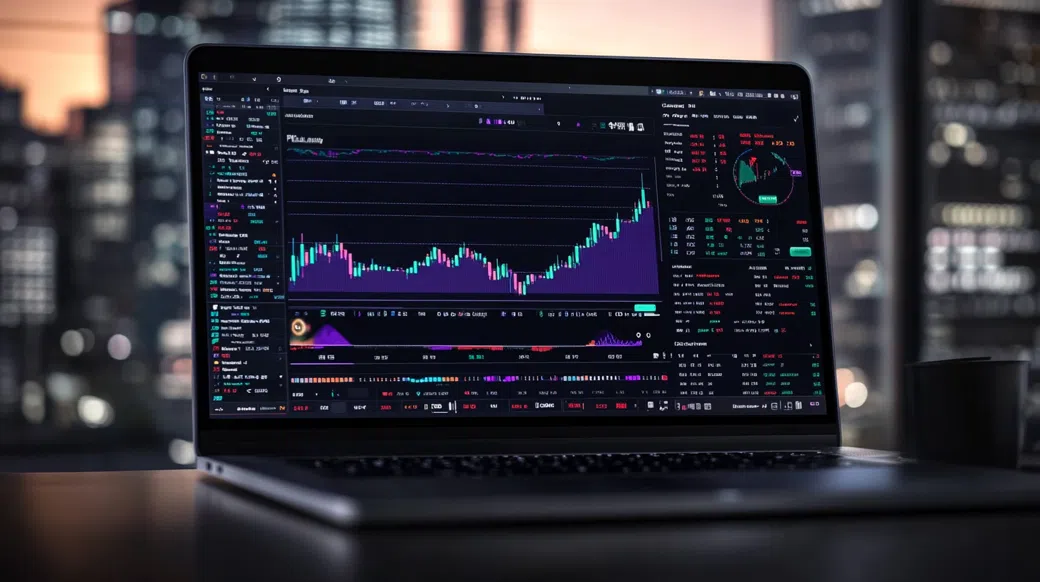
From the desktop angle, the WebTrader behaved like a modern browser terminal: stable sessions, fast symbol search, and clean position tiles that make risk feel visible. Order choices covered the essentials—market, limit, stop, and stop-loss/take-profit attachments—with no drama when I adjusted stops during the London/NY overlap. Execution felt consistent on liquid instruments, although you should still expect slippage around data releases; I placed a small US500 order into a hot minute after a US inflation print and got a fill that was close, not perfect. If you live inside MT4/MT5 communities with custom indicators and EAs, treat that ecosystem as “not confirmed” here rather than assumed.
Vonk Rentveld App: Mobile Trading Experience
The Vonk Rentveld app is built for monitoring and reacting: live quotes, quick order tickets, and the ability to fund or request a payout without switching devices. On my handset, Vonk Rentveld login supported biometric unlock, which matters more than people admit when markets move and you’re half-asleep. Push notifications for price alerts worked reliably, and one-tap close made trimming risk easy. The main quirk: charts are serviceable but can feel tight when you stack indicators—fine for execution, less ideal for deep analysis.
Charting, Tools & Research
Tooling is practical: an economic calendar, a compact news feed, and an indicator library with the staples (MA, RSI, MACD, Bollinger). Watchlists and alerts cover the everyday workflow, and drawings were adequate for marking levels and trendlines. Still, the ceiling is lower than what dedicated MT5/cTrader setups offer, particularly if your process depends on advanced strategy testing or third-party add-ons. Think “good cockpit,” not “quant lab.”
Vonk Rentveld Account Opening & Minimum Deposit
After entering email, phone, and a short suitability-style questionnaire, I was nudged straight into identity checks—passport upload plus a recent utility bill for address verification. The KYC flow was photo-first, with clear guidance on glare and cropping, and my verification landed the same business day. That cadence is broadly what you want: fast enough to trade, strict enough to discourage the worst AML shortcuts.
- Minimum Deposit: $200 (the Vonk Rentveld minimum deposit I saw at checkout for card funding)
- Funding Methods: Visa/Mastercard, bank wire, regional e-wallets, and crypto (BTC, USDT)
- Demo Account: $10,000 virtual balance for testing spreads, margin behavior, and platform layout
- Account Types: Standard (spread-only) and Raw/ECN-style (tighter spreads + $7 round-turn commission per lot)
One detail I liked: base currency choices were presented upfront, which reduces accidental conversion bleed. If you plan to withdraw soon, do the document upload early—some brokers only “get serious” at the first payout request, and that’s the wrong time to discover your address proof is outdated.
Vonk Rentveld Customer Support Review
I tested support with a trader’s question rather than a generic one: “How are swap rates displayed for indices, and do they change intraday?” Live chat replied in about three minutes with a clear pointer to the instrument-specs panel and an explanation that financing can be adjusted as liquidity conditions change. For a second channel check, I emailed about Vonk Rentveld withdrawal timing on card payouts; the ticket response arrived later the same afternoon (roughly eight hours) with a step-by-step outline and the reminder that KYC must be complete before processing.
Coverage is what you’d expect from an internationally oriented CFD desk: live chat runs 24/5, email is always open, and language depth depends on staffing shifts. Phone support wasn’t prominently positioned in my account area, which is common in this segment. Weekends are quieter—crypto markets may trade, but humans don’t always keep the same pace.
Ready to Explore Vonk Rentveld?
If you’re considering this provider, start by checking the instrument list and verifying spreads during your usual trading hours. A demo run can reveal whether the WebTrader fits your workflow before you commit real margin.
Visit Vonk RentveldVonk Rentveld Review FAQ
Is Vonk Rentveld good for beginners?
It can be, but only if you treat leverage with respect and keep position sizes small. The interface is not overly technical, and the demo account helps. What beginners won’t get is deep, structured education like you’d see at larger regulated European brokers.
Can I trade crypto on Vonk Rentveld?
Yes, crypto CFDs are available, with Bitcoin and Ethereum as the main staples. Remember you’re trading a CFD, not buying coins you can send on-chain. Financing and spread behavior can change sharply over weekends.
Is Vonk Rentveld a scam?
No, my 2026 test experience didn’t resemble a scam: KYC was enforced and withdrawals were processed. The real caution is structural—offshore registration means fewer formal protections and less powerful dispute channels than Tier-1 regulators. If you want maximum legal safeguards, choose a broker under stricter supervision.
Is Vonk Rentveld available in the USA?
No, the USA is restricted. US residents typically can’t open CFD accounts with offshore brokers due to local regulatory rules. If you attempt to register, geo/KYC checks usually stop the process.
How long does a Vonk Rentveld withdrawal take?
Most withdrawals are approved internally within 24–48 hours once KYC is complete. After that, receipt depends on the rail: cards commonly take 2–5 business days, bank wires 3–7 business days, and crypto payouts can arrive the same day. Delays typically come from compliance reviews or intermediary banks, not the trading platform itself.
What is the Vonk Rentveld minimum deposit?
The Vonk Rentveld minimum deposit is $200 in the funding flow I used. Some methods may have different minimums, but $200 is the practical starting point for opening a live account. If you’re just evaluating, the demo account is the safer first step.
Does Vonk Rentveld have a mobile app?
Yes, Vonk Rentveld has iOS and Android apps for trading and account management. You can monitor positions, place orders, and handle deposits/withdrawals from the phone. For heavy chart work, the desktop WebTrader still feels roomier.
Final Verdict: Should You Use Vonk Rentveld in 2026?
Overall Score: 4.0/5
What stood out most in my Vonk Rentveld review is the coherence: a usable WebTrader, a mobile app that doesn’t feel like an afterthought, and pricing that makes sense once you pick the right account tier (Vonk Rentveld). The negatives are less about buttons and more about borders—offshore oversight is a different world than EU rulebooks, and that should shape how much capital you park here. Treat leverage like a sharp tool, not a badge of honor. If your plan involves holding CFD positions for weeks, pay extra attention to swap/overnight financing and weekend adjustments.
Best for: active CFD traders who want multi-asset exposure and can manage risk tightly. Avoid if: you require Tier-1 regulatory protections or you’re prone to over-leveraging during volatile news cycles.