Vuur Beursholm Review 2026: Is It Safe & Worth Your Money?
In-depth Vuur Beursholm review updated for 2026. We tested spreads, key features, supported countries, and safety. Read our full verdict.
Vuur Beursholm Review 2026: Pros, Cons, and Features Tested
| Min Deposit | $200 |
| Max Leverage | 1:500 |
| Assets | Forex, Indices, Commodities, Crypto CFDs, Share CFDs |
| Platforms | Proprietary WebTrader, iOS app, Android app |
Built for CFD traders who want broad markets and high leverage without paying “Nordic bank” pricing, Vuur Beursholm suits the hands-on speculator—provided you accept an offshore framework as the price of flexibility. Account tiers split cleanly into spread-only Standard and a tighter-spread Raw/ECN-style option aimed at more active flow. The lineup leans multi-asset (FX, indices, metals, crypto CFDs), and the proprietary WebTrader is more capable than many white-label clones, especially on chart usability. The main compromise is jurisdictional: protections and dispute routes are thinner than in EU-style regimes. I opened and verified an account and found the KYC prompts clear, with the usual AML checkpoints. For a quick orientation, start here: Vuur Beursholm.
Pros
- Two cost tracks (spread-only vs. commission) that map well to different trading tempos
- Solid proprietary WebTrader with clean execution controls and watchlists
- Multi-asset CFDs including major indices and liquid crypto pairs
Cons
- Offshore registration means fewer formal investor-compensation backstops
- Education/research is functional but not deep enough for “learn-from-zero” users
- Inactivity fee can nibble at dormant accounts after a period of no trading
Is Vuur Beursholm Legit and Safe?
Vuur Beursholm appears operational and legitimate in the narrow sense: I could onboard, trade, and withdraw, and the site enforced identity checks rather than waving me through. It is not a “guaranteed-safe” setup, though, because the broker operates under an offshore registration model (Seychelles FSA), where client protections are typically lighter than in the EU.
Seychelles registration changes the tone of risk management. You often get higher leverage and simpler product access, but you don’t get the same investor-compensation schemes or well-trodden escalation paths that a Stockholm desk would take for granted. In my test window, I looked for the classic danger signs: aggressive sales calls, trophy-badge marketing, or withdrawal friction disguised as “extra verification.” None of that surfaced; KYC was enforced with photo ID and proof of address, and the legal pages referenced segregated client funds language (wording matters, but custody practice is what counts). The decisive moment for me was operational behavior: orders filled without odd “price improvement” theatrics, and the withdrawal request moved into processing without a runaround. Still, remember what you’re trading: CFDs are leveraged products; a large share of retail accounts lose money, and capital is at risk.
Supported Countries & Restricted Regions
This broker is primarily accessible across many non-US regions where offshore CFD accounts are commonly permitted; onboarding accepted my European (non‑EU) profile without drama. The USA is blocked, and sanctioned jurisdictions are not supported.
| Region | Status | Leverage Cap |
|---|---|---|
| Europe (non‑EU/EEA) | Accepted | Up to 1:500 |
| Latin America | Accepted | Up to 1:500 |
| MENA (selected countries) | Accepted | Up to 1:500 |
| Southeast Asia (selected countries) | Accepted | Up to 1:500 |
| USA | Restricted | Not offered |
| Sanctioned jurisdictions | Restricted | Not offered |
Eligibility is enforced through a mix of signup declarations, IP/location checks, and KYC review—so “it worked yesterday” is not a promise for tomorrow. Policies shift with compliance pressure, and the broker can request extra documents before approving trading or withdrawals.
Tradable Assets and Markets
The product shelf is built for the active CFD crowd: liquid benchmarks first, long tail second. I found enough breadth to run a simple macro book (rates narrative via indices, risk-off via metals, FX for expression) without needing three separate accounts.
- Indices: Core contracts like US500, NAS100, US30, GER40 and UK100—useful for session-to-session momentum and event hedges.
- Forex: 40+ pairs across majors and minors, with a sprinkling of higher-volatility crosses for those who understand margin and slippage.
- Commodities: Gold and silver plus energy (WTI/Brent) for traders who watch real yields and inventory headlines.
- Crypto CFDs: BTC and ETH alongside a few large caps; pricing tracked spot closely during my checks, with wider weekend financing dynamics.
- Share CFDs: A selective list of US/EU blue chips for tactical exposure rather than long-term ownership.
All of this is CFD exposure: you’re trading price movement with leverage, not taking shareholder rights in equities or holding on-chain crypto. Dividends, where applicable, are typically handled as cash adjustments rather than true ownership income.
Vuur Beursholm Trading Fees and Spreads
Costs follow the familiar two-lane structure: Standard accounts pay via spread, while the Raw/ECN-style tier compresses spreads and adds a per-lot commission. On EUR/USD I saw spreads that land around the middle of the offshore CFD pack, with the Raw tier making sense once you trade enough volume to justify commission.
| Asset | Spread/Fee | Market Average Comparison |
|---|---|---|
| EUR/USD (Standard) | from 1.6 pips | In line |
| EUR/USD (Raw/ECN) | from 0.2 pips + $7 round-turn/lot | Competitive |
| Bitcoin (BTC/USD) | from $35 | Slightly better than average |
| Gold (XAU/USD) | from $0.35 | In line |
| US500 Index | from 0.7 points | Competitive |
Non-spread costs that matter over time: Overnight swap/financing is the quiet line item—especially if you hold indices or FX beyond a session, and triple-swap midweek can bite. I also noted an inactivity charge of $10 per month after 90 days without trading, which turns “set-and-forget” accounts into a slow leak. Withdrawals can be fee-free on the broker side depending on method, but card processors, banks, and crypto network fees still show up in the real world; add conversion costs if you fund in one currency and your account is denominated in another.
Vuur Beursholm Trading Platforms and Tools
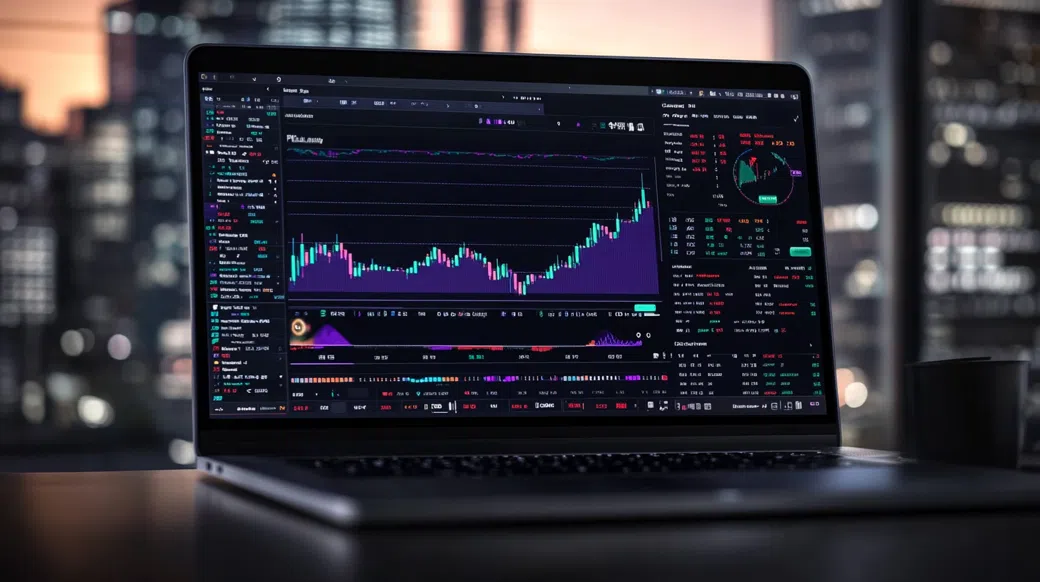
WebTrader is where this service makes its case. My sessions were stable, with no login loops, and order tickets offered the essentials: market, limit, stop, plus stop-loss and take-profit fields that didn’t feel bolted on. Execution on a small EUR/USD test during the London open was consistent with what you’d expect from a CFD venue—occasional micro-slippage, no theatrical requotes. If you live inside MT4/MT5 plug-ins and third-party automation, you’ll feel the gap; I did not confirm MT4/MT5 access in my account area.
Vuur Beursholm App: Mobile Trading Experience
The Vuur Beursholm app is geared for monitoring and fast interventions rather than deep analysis. Quotes refreshed cleanly, one-tap close was reliable, and push notifications covered margin and order events. I could manage deposits and initiate withdrawals from mobile, and biometric unlock reduced friction on repeated checks—useful when you’re juggling screens. The only consistent quirk: dense watchlists need a second to load on weaker connections, so keep your favorites trimmed. For access, the Vuur Beursholm login flow on iOS mirrored the web credentials with an extra device verification step.
Charting, Tools & Research
Charting includes the staples—multi-timeframe views, common indicators (MA, RSI, MACD, Bollinger), and drawing tools for levels and channels. There’s an economic calendar and a news feed that helps you avoid trading blind into CPI or central bank headlines. The ceiling is still below a dedicated MT5/cTrader workstation: alerts and backtesting are more basic, and research is more “headline support” than true market intelligence.
Vuur Beursholm Account Opening & Minimum Deposit
Instead of asking for everything up front, the signup flow gathered the essentials first (email, password, basic profile) and then nudged me into identity verification before I could move serious size. KYC required a government-issued photo ID plus a proof of address dated within three months; my verification cleared the same business day. The platform’s AML prompts were unglamorous but sensible—exactly what you want when evaluating “is Vuur Beursholm legit” beyond marketing claims.
- Minimum Deposit: $200
- Funding Methods: Visa/Mastercard, bank wire, regional e-wallets, and cryptocurrencies (BTC, USDT)
- Demo Account: $10,000 virtual balance for testing spreads, margin behavior, and the ticket workflow
- Account Types: Standard (spread-only) and Raw/ECN-style (tighter spreads + commission) for higher-frequency traders
Pragmatically, the Vuur Beursholm minimum deposit sits in the “serious hobbyist” zone—enough to feel margin pressure, not so high that you need committee approval. I funded my test account by card; the confirmation screen posted the balance quickly and the platform flagged account currency choices clearly. If you want to sanity-check the onboarding screens yourself, you can start with the demo on Vuur Beursholm.
Vuur Beursholm Customer Support Review
I pushed support with a trader’s question, not a beginner’s one: how swap rates are calculated on XAU/USD and whether weekend financing differs on crypto CFDs. Live chat picked up in roughly three minutes and answered in plain language, pointing me to the contract-spec sheet rather than a generic FAQ. I also sent an email about withdrawal sequencing after KYC; the ticket reply landed in about nine hours with method-by-method timing guidance.
Coverage is broadly 24/5, which suits FX and index traders but leaves weekend crypto questions to self-service. Language support felt adequate in English, with regional depth likely varying by where you register. Phone support wasn’t prominent in my dashboard, so I’d treat this broker as chat/email-first—typical for offshore CFD operations.
Ready to Explore Vuur Beursholm?
If you’re considering an account, verify the current spreads on your instruments and confirm your country eligibility before committing meaningful capital. Starting with the demo is a sensible way to test the WebTrader layout, order types, and margin feel in real market hours.
Visit Vuur BeursholmVuur Beursholm Review FAQ
Is Vuur Beursholm good for beginners?
Yes, but only for beginners who already respect leverage. The interface is clean, the demo helps, and the Standard account keeps pricing simple. Still, the offshore setup and 1:500 leverage mean you need strict position sizing from day one.
Can I trade crypto on Vuur Beursholm?
Yes, crypto is available as CFDs on pairs like BTC/USD and ETH/USD. That means you’re trading price exposure with financing costs, not withdrawing coins to a wallet. Expect wider weekend financing dynamics than you see in spot markets.
Is Vuur Beursholm a scam?
No, my Vuur Beursholm review experience didn’t show scam behavior: KYC was enforced, trades executed normally, and withdrawals processed. The more relevant caution is structural—this is an offshore-registered CFD broker (Seychelles FSA), so protections can be thinner than in top-tier jurisdictions. Treat it as higher-risk infrastructure and size accordingly.
Is Vuur Beursholm available in the USA?
No, Vuur Beursholm is not available in the USA. US residents are typically restricted due to local regulatory rules around CFDs and leveraged derivatives. If you try to register from the US, access is usually blocked during eligibility checks.
How long does a Vuur Beursholm withdrawal take?
A Vuur Beursholm withdrawal typically leaves the broker within 24–48 hours after KYC, then timing depends on the rail. Cards usually land in 2–5 business days, bank wires in 3–7 business days, and crypto transfers are often same-day once approved. Your bank or network fees can affect the final receipt.
What is the Vuur Beursholm minimum deposit?
The Vuur Beursholm minimum deposit is $200. That level is enough to test live execution and financing in small size without overexposing your bankroll. If you plan to trade indices or crypto with leverage, a larger buffer is often prudent to avoid margin stress.
Does Vuur Beursholm have a mobile app?
Yes, there is a Vuur Beursholm app for iOS and Android. It supports order placement, position management, deposits, and withdrawals, with biometric login on compatible devices. For deep research and multi-chart layouts, the WebTrader still feels more comfortable.
Final Verdict: Should You Use Vuur Beursholm in 2026?
Overall Score: 4.0/5
My read, after trading and moving money through the system, is that Vuur Beursholm is a credible offshore CFD venue with a surprisingly competent proprietary platform and a cost structure that rewards active flow via the Raw tier. The frictions are the ones I’d expect outside the EU: lighter formal protections, fewer escalation channels, and fees like $10/month inactivity after 90 days that punish neglect. If you treat leverage as a tool—not a lifestyle—and you understand that CFDs can magnify losses as fast as gains, this broker can fit. Details and current terms are best checked directly on Vuur Beursholm.
Best for: active FX/index traders who want WebTrader convenience and flexible leverage. Avoid if: you require tier‑1 regulation, deep research, or long-term “buy-and-hold” investing features.